

The Best Time To Harvest Summer Squash So It's Perfectly Ripe
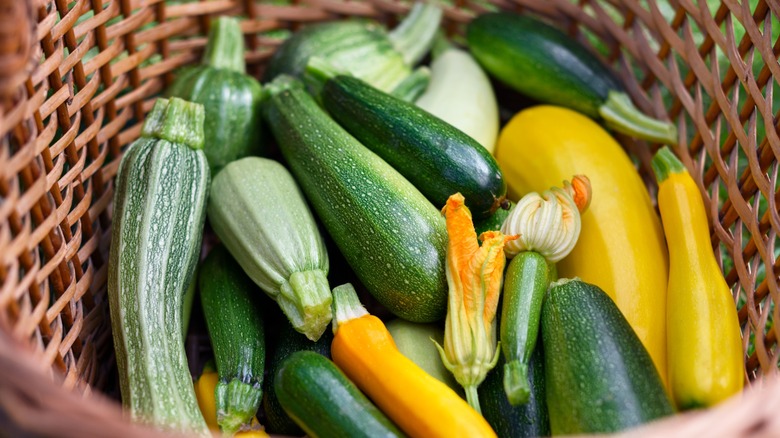
We've been over the types of winter squash and how to prepare them, but summer squash is something else entirely. Winter squash is durable, hard-shelled, and can be allowed to grow to enormous dimensions, while delicate summer squash are harvested young and have thin skin you can score with a thumbnail. The most well-known summer squash, of course, is probably zucchini, that superstar of the warm-weather garden. You can find other types of delicious summer squash fit for your table, such as that in our very own summer squash and basil burrata salad recipe. Knowing when to harvest summer squash is of the essence, as, left on the vine, they get woody and taste lousy. So, time is of the essence when it comes to attaining optimal ripeness before plucking your squash from the garden.
Too many people let their summer squash mature for too long on the vine, and they pay for it with veggies that are only fit for composting or seed harvesting. In truth, you'll want to move fast and harvest your squash a mere four to eight days after flowering. Size-wise, all summer squash besides petite patty pan varieties are ready to go when they're around seven to eight inches long. Round squash should be about tennis-ball sized, and scalloped squash should be around four to six inches in diameter. You'll know visually that the squash are ready to harvest when the skin has a glossy sheen to it and scratches easily. If you harvest your squash at exactly the right time, you'll be rewarded with veggies that are perfectly ripe and sweet, ready for any culinary treatment you'd like to use on them.
More tips for harvesting summer squash
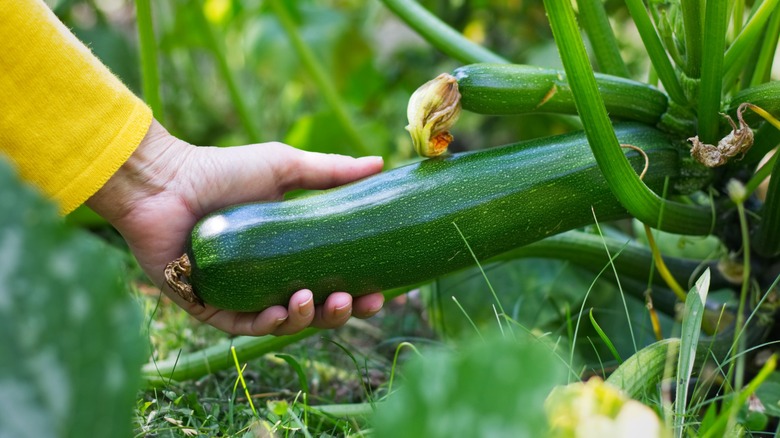
Summer squash, and especially zucchini, should be harvested every two days at the very least. This serves a multitude of benefits to both you and the plant. First of all, healthy squash plants are big yielders and will produce more veggies than you can likely imagine. Harvesting frequently keeps you from being overwhelmed by the sheer volume of squash in your possession, as anyone who has ever had a really good year for zucchini will attest. Secondly, harvesting squash encourages the plant to produce even more fruit. Leaving the ripe squash on the plant will also potentially cause it to go past the point of peak maturity and make it tasteless and inedible, wasting the harvest. For all these reasons, you should tend to your plants often.
Knowing how to harvest your summer squash for the health of your plants is also important. Never try to pull your squash from its stem — the stem is stronger than it looks, and you risk damaging the root structure by yanking on it. Instead, use clean clippers or a sharp knife to cut the squash from the plant, leaving at least an inch of stem behind. You'll notice the residue from the old squash blossom on the end of the vegetable, but this can be easily wiped away or otherwise removed. With a little care, you will know exactly when and how to harvest your summer squash, ensuring your labors pay delicious dividends!