

The Easy Way To Tell When Your Carrots Are Ready For Harvest
"You never see a rabbit wearing glasses," quipped my mom when I was a kid and also reluctant to eat my carrots. Turns out, she was right. These veggies are packed with vitamin A, which is good for our eyes, among other things (though tales of them improving human night vision to near-superhuman levels are exaggerated). Carrots are also among the most satisfying veggies to grow at home, even if it can be a little tricky to figure out when they're ready to be pulled from the soil. As so often happens with gardening, there is an "if you know, you know" solution to many issues, including harvesting carrots.
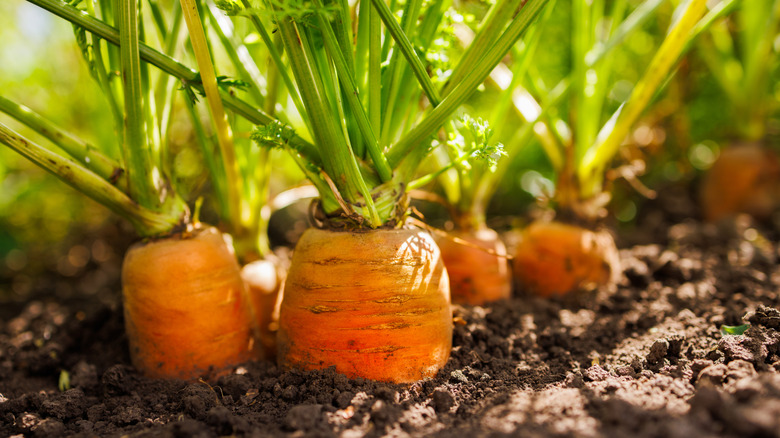
Happily for home cooks growing carrots for the first time, there are several clues to indicate whether your veggies are ripe and ready for the pot or if they need a little more time underground. The first hint is their green tops. These crowning glories should be leafy, abundant, and stand at around 12 inches high. Even if your tops are ticking all these boxes, don't go yanking them up just yet! The carrots themselves may not be quite ready, so now you have to get up close and personal.
Lift up the feathery leaves and look at the top of the root itself. If its "shoulder" has started to push up out of the soil, that's another good sign it's ready to be harvested. But before you start to pull, check the size of that shoulder; anything between ½ and ¾ inch thick means your carrots — including those 100% edible leaves — are ready to rock. Water the bed well the day before you plan to harvest, and your carrots should come out smoothly and easily.
Read the seed packet label for harvesting information
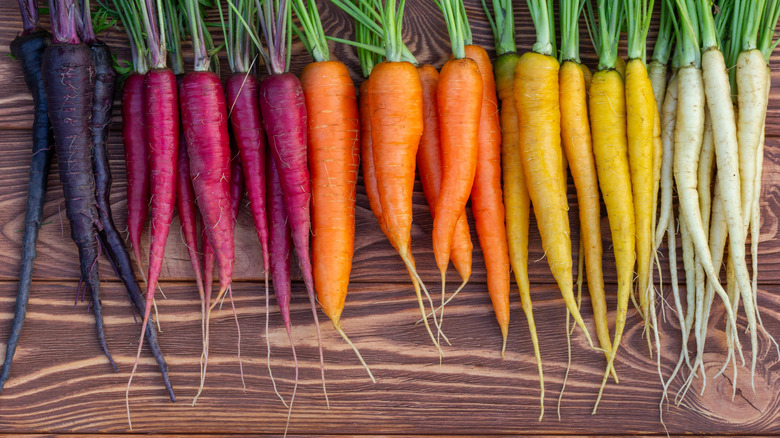
Gardeners love carrots because, when one is ready to be pulled up, just about all the other ones planted at that time will be, too. Knowing precisely when your carrots reach maturity will depend on which type you've planted. Some, like the tiny Shin Kuroda variety, can be ready to harvest by around 58 days, while Yellowstone, Purple Haze, or Scarlet Nantes can take about 75 days. Always check the seed label for specific days to maturity so you have a rough idea of when you're likely to be pulling them.
Other factors can determine when to pick your carrots, too. If your veggies were planted a little too closely together, the lack of space can hinder their growth (though you may end up with some hilarious shapes), so they may need longer in the ground than the label advises. Inconsistent watering can also result in carrots that are smaller and more bitter, while too much nitrogen in your fertilizer is great for the leaves, but, just as it does for green beans, it can also slow carrots' growth.
Where you plant your carrots is also important. This is a crop that will grow in shady areas and will get sweeter in colder conditions. However, because they're a taproot, you should never transplant them as seedlings. If you want an early summer harvest, sow your seeds directly into the soil a few weeks before the last frost of spring, adding more every three weeks for a succession crop. For a winter supply, sow your carrots 10 weeks before the first frosts of fall.