

Here's What KFC Does With Its Leftover Chicken
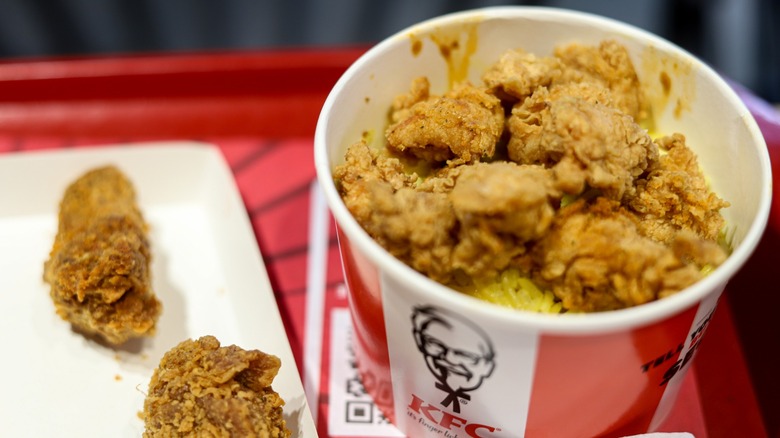
When KFC left its Kentucky headquarters for a new home in Plano, Texas, it said goodbye to the state that gave it its (once) full name: Kentucky Fried Chicken. What KFC has never changed, however, is its company ethos supporting the feeding of those with food insecurity. When Harland "Colonel" Sanders gave a ride and a full scholarship to a young hitchhiker, he inspired the 1998 founding of the KFC Foundation, which supports struggling restaurant employees. But that's not the chain's only legacy of giving. Select franchises also participate in the Harvest Program, through which unsold, uneaten food is donated to those in need through partner organizations in the local community.
At the end of the day, restaurant employees at participating KFC restaurants package good, unsold food up in approved containers and store it in the location's freezer. Eventually, it's picked up by partner organizations like community churches, which then distribute the food to needy individuals and families. The Harvest Program began in 1999, and, in the more than quarter century since then, KFC estimates it has donated 92 million meals spread between more than 4,300 nonprofit partner organizations. There are a lot of ingredients that go into KFC's mashed potatoes, but there's a lot of heart that goes into feeding disadvantaged members of the local community, and the chicken giant delivers it in salty, umami-rich spades.
KFC may have both official and unofficial ways of dealing with food waste
Many restaurants donate leftover food — we recently covered Chipotle's excess food policy, in which leftover ingredients go into the community by way of partners, in a very similar way to the food at KFC. The benefits of initiatives like the Harvest Program are twofold. Not only do they connect hungry community members with food that's leftover from the day's cooking, but they also help reduce commercial food waste, which is a significant problem in the United States. As per Food Rescue US, as much as 40% of the food supply in America is wasted every year. That's some 91 million pounds of perfectly good and edible food. This is not just an ethical issue in which consumable food is trashed while people go hungry, but also represents an environmental problem. In other words, water, energy, and labor are all wasted when food hits the trash.
On social media site Reddit, multiple threads detailed the afterlife of unsold KFC chicken, with several commenters (who reported they were KFC employees) noting that their restaurants ran a tight ship to ensure that not much extra chicken was cooked in the first place. Per their accounts, white meat chicken often gets recycled into the next day's pot pies, according to anecdotal reports. Managers at some locations are reportedly generous about letting employees take home leftovers at the end of the night, while others claimed that the last few customers of the night were sometimes on the receiving end of "waste not, want not" largesse, receiving buckets of extra chicken with their orders so that nothing was thrown out.