

Stop Throwing Out Dryer Lint: Use It To Help Your Veggies Grow
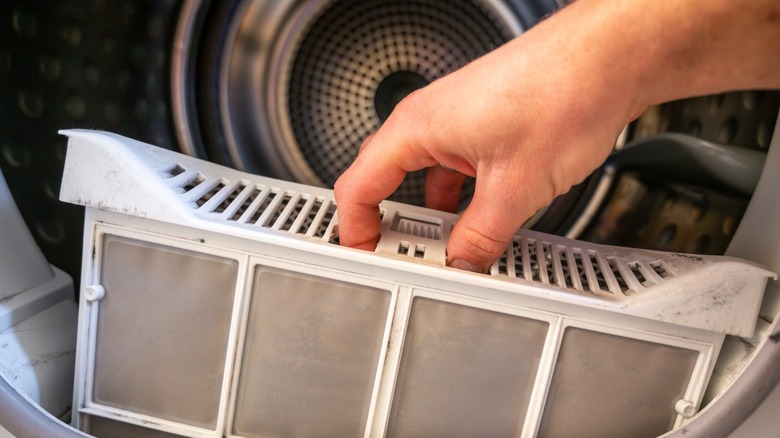
When foodies talk about appliances, they're normally asking questions like whether your kitchen appliances should be matching or querying the most reliable models to buy for better cooking and eating. Cleaning stainless steel appliances with salad staples? We're all over it! We usually don't have a lot of call to talk about clothes dryers, but it turns out that dryer lint — that nuisance product that builds up in your dryer and requires cleaning from your lint trap — might just be the missing ingredient you need to suppress weeds in your garden, totally free of charge.
While some home gardeners shell out considerable cash on garden fabric to stifle any weed growth in their garden beds, dryer lint will actually accomplish the same purpose. All you have to do is accumulate a good amount of the pesky lint (not hard if you do a lot of laundry) and spread it about one to two inches thick around the bases of your plants. This will prevent light from getting to the soil around your plants and keep invasive weeds from growing and choking out your beautiful fruits and veggies. Depending on how big your garden is, it may not be realistic to sow lint around the entire area, but you can certainly save some coin by using as much as you can gather in lieu of a whole garden's worth of landscaping cloth.
There are some considerations to keep in mind with dryer lint in your garden
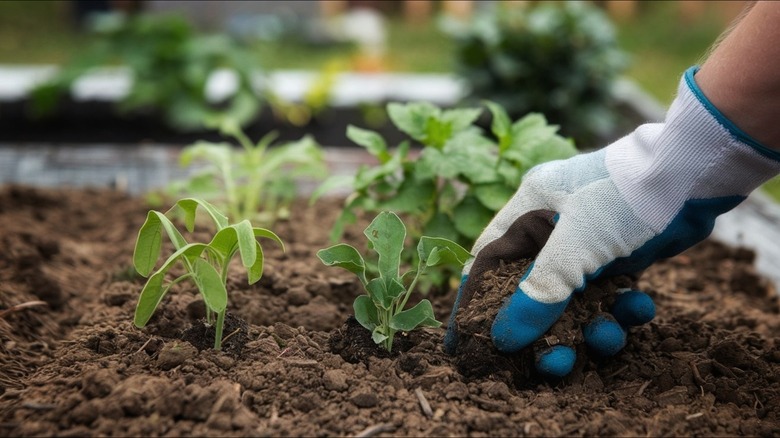
Is all dryer lint good for your garden? Not so fast — if you dry synthetic fabrics in your loads of laundry, it might not be best to use that lint around your plants. Lint from natural fabrics, like cotton and linen, is a boon to your garden bed, but the microplastics contained in lint derived from drying polyester and other synthetics could be harmful to the environment. Furthermore, detergents with dyes or strong fragrances and supplements like dryer sheets and fabric softener should be avoided, as these can leach chemicals into your soil and plants. One possible solution is to do separate dryer loads with your natural fabrics and save that specific lint for your garden. Of course, this requires extra effort, but if you're the type of person who values repurposing junk, you just might be tempted!
If you find that you don't generate very much dryer lint for using in a whole garden bed, consider using (all-natural) dryer lint at the base of your potted plants. The lint will absorb moisture and retain it for your plant babies, as well as adding bulk to your soil. Keep in mind that dryer lint is very, very flammable, so you should store it somewhere where there's no chance of stray sparks or heat causing a chance of immolation. We like the possibilities for dryer lint in our gardens, even with some realistic constraints, because otherwise it is quite literally useless. Saving a little money on products to combat weeds frees up our funds for the fastest-growing tomatoes to add to our garden and other treats for our outdoor ventures.