

5 Foods With More Iodine Than Table Salt

Iodine isn't the most glam or fashionable mineral in health food talk, but it plays a critical role in keeping your body healthy. Namely, it regulates the function of your thyroid gland, which helps to regulate your metabolism. Furthermore, human brain and bone development in pregnancy and infancy require iodine as fuel. Your body doesn't produce iodine on its own, so you need to get it from the foods you eat, some of which may have more iodine than table salt.
When most folks think "iodine," if they stop to consider it at all, they probably think about table salt. Salt enriched with iodine is a significant source of this nutrient. Just ¼ teaspoon of salt, a typical serving, contains 71 micrograms of iodine, or roughly 47% of the recommended daily intake for most adults. Salt has a lot to recommend itself, as it makes food tastier, and it never (technically) goes bad. Of course, salt is also high in sodium, which may be a problem for certain people. That same tiny serving of salt contains about 25% of your daily value of sodium.
We know that too much dietary salt can be problematic; yet, as doctors have warned people about the dangers of excessive sodium consumption in recent years, a rise in iodine deficiency has been noted. That's why it's important to seek other foods with iodine. This is to mention nothing of the fact that certain foods actually contain more iodine than table salt! Serving sizes aren't equivalent, of course, because one serving of salt is much, much smaller than a serving of, say, yogurt or fish, but the following comparisons are made based on a typical helping of the food in question.
Seaweed
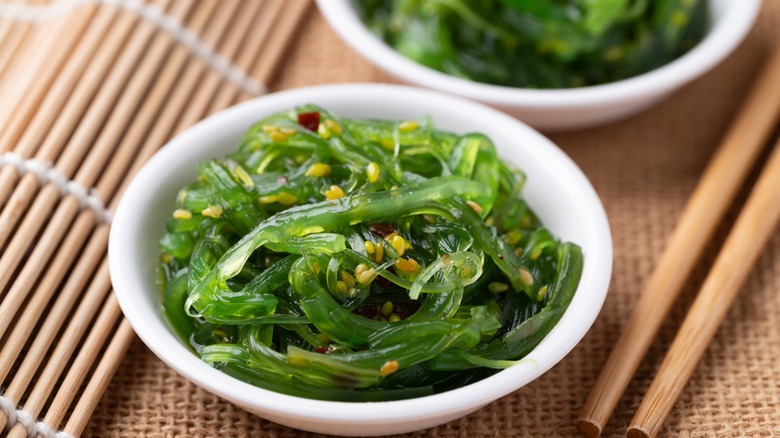
When we went over tips for making homemade sushi, we forgot to mention that you should never overlook the nori if you are trying to bolster your iodine intake. Because it soaks in briny seawater, seaweed is an especially rich source of iodine. Different types of seaweed have different iodine concentrations, but nori, which might be the most common one you encounter, contains as much as 232 micrograms of the nutrient in one 10-gram serving. If your seaweed encases fish, another iodine heavyweight, you stand to boost your intake even more.
Cod
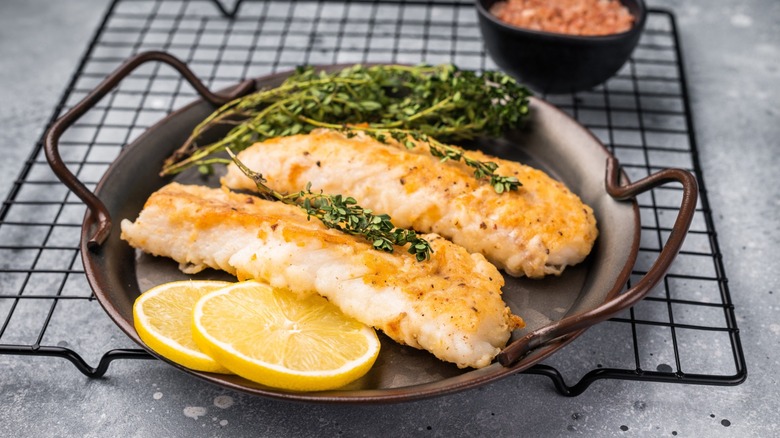
You'll find that many types of seafood are rich in iodine, but lean, delicious cod is particularly notable when it comes to getting this nutrient. All you need is a three-ounce serving of cod to enjoy 158 micrograms of iodine. Cod makes a quick, easy dinner, whether you're enjoying a fresh catch or cooking frozen seafood. Note that thawing frozen cod in water causes a loss of iodine, as it leaches out into the liquid, so change your thawing methods accordingly.
Greek yogurt
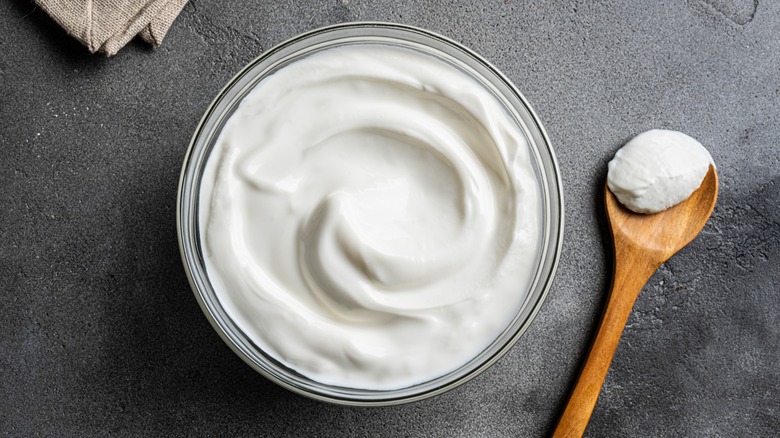
Whole milk is rich in iodine, but Greek yogurt is a denser product that packs in more goodness, pound-for-pound. In an eight-ounce serving, you will enjoy as much as 116 micrograms of iodine. Greek yogurt might just be a superfood, packing potassium, vitamin B12, and gut-healthy probiotics in a protein-rich vessel, but its sheer versatility really cinches it as a great choice for those trying to up their iodine. There are a ton of baking ingredients you can swap for Greek yogurt, meaning you don't even have to eat it plain to reap its benefits.
Enriched bread

You've heard us fuss over the best bread for French toast, but the best bread for any sandwich when iodine is an issue is the enriched kind. Certain manufacturers of mass-market bread loaves treat their dough with iodate bread conditioner, which majorly ups the iodine in each slice. The dough is "enriched" with nutrients, hence the name. One slice of iodized bread can pack as much as 185 micrograms of iodine. In 2009, Australia began requiring all commercial bread products (save organic ones) to be treated with iodine salts, and studies have found this to be a safe practice for all consumers.
Oysters
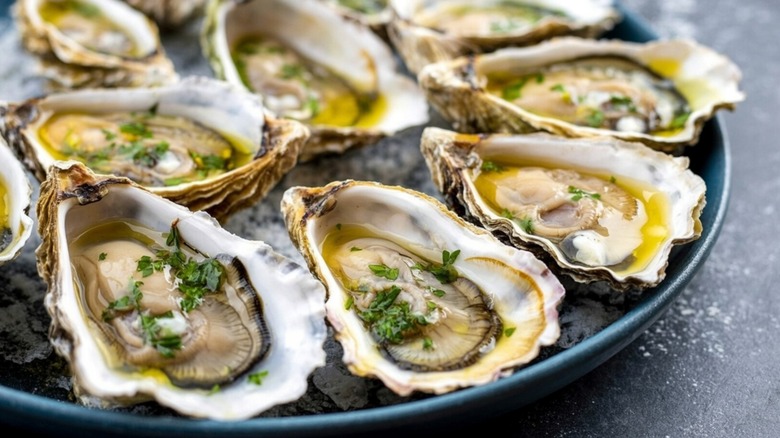
You might suddenly be quite interested in wine pairings for oysters when you realize how much precious iodine comes from these delicious bivalves. A standard three-ounce serving of cooked oysters provides as much as 93 micrograms of iodine. Because oysters continually pull seawater through their gills, they trap loads of iodine. You reap the benefits when you eat them — and you get a tasty dish, to boot! If you sprinkle a little iodized salt on your shellfish, you up the nutrient content even more.