

Onions Are Hungry Plants: Here's The Best Fertilizer For A Bigger Harvest Than Ever
We may receive a commission on purchases made from links.
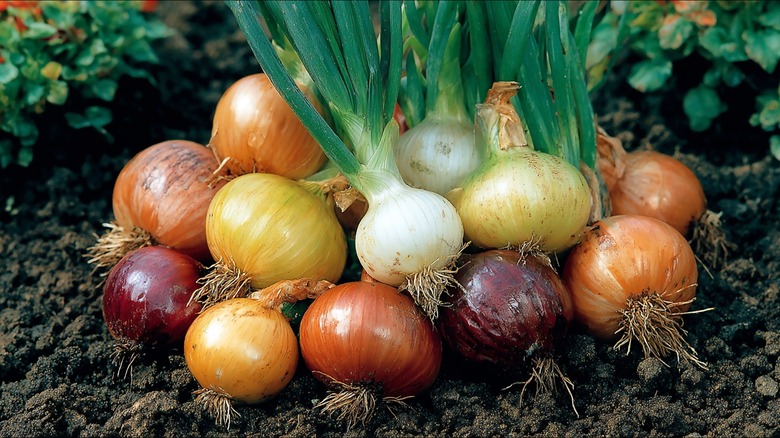
Like the Very Hungry Caterpillar, your garden onions have a need to feed. You've undoubtedly heard of "heavy feeders" in the garden world; plants that have a higher-than-average nutrient requirement. Onions rank way up there on the list. Luckily, while how often to water your veggie garden might be a slightly tricky question, the answer to onions' insatiable appetite is simple: you wanna load them up with nitrogen-based fertilizers.
There may be a culinary difference between white and yellow onions, but bulbs of all colors have something in common, and that's a need for tons of nitrogen when they're in the growing phase. The phosphorus and potassium in fertilizing agents don't harm onions, but they aren't available in a form that's absorbable by growing veggies. When you start your onion seedlings or sets, you can use a balanced fertilizer like a 10-20-10 to help them take off, but then you want to switch to a nitrogen-heavy formula and apply it at least twice if not three times during the growing period. One option that's Prime-eligible is SoilMoist NitroGreen 100% Organic Fertilizer, the 13-0-0 formula of which is just right for onions.
Some experts say that onions prefer a granular commercial fertilizer to a liquid one and absorb it more easily. On the other hand, if you want an all-natural fertilizer, chicken manure is high in nitrogen. You can also opt for urea, which generally registers around 46-0-0. Keep in mind that you may end up fertilizing your onions every two or three weeks during the growing phase, but, regardless of the plant food you choose, you should discontinue your regime when the bulbs swell.
Social media users agree that nitrogen is the key to a great onion yield
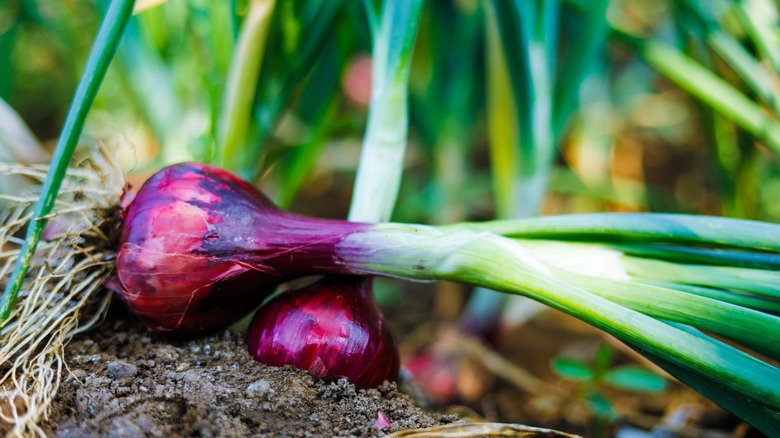
One Redditor used a unique way of adding nitrogen constantly to their onions under a compost layer: "I use a thick layer of compost every year, so phosphorous [sic] and potassium are not a big concern. But nitrogen either gets washed out or broken down pretty quickly, so small doses once or twice a week can be a good way to go."
In that same thread, another commenter echoed the two-stage philosophy recommended by experts, while name-dropping some organic options: "Onions do best starting with a balanced fertilizer when they are planted to help develop the roots. Something with a boost of phosphorus is great (the second number in the N-P-K ratio.) [...] Then, through the growing season give regular feedings of a high nitrogen fertilizer to power growth. Organic options are cottonseed meal, feather meal, alfalfa meal, and fish meal." And, on another Reddit thread, a dissenting voice argued that fertilizing onions may be simpler than we thought: "I typically fertilize lightly with a fish fertilizer but I've grown great onions just from compost."
One thing is for sure between expert advice and anecdotal reports: onions are not a "set it and forget it" part of your garden. If you want a generous, weighty harvest and plenty of allium to enjoy all through the cold months, you'll have to bust out the fertilizer. Just make sure you know the best way to store onions to keep them crisp.