

It's Not Parmesan: The Classic Italian Cheese Olive Garden Servers Grate On Your Food
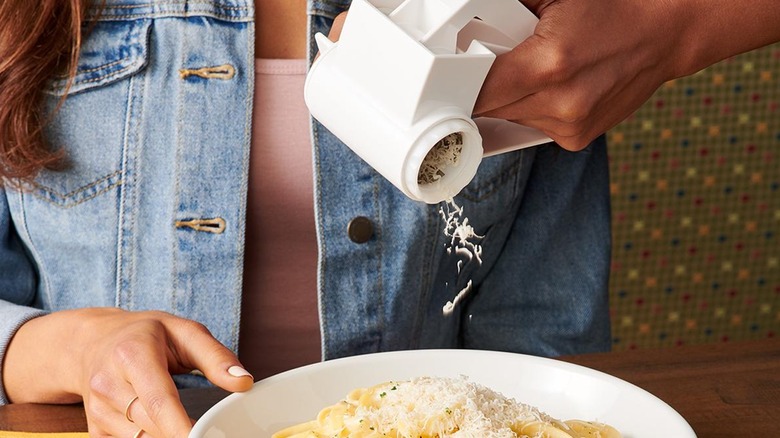
Olive Garden is a chain restaurant that always gets us up in our feels, whether we're shaking our heads at the choices (and pricing!) on a nostalgic '90s OG menu or reaching for just one more of those amazing breadsticks. Because we love eating at Olive Garden, we're forever interested in the restaurant's secrets, including minutiae like the cheese that servers grate on your food. When the waiter or waitress approaches your table with that magical apparatus and promises to keep grating until you are happy with the mountain of cheese on your meal, it's not parmesan in the hopper: it's actually romano cheese.
While we're lacking hard-and-fast "Word of God" proof from Olive Garden (or its parent organization, Darden Restaurants) that romano cheese is what's in its graters, we have a lot of anecdotal evidence. First of all, romano-style cheese tends to be cheaper than real parmesan. Olive Garden is a casual restaurant, so it doesn't make financial sense to promise unlimited cheese when pricey parm is up for grabs. Secondly, when the restaurant packages to-go meals, it includes packets of grated romano that are labeled as such, which amplifies our suspicion that it's also romano in the graters themselves.
Thirdly, social media is riddled with reports from self-proclaimed current and former Olive Garden servers claiming that they know the cheese is romano and, specifically, Lotito brand romano cheese. With all these clues put together, we have a pretty good feeling that we've cracked the case.
What is the difference between parmesan and romano cheese, anyway?
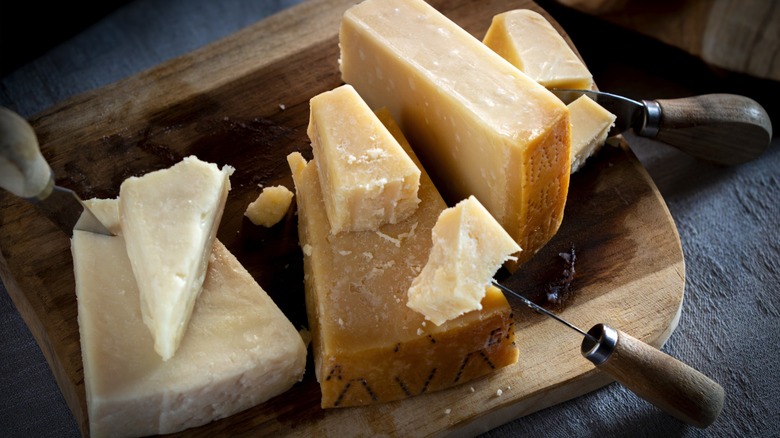
Real, imported parmesan cheese is a premium product. There's a reason that authentic parmesan wheels are imprinted with dots — they let the consumer know that a cheese is the real deal. Parmigiano Reggiano cheese straight from Italy is a PDO product, which means that it may only be crafted by certain approved artisans in certain geographic regions. However, there is also "parmesan" cheese (minus the Reggiano), which can be produced anywhere. Generically, parmesan is a hard cow's milk cheese that's aged for as long as a year. "Real" pecorino romano cheese is also a PDO thing, but even the domestic version is cheaper because it can be manufactured more easily. It's made of sheep's milk and may be aged for as few as five months. Parmesan typically has a "cleaner" flavor, while romano is gamier and more robust. Both are mainstays of Italian dishes all over the world, but romano is a bit more attainable under budget constraints ... such as those employed by casual brands trying to combat ever-rising food costs.
At the end of the day, you know that cheese that Olive Garden mounds atop your fettuccine or ravioli is going to be a delish topper that makes your mouth water. For all intents and purposes, it doesn't matter that the cheese isn't "real" parmesan, as romano is a perfectly fine choice for serving over Italian-inspired food, and, judging by social media memes and reels, customers tend to love the cheese at Olive Garden.