

Mouthwatering Brisket In Half The Time Starts With This Technique
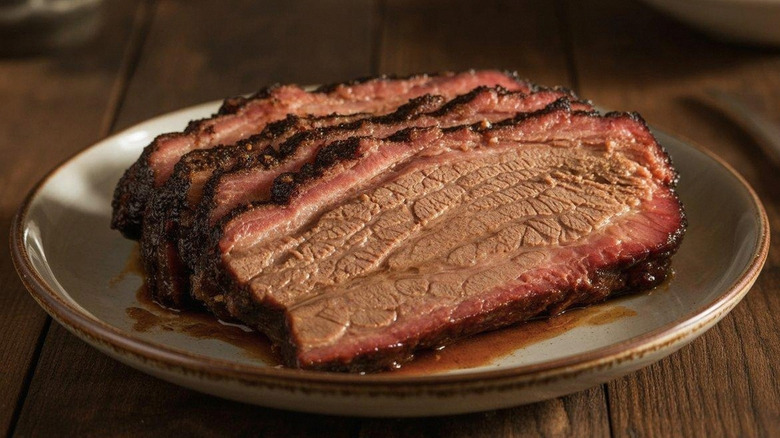
People who love to cook often have plenty of opinions about how best to do it. We've previously highlighted chefs' disagreements about salmon cooking temps and offered our own advice about how to get perfectly charred peppers. Grilling, perhaps more than any other way of cooking, is the cause of much heated debate, particularly when it comes to brisket. Traditionally, this massive hunk of beef is cooked on a low heat for up to 20 hours, ideally resulting in a pitch-black bark over juicy meat. But there is also plenty of support for the hot and fast method, with some claiming it's perfect for smaller briskets (around 10 pounds) and serves up tasty results in at least half the time. "I smoked a brisket hot and fast for the holidays this year. My whole family was blown away and will never accept an over cooked oven baked brisket flat again," one Redditor enthused, with many others on the thread in agreement.
Although many people like the general technique, not everyone does hot and fast grilling the same way. Some home cooks start their briskets at between 250 and 275 degrees Fahrenheit, so the intense smoke and heat can quickly get to work on the meat, then crank the temperature up to around 400 over three or four hours. Others hold them at between 325 and 375 degrees Fahrenheit for the duration of the cook. Then there's the positioning of the meat on the grill. Plenty of grill masters insist that a hot and fast brisket should only be cooked fat side down, while others do the opposite and are perfectly happy with the result.
Fat levels and generous seasoning are all key to a tasty hot-and-fast brisket
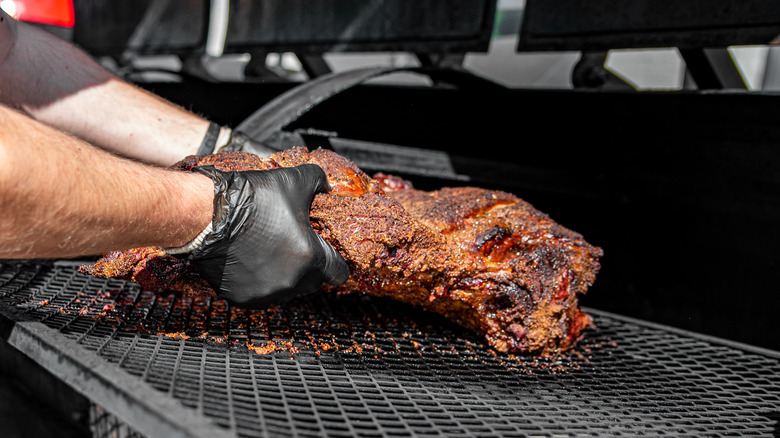
The amount of fat is crucial to a successful hot and fast brisket. Cut off too much and you risk cooking a dry, unappealing brisket, but leave too thick a layer and it might not render out in time. If you're prepping the meat yourself rather than asking a butcher to do it, some suggest trimming off the deckle – the thick, fatty layer on top of the brisket — and the mohawk running along the top, while others insist you should leave on more fat than you would for a lower and slower-cooked brisket. We say try leaving different amounts of fat on your briskets and see which works best for you.
Practically everyone agrees that the bark on a hot and fast brisket is every bit as important as on the traditional kind, so be generous with the seasoning and remember to let the salt sit for a little bit to kick-start the process of tenderizing the beef. It is worth knowing the bark might not look as black as on a brisket that's been grilled for longer, but many say it's a small price to pay for meat that's ready to eat in such a shorter time. No matter how you do hot and fast grilling, ensure the brisket's internal temperature reaches the USDA-recommended 145 degrees Fahrenheit. Hungry purists may wrinkle their noses, but they may well change their tune when you're serving up hot, tasty meat while theirs is still cooking.