

Why Chefs Argue Over The Best Temperature For Cooking Salmon
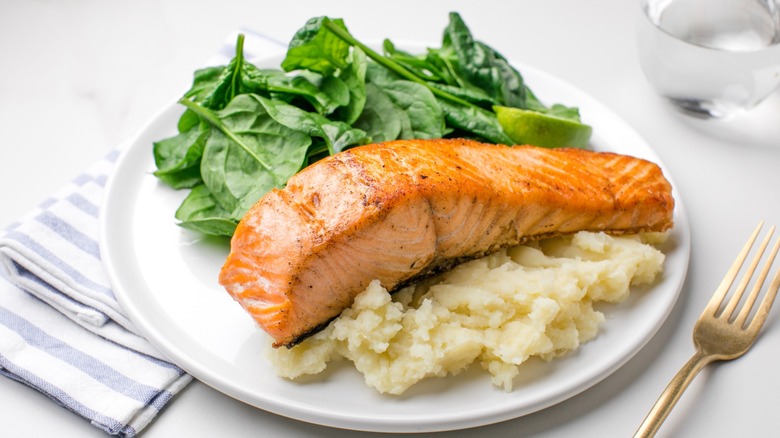
When Foodie spoke with chef George Duran and chef Sylvia Graf Carrethers, they both had similar advice regarding common mistakes you're probably making when cooking salmon: cook that fish to 145 degrees for maximum flavor and food safety, right in line with official U.S. food safety guidelines. "Regular store bought salmon is NOT sushi grade salmon and not meant to be served raw or undercooked," Carrethers stressed. Duran even recommended using a meat thermometer for exact temperature control.
And yet, however they're preparing salmon, other chefs in restaurants from coast to coast are choosing to present this protein at temperatures under that recommended mark. The theory goes that, around 125 degrees internally, salmon is medium-rare and, therefore, buttery and tender. To some, USDA recommendations are just suggestions, with some noting the process of freezing salmon helps to kill any parasites (though not bacteria) that might rear their ugly heads at lower cooking temperatures.
It seems that cooking salmon has chefs in two camps: those that adhere strictly to food safety regulations and bring salmon to a full 145 degrees and those that deliberately stop at a lower temperature because they feel the resulting dish is tastier. Everyone agrees that overcooking salmon is a sin; they simply clash over what, exactly, constitutes overcooking. The "right" answer is hard to say and largely depends on preference and your personal capacity for risk.
How should you cook salmon in your own kitchen?
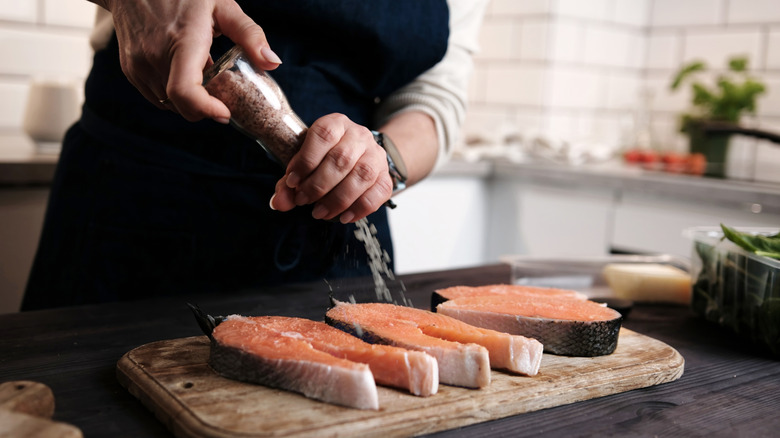
There's a ton to love about cooking salmon at home: it's tasty, loaded with nutrients, and not excessively expensive. Compared to cod, another popular seafood, salmon is also easier to cook. Yet, for those of us who are dogmatic in the kitchen and both live and die by rules, the uncertainty over cooking salmon might be confusing and even troubling.
Keep in mind that there are several areas of the culinary world where "YMMV" is a perfectly valid approach to doneness. Take burgers, for instance. Some folks are comfortable scarfing them down medium, with plenty of pink in the middle, while others swear by only consuming ground beef that's cooked through. Do you choose to eat raw shellfish, despite public health warnings to the contrary? How about that gallon of milk sitting in your fridge that's a week past the expiration date printed on the side — do you go by the tried-and-true "sniff test," or bin it in the interest of maximum safety?
Your personal tolerance for risk, as well as the state of your own health, should guide your decisions on these matters, including how you cook salmon. There's no denying that more rare salmon contains more moisture, and some people prize that consistency. Others would rather have the peace of mind that comes with "done" fish, possibly at the expense of a little suppleness. Neither answer is strictly more legitimate than the other (though medical professionals may recommend erring on the higher-temp side).