

What Happens To The Unsold Items In Costco's Food Court At The End Of The Day?
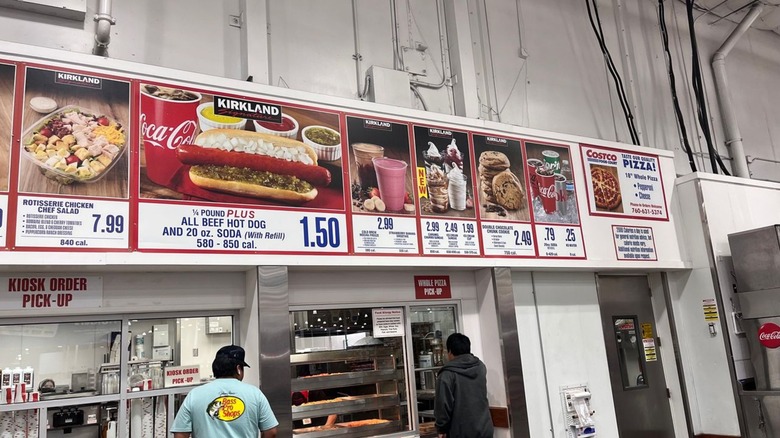
Waste not, want not — that ageless maxim applies not just to thrifty consumers, but to big businesses trying to keep overhead under control. Costco, the membership warehouse that's an industry giant not only in terms of store size, has no small amount of experience in managing waste. In fact, it has a whole policy for dealing with leftover rotisserie chickens that sees the poultry recycled into prepared food items, and it also makes deals with food banks to pick up its excess perishable food (that is, groceries) from shelves and bins. This begs the question: what does Costco do with the food court wares that are left behind when the store closes? All those delicious $1.50 hot dogs and cheap pizza slices that, sadly, don't make it into a hungry shopper's belly might just meet the trash.
In a spirited discussion on Reddit – which, keep in mind, is not officially associated with Costco and, furthermore, is populated with users whose claims cannot be verified — sources say that a lot of food court food is tossed at the end of the night. Multiple commenters allege that there are several good reasons Costco can't recycle, reuse, or give away old product, so binning extras may actually be the smartest decision for the company. It's a bit of a shocker from a company as notably meticulous as Costco when it comes to matters of food waste. Yet you need to understand, first and foremost, that rules are different regarding hot, prepared food compared to chilled stored items or even uncooked ingredients.
Why does Costco have to trash all the hot dogs?
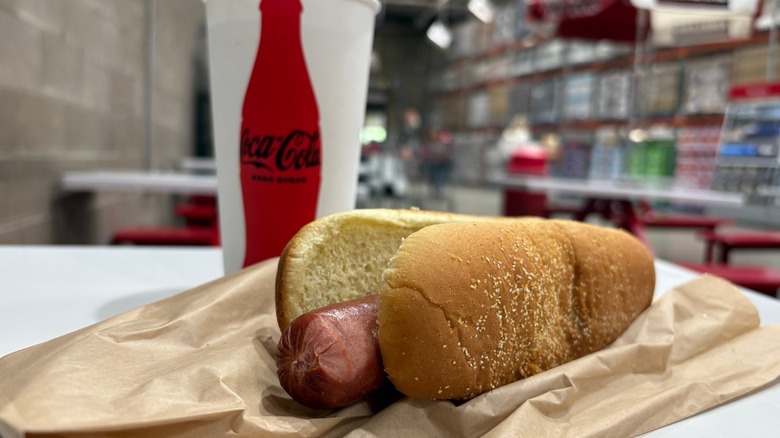
When we looked into burrito heavyweight Chipotle's excess food policy for leftovers, we were astounded that, while official publications tout the chain's affiliation with food banks across America, a great deal of food is reportedly wasted in everyday practice. While some of this has to do with employee mistakes or bad waste management practices, the sad truth is that, sometimes, tossing food is the "right" thing to do from a business standpoint. First of all, if you donate cooked food, you have to take exquisite care to make sure it is held at proper temps before it's safely cold-stored and packaged appropriately. This isn't always possible, especially in a small-scale food court setting. In some situations, donating hot food isn't allowed at all.
Giving away the food in-store also comes with pitfalls. Customers or employees might come to expect freebies at the end of the night and swarm hapless food court employees. Additionally, unethical food court employees might resort to making extra food to ensure they have plenty to take home, which is even more wasteful. Sometimes, the path of least resistance is simply doing one's best to manage what's made normally and then binning what's leftover at the end of the day. This isn't a popular solution for those who hate the idea of tossing perfectly good food, but there is some logic behind it, even if it seems like there could be more palatable alternatives.