

Skip The Stove: Here's Why Beef Stew Tastes Better From An Oven
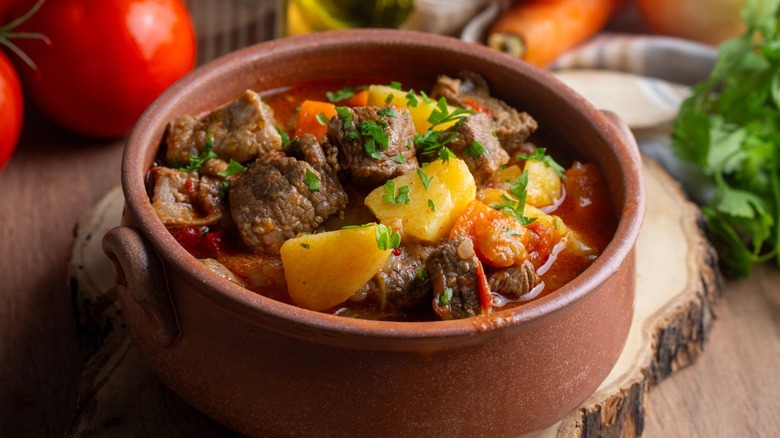
When beef stew is on the menu, we implore you to cook it in your oven rather than simmering it on your stovetop. Sounds unconventional, right? Actually, there's science behind it. While red wine will upgrade your beef stew as a matter of flavor, the improvements to the taste of your beef stew in the oven come from the method of cooking. Simmering stew on the stove cooks the meal from below, while finishing it in the oven allows heat to penetrate the contents of your Dutch oven or crock from all sides. This also means that all the stew that's in contact with the sides of your cooking vessels will brown up (thanks to the delicious Maillard reaction), leading to more nuanced, deeper flavors.
Obviously, you can't cook beef stew in the oven from start to finish. This is a two-stage method that might sound complicated, but it pays dividends in ease on the back end of the cook. Use the stovetop to sear your meat and brown your veggies before assembling your stew. The oven, then, is for a sustained simmer at a medium-low temp for around 1.5 to 3 hours, with a lot depending on the temp you opt for. You'll note that oven cooking is, overall, a little bit faster than the stovetop, due to the heat surrounding the crock instead of simply coming from below. The oven also promotes thickening of your gravy in a way that the stove can't replicate, often requiring the supplemental use of a slurry to thicken your beef stew.
Oven-cooking works no matter how you do stew
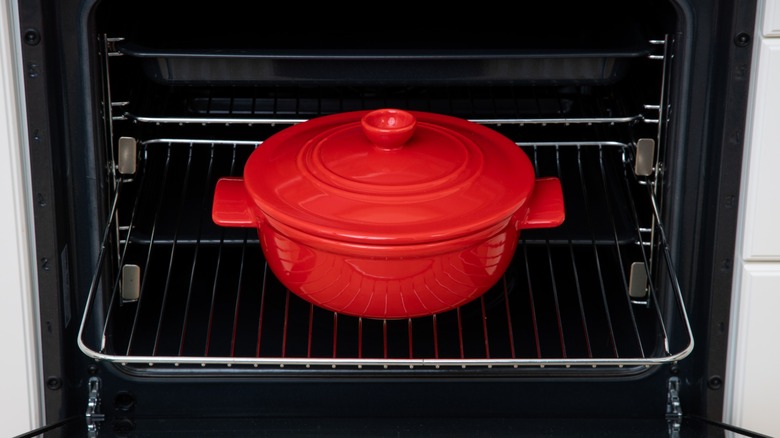
"Beef stew" as a title encompasses a vast range of ingredients and flavors. It should be a savory, umami-rich crock of beef and some sorts of veg, but the specifics are up to you, starting with the main event. Knowing how to cook different parts of a cow is something of a culinary art, and your oven stew will sing if you pick the right beef. Sections of the beast that get lots of exercise over the cow's lifetime are deeply flavorful, but need a long, slow cook to break down the abundant connective tissue that exercise develops. Luckily, beef stew is the perfect match for those cuts, so look for chuck, short rib, or even brisket.
The veggies you put in your stew will also benefit from oven cooking. Potatoes of all varieties will develop that prized creaminess that comes from long cooking — we like the texture of a nice yellow potato in stew. Yukon Gold will hold its shape while also imparting starchy fluffiness to the stew. If you add more delicate veggies like green beans or mushroom segments, you may choose to leave them out until closer to the stew's finish so that they don't become mushy.
Building a great gravy is also easier with the oven, because the liquid will naturally reduce in a way that it doesn't do on the stovetop. We prefer to build layers of flavor with stock, wine, and spices, and always incorporate something deeply umami-rich like anchovy paste or even Marmite. Let the oven work its magic, and the flavors will marry magically in a manner that has you swearing off the stovetop for good.