

Give Homemade Pastries A Glistening Bakery-Level Look With One Easy Move
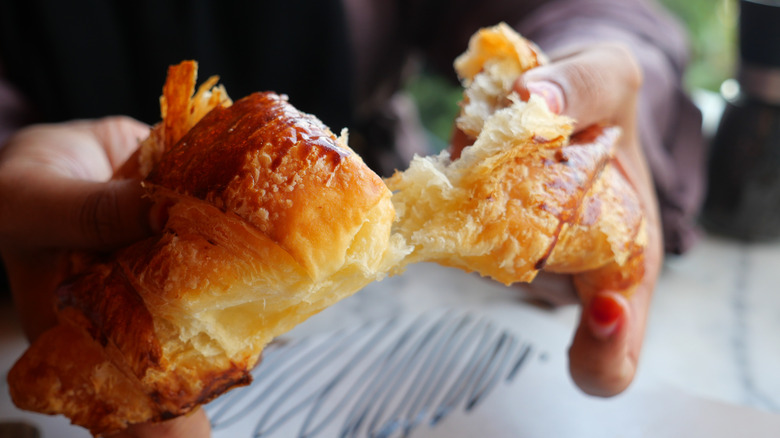
Is there anything more irresistible than glistening, golden pastry? Whether it's the crust of a delicious sweet or savory pie or the latest social media twist on a croissant (who remembers — or chowed down on — the cronigiri?) how good that baked item looks will be half the reason you reach for it. Yet no matter how fancy-schmancy the finished product, the key to its luscious appearance is as simple as they come: the humble egg.
A slick of whisked egg — known as a wash — is brushed across the top of each pie or pastry to give it that distinct golden-brown coloring. While appearance is everything in the baked goods stakes, that's not the only reason to give your pastry an egg wash. It shields the dough from the oven's heat so it doesn't scorch during cooking and can also act as a kind of glue, holding plaited breads or edges of pastry seams together and ensuring that toppings stick. An egg wash will also enhance taste, thanks to the egg's proteins reacting to the heat via the Maillard reaction, giving the pastry deeper flavor.
Applied before cooking, that thin, wet coating becomes a crisp layer of deliciousness in every bite. However, if you forget to add the egg wash, don't ever be tempted to add it after baking. Instead of bonding with your dough and forming a gorgeous, glistening crust, it will more likely make a soggy, unappealing mess. You could also end up burning the entire thing, because the added wash will need more time to cook. It's better to go without and have a blonder pastry than a baking disaster.
There are lots of ways to egg wash, but a good brush gives great results
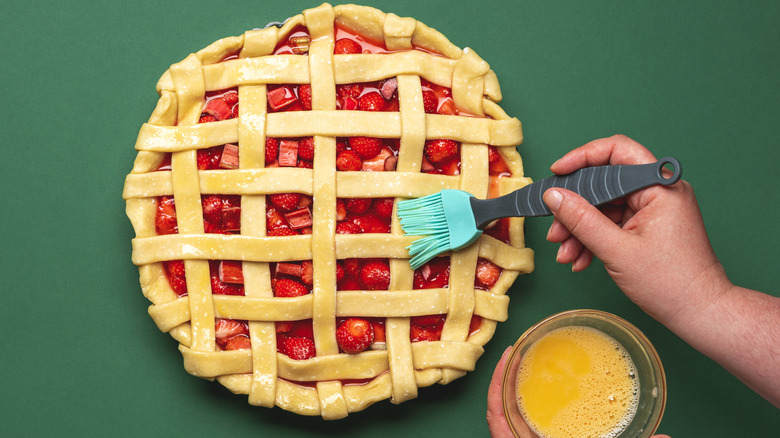
The most basic wash is a single egg that's been firmly whisked by hand (I find a fork is best) to a smooth, uniform consistency. You're not looking to make the fluffiest scrambled eggs, but any gloopy lumps do need to be eliminated. I always cut mine with a splash of half-fat milk to make sure the coating is even, but it's not the only addition or subtraction out there. Some people add a drop of water to get that glistening shine, while others separate the egg and use either just the yolk or just the white. I like the richness the yolk brings, but a white-only egg wash is a great base for sanding sugar on brioche buns.
Whisking your egg with whole milk or one of these non-dairy alternatives to cow's milk is great for dinner rolls or biscuits, and if you're baking scones, swap out the milk for a dash of heavy cream to create a truly indulgent finish. What can make a big difference to the final visual appeal of your pastries is what you use to put the egg wash on the dough. I prefer a bristle brush, but silicone ones are good too — I have even used my clean fingers in a pinch! Unless you're deliberately going for a distressed look, avoid using a brush with bristles that are too stiff or have been damaged, as they'll likely rip your dough and leave puddles of wash.