

For The Most Flavorful Tomahawk Steaks, Never Skip This Simple Step
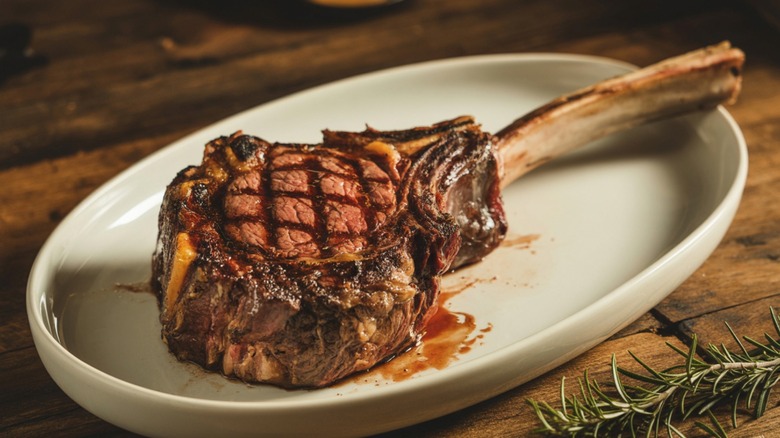
No matter how the cook identifies, it takes a certain amount of machismo to take on a tomahawk steak at home ... a culinary swagger, if you will. Suffice it to say, a tomahawk is not ending up on the list of best affordable steak cuts. It's going to set you back a pretty penny, so you definitely don't want to mess it up. Yet, Texas Roadhouse doesn't even offer tomahawk steak on its menu, so home cooking is still the most accessible route to "affordable" meat for many. Many steps go into producing a successful steak, from selecting the right cut to choosing a cooking method and vessel, but, for our money, there's one step that should be considered absolutely mandatory: basting.
Foodie's sister site Chowhound spoke to a cabal of pro chefs on the "dos" and "don'ts" of successfully cooking a tomahawk steak, and basting was brought up as a gotta-have-it component of the equation. Chef Hervé Malivert explained it thusly: "Basting helps to distribute the fat and flavor more evenly, so it's a good method to consider, though potentially challenging for the size of many tomahawk steaks."
Mailvert likes to baste his tomahawk steaks in melted butter, but this take is perhaps slightly controversial. Some chefs prefer to baste steak in its own rendered fat, while others will stick to ghee for its higher smoke point. No matter what fat you use, however, make sure you have helping hands on deck to baste that steak at the right moment — more on that in a moment! It's a bonafide secret to unlock juicier steak, along with bringing the steak up to room temp before cooking and resting your meat.
Knowing when and how to baste is critical
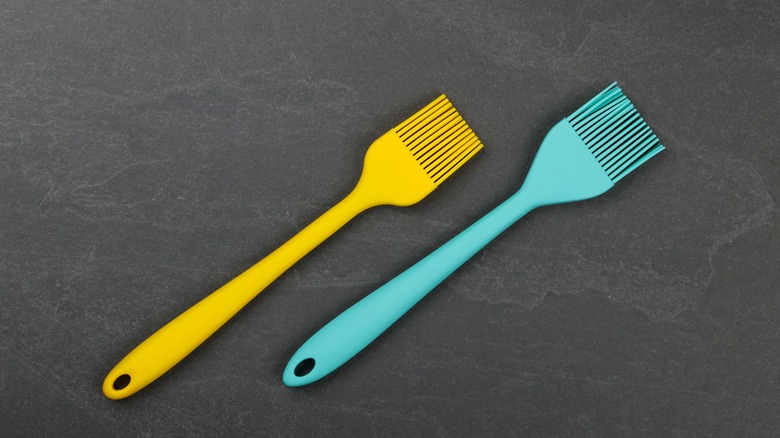
Basting a steak at any old point in the cooking process won't yield the results you want — namely, a rich, meaty tomahawk dripping with unctuous butter from its crackling crust. Many cooks make the mistake of basting too soon. In fact, basting is best left as a last-minute activity, done after searing is complete to finish the steak and let it come up to temp in its coating of hot fat. Even if you wait to baste your cut until the time is right, many DIYers will burn their butter and any accompanying aromatics by keeping the pan over the heat. Experts insist that removing the pan from the direct heat (usually by tilting it) will guarantee buttery crispness without charring.
"When you baste take it off the heat, throw the butter in and get it moving immediately. If you move it around it should immediately bring the temp down in the pan. Now add your aromatics and start basting," suggested one Redditor. "If it gets too cold you can put it back on over low heat." Of course, cooking a tomahawk specifically poses some special challenges because the cut of meat is so very large. If you are grilling, moving your steak off direct heat is a good step. Assuming you have a pan large enough to accommodate this bone-in wonder, you might need to completely remove it from the burner to baste, as tilting it might be too athletic a feat for even the buffest home cook!
Static Media owns and operates Foodie and Chowhound.