

How Pirates Used To Cook Their Food Centuries Ago
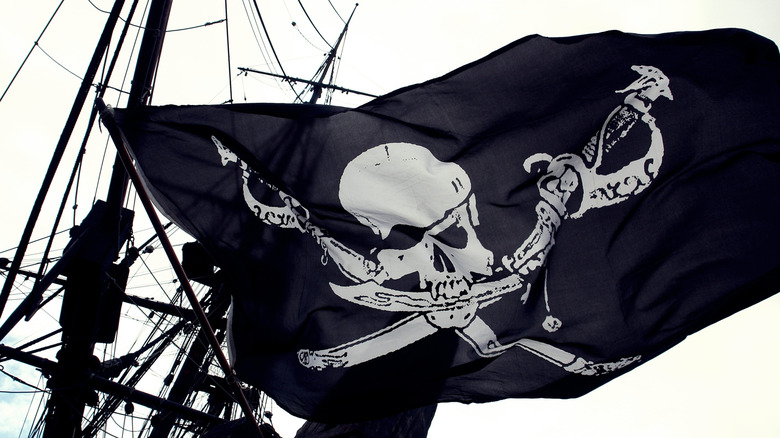
The word "buccaneer" conjures up images of swashbuckling adventurers roaming the high seas while swigging more rum than could possibly be good for them. But the pirates of myth weren't the original buccaneers — those were actually cooks. In 17th-century Hispaniola in the West Indies (today split between the Republic of Haiti and the Dominican Republic), French explorers saw locals use a stick frame over an open fire, a setup known as a mukem, to cure or smoke meat. The newcomers embraced the method wholeheartedly, giving it the name "boucan," while those who practiced it were dubbed "boucaniers."
By 1694, the name had made it into the prestigious French Academy's dictionary, but more importantly, the diet of pirates was changed forever. At sea, they survived on lots of rum, as well as a boring diet of dried meat and biscuits (more on those later). Once back on dry land, they would have made a beeline for French boucaniers' huts, where they would smoke pork most often, though turtle meat — typically cooked in the shell — was also a regular menu item. English settlers eventually began to use the term "buccaneer" and applied it not only to those skilled French cooks, but also to anyone who took to the seas in search of plunder. Thus, we get the long-standing connection between barbecue and pirates.
Dried beef hard enough to carve and wormy biscuits ... being a foodie was tough for pirates
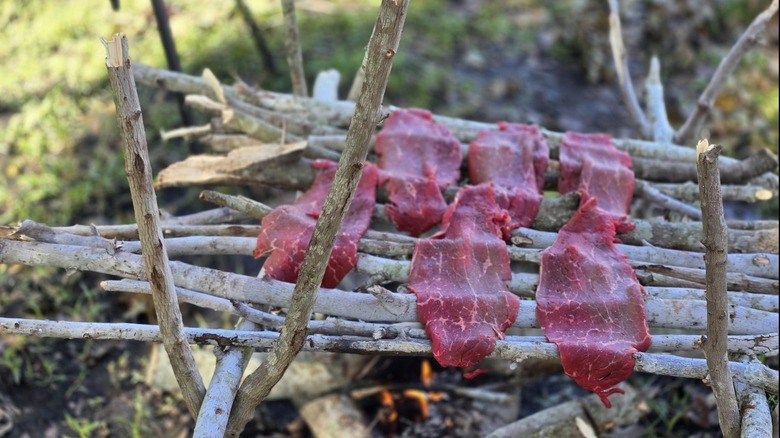
Life for a pirate was far from an easy one, and the food really didn't help. The dried meat was often salted beef and tough enough to be carved into buttons and buckles by sailors (those who hadn't lost their teeth to scurvy, mind you). As for the biscuits? Forget the buttery ones made at home with the 1-2-3 method. Pirates and other sailors were served hardtack, a dough made from flour and water that would rarely spoil but was regularly infested with small worms called weevils (they could at least say it was extra protein). There are even tales of starving sailors forced to fry and eat the leather of satchels and shoes. No wonder the prospect of the boucaniers' delicious cured pork or turtle was so appealing to their tastebuds!
Buccaneer and explorer William Dampier fared a lot better during his 17th and 18th-century travels, sampling everything from flamingo, whose meat he quite liked, to Galapagos tortoises, which he compared favorably to chicken. Maybe that's why turtle soup was once considered a delicacy? Fast forward to the 21st century, and we think those French boucaniers would be thrilled to see how many American home cooks have become masters at smoking meat. They may even recognize this flavorful, genius rib smoking technique. If they asked us for tips and tricks, we'd have to reply, "Arr, Jim lad!"