

What's The Average Lifespan Of Your Aluminum Countertops?
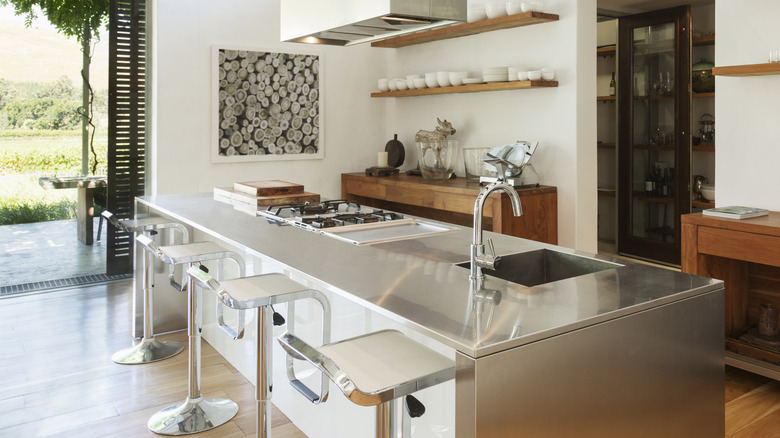
You can expect to get around 10 years' loyal service from your refrigerator, though if you take good care of it, your beloved Yeti cooler will outlast it by some considerable time. But in between taking ingredients out of the fridge and putting finished dishes in the cooler, what about the place where we do the actual cooking? Kitchen countertops have come a long way since the days of scrubbed wooden surfaces, and while aluminum is not one of the most common, it can be a solid investment, with an average lifespan lasting several decades, according to designer Kerrie Kelly (via Tasting Table).
Of course how long aluminum countertops last does come with a few caveats. These metal surfaces can be softer than stone, for example, and prone to dents and scratches. You can easily minimize the latter by always using a chopping board, and if you avoid putting very hot pans or containers directly on the countertop, the metal is less likely to warp. Whether your aluminum countertops are on an inside or outside kitchen, how often they are used has an impact on their staying power. Metal work surfaces that are rarely used but which are exposed to the elements could have the same average lifespan as a busy kitchen whose countertops are constantly in use. It's all about the traffic, baby!
Aluminum countertops have all the benefits of stainless steel, but watch out for corrosion
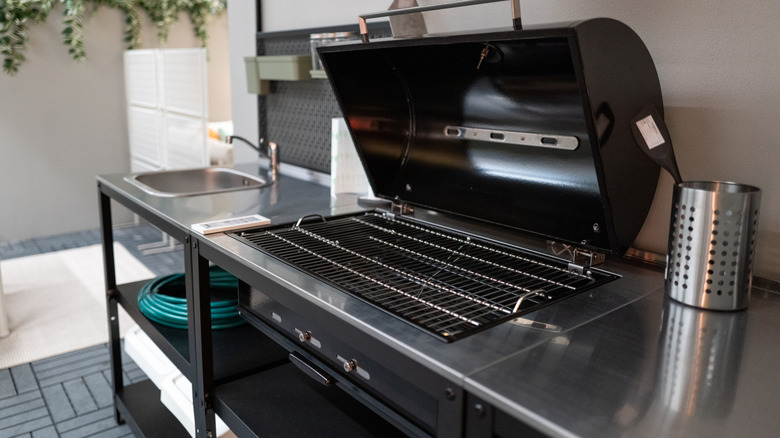
Longevity isn't the only reason to opt for aluminum worktops. They're a timeless, stylish addition to both indoor and outdoor kitchens, and can cost a lot less than natural materials, such as stone or wood, and have many of the benefits of stainless steel, without the price tag. You can even do your bit for the environment and go for recycled aluminum. Professional kitchens use stainless steel because it's hard-wearing, easy to clean, and lasts forever. Aluminum countertops are the same, and there's a cherry on top of this particular cake: It's lighter too. That makes them easy to move around but also cut and shape into whatever design you want, no matter how unusual your kitchen.
Like stainless steel, aluminum doesn't rust but it can corrode. It's protected by a thin, invisible layer of oxide, created when the metal is exposed to oxygen. When that layer is compromised — for example, if it comes into regular contact with other metals (hello sharp knives) — that protection can be diminished. If you haven't already got corrosion-resistant aluminum work surfaces, you can apply a wax-based protective coating or lacquer sealant to keep the metal looking its best, no matter where it's used.
The way you clean your aluminum countertops can extend their average lifespan too. Gentle cleaners, applied with a soft cloth work best, but if you prefer natural products, lemons, tomatoes, and cream of tartar can be effective. Again with the comparison, but just as olive oil is great for cleaning stainless steel, it's good for aluminum too, though the same can't be said for steel wool or abrasive products. Baking soda or alkali-based cleaners can tarnish the metal, so give them a wide berth too. Stick to these rules and your aluminum countertops will be dropping jaws for decades to come.
Static Media owns and operates Foodie and Tasting Table.