

The Best Way To Cook Vegetables For Maximum Nutritional Value
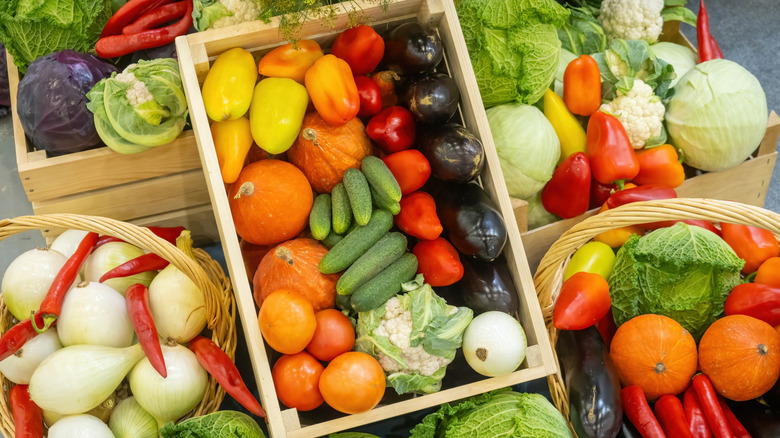
Every generation of children faces a plate of limp, soggy vegetables and, with every miserable forkful, is told to eat them up because they will "make you big and strong." Those who grew up into dedicated foodies know there is truth in that nutritional argument, but there are also many ways to make eating veggies a far more pleasant experience. We're up to our elbows in different cooking methods, thanks to evolving kitchen kit, but to help our veggies hang on to their vitamins and minerals, there's one method that rules supreme: you need to steam 'em.
For instance, broccoli is a vitamin C powerhouse, packing in more than an orange, and steaming helps to retain as much of that nutrient as possible. Scientists found that boiling broccoli eliminated 54.6% of that essential vitamin, way more than the 14.3% lost during steaming, per Nutrition & Food Science. It's a similar story for spinach, which saw 50.5% of its vitamin C leach into the cooking water, compared to just over 11% when it was steamed. Another study suggested steaming veggies such as cabbage, broccoli, and cauliflower, also allowed them to keep more immune system-boosting phytochemicals and glucosinolates, which have antioxidant and anti-inflammatory benefits (via Journal of the Science of Food and Agriculture). Of course, not every vegetable that we plant in our garden or buy in the supermarkets can be steamed, so where does that leave home cooks looking for more vitamins and minerals in their dishes?
Microwaving will also help retain lots of nutrients
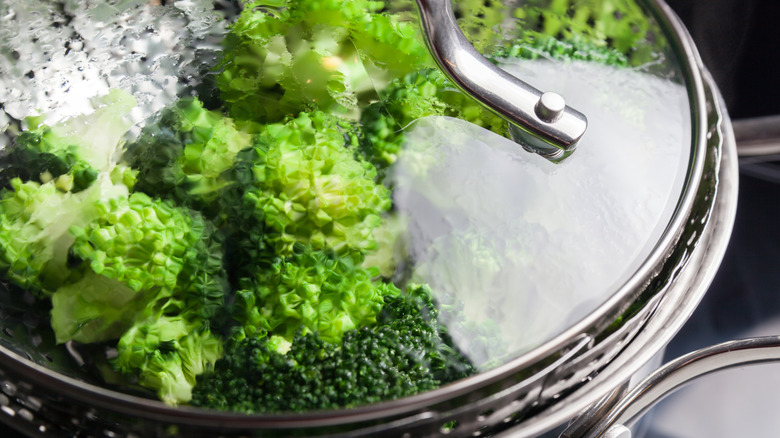
There's no right or wrong way to cook vegetables (you should always do you), but it's worth favoring certain methods to maximize nutritional value. Steaming is great for many veggies, but microwaving them comes a close second, with samples hanging on to more than 90% of their vitamin K, according to a study published in Food Science and Biotechnology. Steaming and microwaving enable this because neither method subjects foods to prolonged high heat. However, beyond the taste of the vegetable itself, it's also fair to say both methods can result in bland flavor, unless you decide to amp it up cowboy style.
That's where roasted and pan-fried vegetables come in. While both high heat methods can negatively affect vitamins that don't do well in heat, roasting and sautéeing can also enhance other goodies. Take the humble tomato, for instance. Cooking them allows us to absorb more of the antioxidant lycopene in the fruit (yes, technically they're a fruit), while heating spinach cuts oxalate levels so we can take in more of the leafy green's iron and calcium.
Some people prefer eating raw veggies to ensure they absorb all their nutrients. While that works for bell peppers, lettuce, and many other common salad ingredients, the same can't be said for potatoes. If you want the best the tasty tuber has to offer (all that fiber under the skin, for instance), you have to cook them. Precisely "how" is all down to you and part of the fun.