

Here's Where Costco's Lettuce Comes From
We may receive a commission on purchases made from links.
The sourcing of supermarket lettuce became a topic of frenzied public conversation in summer 2026 when an outbreak of the cyclosporiasis parasite was reported across the United States. Despite recalls linked to iceberg lettuce produced by the immense Taylor Farms label, the source of the widespread infections was initially unclear. One thing's for sure: said parasite, which can lead to miserable intestinal symptoms in otherwise healthy people (with possible worse outcomes for immunocompromised individuals), got the countless members of the Costco Nation questioning where their lettuce came from. The simple answer is that there isn't a simple answer. Unlike the brand behind the store's tequila, Costco has multiple sources for its leafy greens — including local producers that vary by state and region.
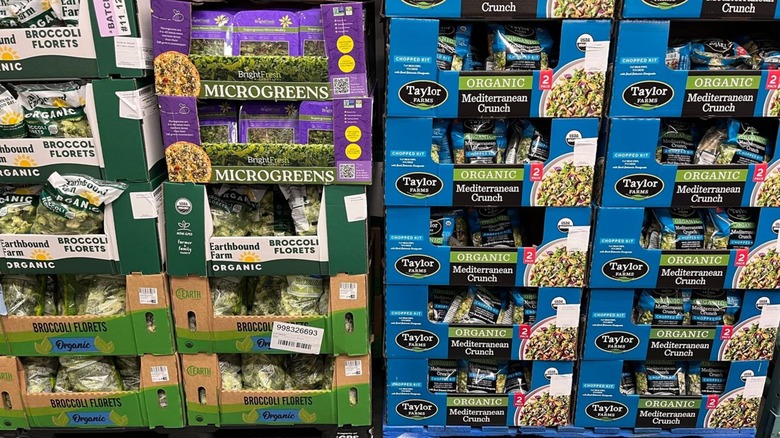
It's true that Taylor Farms has many products on shelves at Costco, including multiple bagged salad kits and prepared veggie trays with the brand name prominently featured on the packaging. Beyond Taylor Farms, however, the sourcing of some Costco lettuce products gets a bit murkier. Costco's Responsible Agriculture page enumerates the brand's commitments to greener farming and partnerships with growers who maintain similar values but doesn't spell out specific producers for all veggies, as that might just be an impossible task.
The page for Organic Spring Mix mentions that it comes from Earthbound Farm in California, you'll notice, but landing pages for generic romaine hearts and butter lettuce merely state that the lettuce comes from the USA, Canada, or Mexico. Note that the URL for the romaine hearts mentions Dole, but that information isn't replicated on the page itself. This list isn't exhaustive by any means, and, as mentioned, sources may vary by Costco warehouse location.
Smart consumers will balance anxiety with common sense
Costco is no stranger to a recall. In 2023, a Kirkland Signature canned cold brew coffee recall affected almost 3 million units — and that's just one example. It isn't just a matter of public safety that drives recalls (although that's arguably the biggest one); it's also a concern of consumer trust with retailers and manufacturers. If it seems like there have been more high-profile recalls in recent years than you remember from the past, you aren't imagining things. This is nothing to fear, however ... quite the contrary. Increasing food recalls actually mean that public agencies like the FDA are doing a better job catching potential threats before they can widely harm people.
What's a consumer to do when it comes to keeping yourself and your family safe from threats ranging from cyclosporiasis to bolts in your coffee? Well, monitoring the FDA's Recalls, Market Withdrawals, & Safety Alerts page is a good start. Keeping tabs on the sourcing of your family's food, especially produce, is another big step. Familiarize yourself with the best ways to clean produce and the safest storage practices. If you can't get a good trace on where a product comes from, like certain Costco lettuce, you are well within your rights to seek out an alternative during times of greater vigilance. Being an informed, proactive consumer will benefit you in many areas of life, especially when it comes to the foods you put in your body.