

The Best Way To Cook Chicken For Maximum Nutritional Value
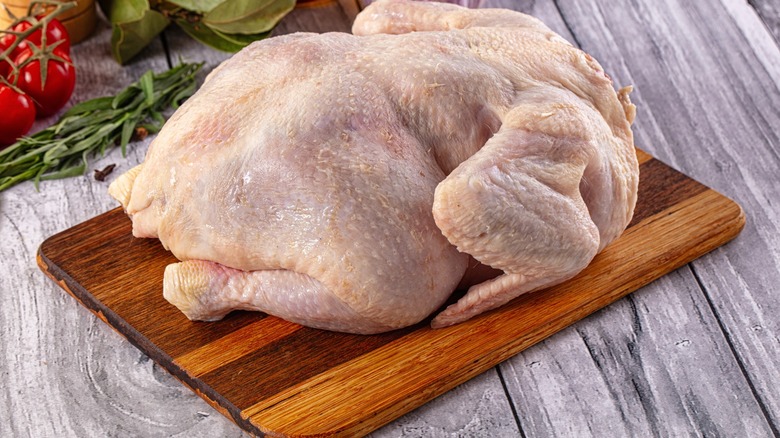
We're of the opinion that chicken just may be the most versatile protein out there. To name just a few techniques, you can bake it, deep-fry it, grill it, or pan-fry it — the last of which is the key to our own citrusy Cuban mojo chicken recipe. Chicken isn't just a have-it-your-way workhorse, however; it's also packed with substantial health benefits, including all nine essential amino acids, calcium, phosphorus, and lots of protein ... all while being relatively low in calories and fat. Mindful eaters aren't just concerned with consuming nutritious foods but preparing them in the ways that bring out the most in their ingredients. When it comes to chicken, poaching just might be the best way to cook chicken while also preserving most of its nutrition.
Like other proteins, chicken suffers the degradation of its amino acids at high heat, which rules out several popular methods right off the bat. Furthermore, the charring produced by grilling, smoking, or roasting can potentially cause buildup of harmful chemicals called HCAs and PAHs. You probably already know that frying isn't the best idea nutritionally, due to saturated fats in the grease.
On the other hand, low-temp methods that don't rely on additional fat are reliably great when it comes to promoting chicken's max nutrition. Sous vide, steaming, and pressure cooking all have their place in cooking chicken in a healthier way. Yet, poaching wins out because it does all that while being incredibly efficient at infusing big flavor into your food.
How to poach chicken for nutrition and great flavor
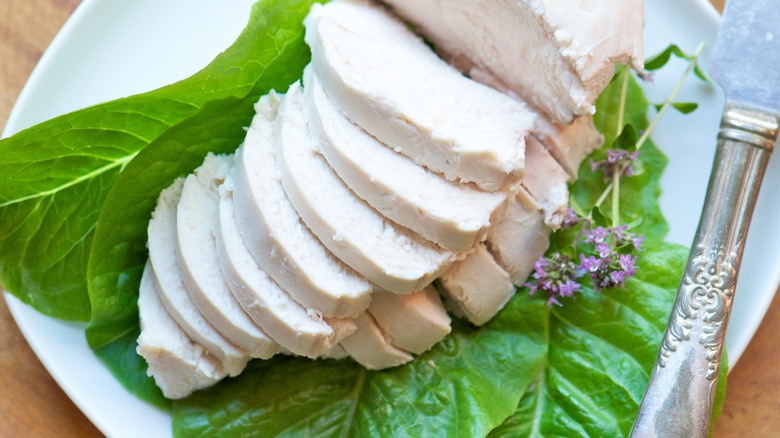
There's a difference between white and dark chicken meat, but extra-lean boneless, skinless chicken breast filets are what normally gets poached. By the way, never wash your chicken before cooking! You don't need a ton of liquid to successfully poach chicken; just enough to cover the meat by one inch. There's some evidence that starting your chicken in cold water may reduce protein shrinkage (which could promote toughness) and may help lock in moisture. For flavor, dress up your agua with low-fat options like lemon juice, aromatics, and fresh herbs, or swap in low-sodium chicken broth or stock. Bay leaves, garlic, ginger, and onion will all go a long way towards infusing flavor into the liquid without adding unwanted calories or compounds. Best of all, with the right seasoning, you won't need any butter or sauce to flavor your chicken.
After poaching, your tender chicken is a blank canvas for tons of savory meals. Use it to top your favorite nutrient-packed salad or slice it up over a bowl of chickpea pasta. Stuff it into sandwiches or wraps, mix it into pie filling, or stir it into soups. Rotisserie chicken is a similar product that enjoys a "do it all" rep in the kitchen, but, as the chef behind your own poached chicken, you can more readily control the sodium and other add-ins like sugar and preservatives that are found in many supermarket birds. Not only is poaching arguably the healthiest way to cook chicken in terms of preserving nutrients, but you can argue that it's among the most enjoyable and versatile as well.