

The Whiskey Cowboys Drank In The Old West
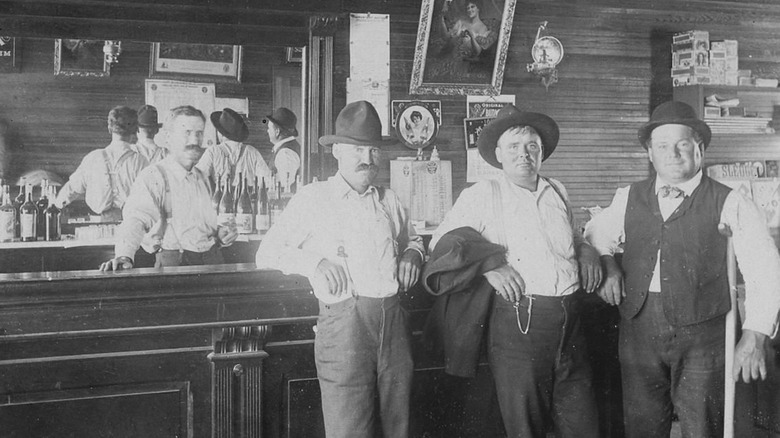
We know a lot about life in the Old West, and while cowboys weren't the biggest foodies, they didn't have it all bad, as this popular (and tasty) bean meal shows. It's a different story when it comes to their whiskey. Generally speaking, these hardy men slugged a drink that was every bit as rough and ready as they were, with names that gave more than a hint about what it did, with coffin varnish, corpse reviver, and mountain howitzer being just a few.
Although immigrants from Ireland and Scotland brought their distilling skills to the United States, corn was so plentiful, practically anyone could rustle up a batch of rotgut — and lots of them did. Although cowboys would flock to saloons where word of mouth suggested the whiskey was good (some in the bigger cities imported theirs), in the more remote areas, it could be pretty much raw alcohol, colored with everything from molasses to prune juice and tobacco to make it look right.
Then there was the taste ... Some sellers added sugar to sweeten their whiskey, while others dropped in sulfuric acid, turpentine, or even a touch of strychnine to give it more of a kick! Many unscrupulous sellers cut their drinks with river water to make them go further, while presumably sitting back and counting their profits. Anyone buying a top-shelf bottle of whiskey today would barely recognize — never mind dare to slug — the 19th-century version. As an industry, distilling whiskey in North America really was the Wild West.
We have Kentucky bourbon makers to thank for better distilling standards
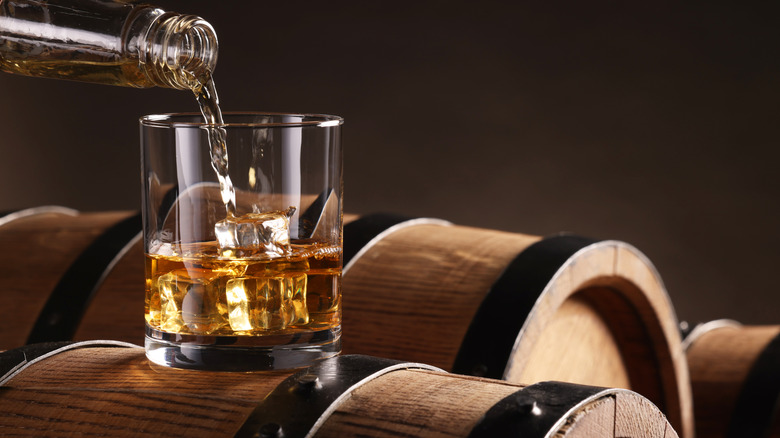
Today, Kentucky is home to the lion's share of bourbon production in the United States, and in the 19th century, local distiller Colonel E.H. Taylor Jr. was among those campaigning for the whiskey industry to be cleaned up. He got his wish with the 1897 Bottled-in-Bond Act, which set out strict requirements for whiskey that exist to this day. The throat-stripping moonshine that cowboys knew (and loved) had taken its first step toward becoming something really special. And actually drinkable.
More regulation followed in the 20th century, as the 1906 Pure Food and Drug Act was enacted under President Theodore Roosevelt. Three years later, President William Howard Taft put his name to the Taft Decision, which laid down precise definitions of what constituted a whiskey, including what it could be made from (in the Old West, whiskey mostly came from grain or corn, or in the case of bourbon, molasses), and how it was aged. Cowboys may have had the occasional swig of the good stuff if they found themselves in a place like Tombstone or Virginia City, but we think the rough, tough men of the trail would heartily approve of the whiskies many of us enjoy today.