

Tavern Vs Bar: Here's The Main Difference You Should Know
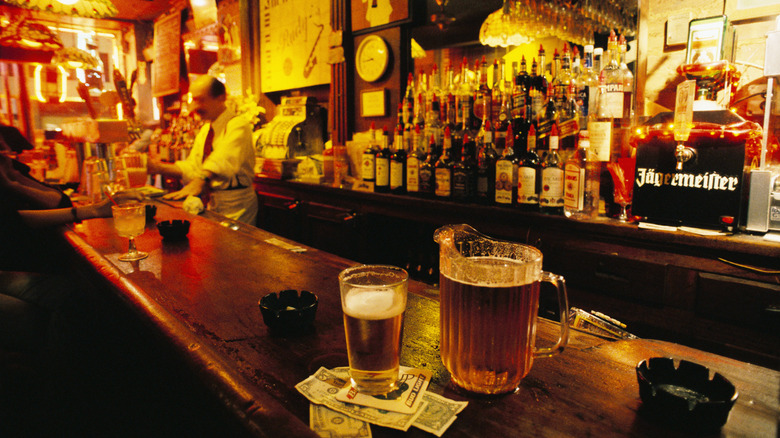
When it comes to places to socialize and enjoy grown-up beverages, there may have never been more options to choose from. Not only do many restaurants often have bar areas, but several types of businesses are anchored upon the occasions of people meeting up for a drink. These could be pubs, saloons, speakeasies, taphouses, bars, or taverns. But are these watering holes all that different from each other? Sort of. Really, you can probably get a cold beer at any one of these establishments, and other specifics often overlap. But technically, there are some differences. For instance, when comparing bars to taverns, the main difference is that a bar serves drinks but rarely meals, while taverns serve both.
Most definitions of "bar" hold that its main purpose is to serve alcoholic beverages, with food being a very secondary option. Technically, a bougie, high-end joint that serves expensive craft cocktails could be considered a bar, but in its most basic form, a casual "bar" is often associated with neon signs, music, barstools, and maybe a pool table or dart board. You expect beer taps and strong booze (like whiskey and pickle juice) served up on a long counter. If there's food, it's often simple snacks like popcorn or pretzels. Some bars might have very casual food choices that cook up quickly (like onion rings or fried mozzarella sticks), while many offer no food at all. Bars are equal parts meeting places for friends and places to sit alone over a strong drink. If it's a more substantial meal you want with your brew, head to the tavern down the street.
Visit a tavern if you're hungry

Early American taverns offered food and drink, but many of them also had rooms for weary travelers to rent and rest for the night. More than that, these were social hubs of towns and communities, where people discussed business, played cards, and traded goods at tables and chairs (as opposed to bar stools) with a roaring fire nearby to keep them warm. You may or may not find a fireplace at taverns today, but you will likely find much more food there than at a classic bar.
Taverns usually have a menu of meal choices but still maintain a full bar. Some are practically high-end restaurants, such as The White Horse Tavern in Rhode Island, which was established in 1673 and claims to be the nation's oldest tavern (not to mention one of the world's oldest restaurants). There is a full wine, cocktail, and beer list here, and dinner choices include beef Wellington and duck confit. Try finding these at the bar around the corner.
This landmark is also an excellent example of how taverns have shifted in purpose throughout time. Whereas once The White Horse Tavern was largely a meeting place and inn, it's now a spendy eatery. And, while the structure is, indeed, old, its age pales in comparison to the oldest pub in the world that once served Vikings. At the same time, there are plenty of taverns with a much more casual vibe, although it's rare — if not impossible in some places — to find one that rents rooms for the night.