

Italian Vs British Sausages: What's The Actual Difference?
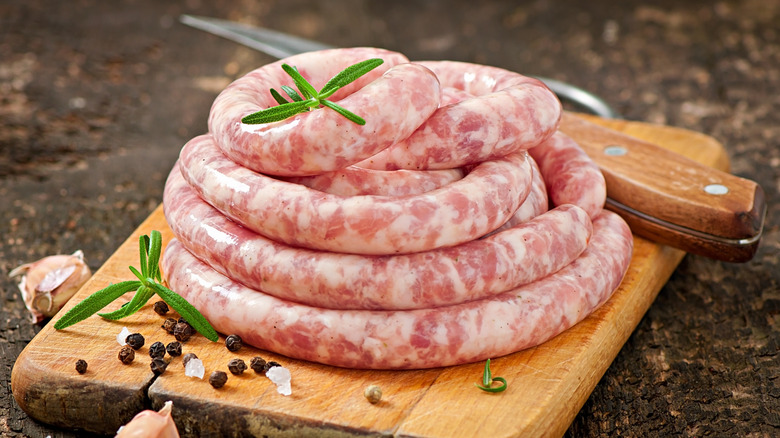
Crikey, but I love a good sausage and, thanks to the goodies served up in Britain and Italy, I am spoiled for choice when it comes to taste and texture. Sausages made in the two countries share a few characteristics. They both have long histories, and some are proud local culinary symbols, but when it comes to sheer variety, the Italians wipe the floor with the Brits. You can eat your way from one end of the country to the other, with each region connected like the links of a sausage, each with its own distinct story and flavor — and we're not even counting Italian meats for a charcuterie board! That's not to say British types are to be dismissed, but the real difference lies in Italy's sausage diversity.
Northern Italy's horseshoe-shaped luganega is among the oldest kinds in the region, and its pork meat is flavored with anise and wild fennel, among other seasonings. Sicily's sasizza pasqualora of Partinico is a unique blend of pork and lamb, the outcome of a pact between shepherds and farmers, while the mainly beef cervellata sausage from Sardinia is served with a classic condiment that gives regular potato salad a flavor boost.
Liver enters the chat in sausages from Lazio and Abruzzo, alongside ingredients including pork cheek and orange peel. In Umbria, sausages are made using fattier pork, so they're richer on the palate, while Pignone's are flavored with warm spices, including cinnamon and cloves. In Padua, local sausages are made with iron-tasting horse meat, in contrast to the much milder, delicate-flavored Mantua sausage.
What Britain lacks in variety of sausages, it makes up for in flavor
Aside from the range, another difference between Italian and British sausages is that the latter can have more breadcrumbs than beef or pork. Olly Kohn, co-owner of The Jolly Hog, spoke to Foodie on the best sausage cooking tips and advised us to look for "a meat content where you know that this is actual pieces of meat." But among artisanal British sausagemakers, that's not a problem. There are many lesser-known local specialities, the Manchester sausage that's enhanced with ginger and nutmeg, while the Oxford sausage is an aromatic blend of pork, veal, and lemon.
However, the most popular regional sausage in Britain may be the Cumberland, a robust, meat-forward spiral that's seasoned with sage. It's closely followed by the Lincolnshire sausage, a peppery, porky fave that always goes down well at breakfast. Lancashire sausages have more roughly cut meat and dialed-down seasoning, while vegetarians have been chowing down on the cheesy, herby Glamorgan sausage since the 1860s.
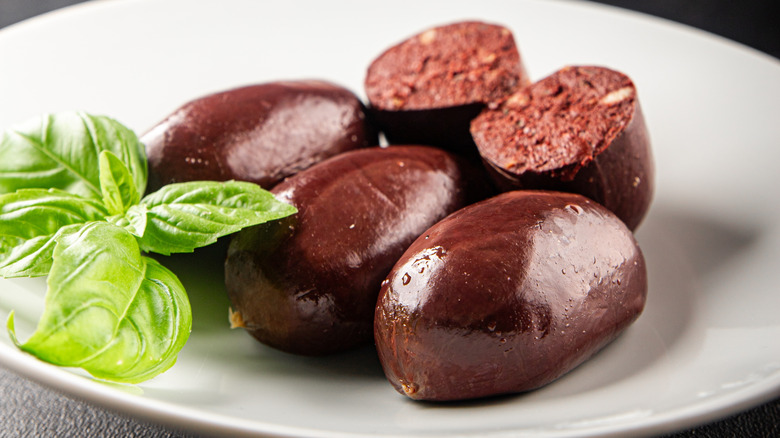
No look at British sausages would be complete without mentioning black and white pudding. King Henry VIII loved black pudding, which, despite the name, is not a dessert. It's made from a mix of pig's or cow's blood, suet, oats, and seasonings (meanwhile, white pudding is essentially black pudding sans the blood). Whether these qualify as actual sausages is a debate for another day, but unlike many of the Italian or British sausages featured here, these two entries are like Marmite. In other words, you either love them or loathe them.