

What The Overlooked Certification On McDonald's Filet-O-Fish Box Means
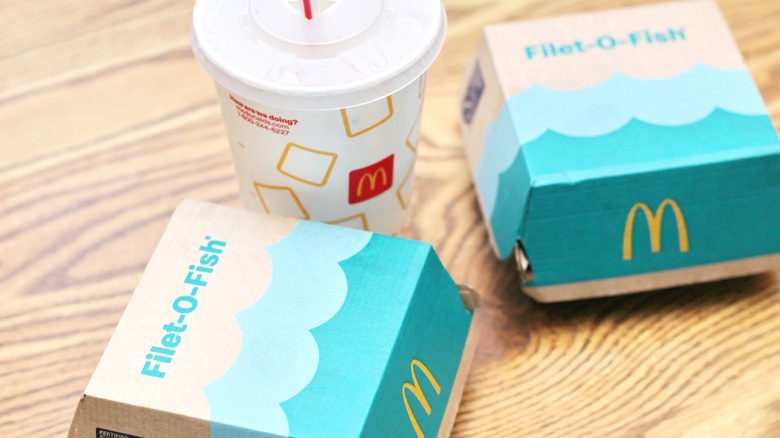
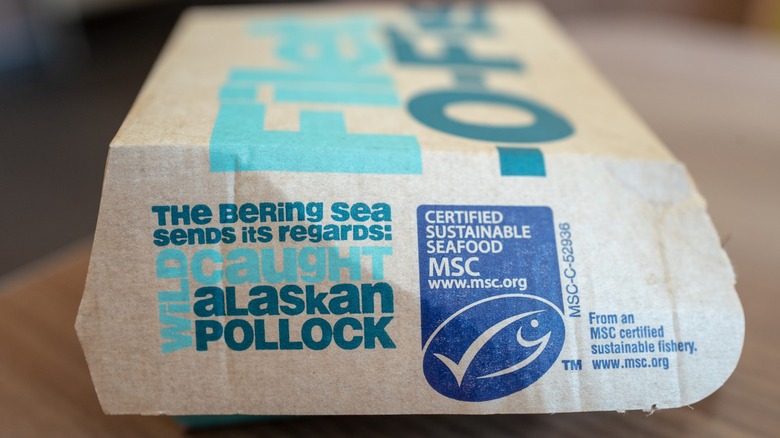
We feel at this point like we're bona fide Filet-O-Fish experts, knowing not only what type of seafood is in a McDonald's sandwich (it's Alaskan pollock), but also all the best Filet-O-Fish hacks. Just when we were sure that we'd cracked the code on this delicious, underrated handheld, however, we learned something new. This time, it's the fact that the "MSC certification" logo on the side of the Filet-O-Fish box actually means something very significant. It has everything to do with McDonald's commitment to sustainability when it comes to sourcing seafood, making it a mark you should care about.
Basically, McDonald's took on the task of becoming the first (and, to date, only) company with a global reach to serve only MSC-certified seafood in all its restaurants. The Marine Stewardship Council espouses a chain of custody in which sustainable fish is guaranteed at every level, with efforts made to ensure that no other types of seafood make it into the batch.
This can be a challenging prospect, and it's definitely a feather in McDonald's cap that it can boast the MSC certification to guarantee that the fish in your sandwich was harvested with the consideration of future fish stocks in mind. Overfishing and harmful fishing practices like bycatch can deplete ecosystems and imperil not just the oceans around us, but the very existence of edible seafood in the future. Sustainability initiatives like those practiced by MSC partners have tomorrow's oceans and fish sandwiches in mind.
Sustainable fishing is part of a greater commitment to the world
On paper, sustainable fishing sounds like an elementary concept. You just leave enough fish in the ocean to create new fish, right? Is it all about just the number of fish? Not so fast. Sustainability, when it comes to seafood, is an all-encompassing term that relates to just about every aspect of fishing, boating, and marine life. Yes, it's true that sustainability focuses on ensuring that the breeding stock of fish remains adequate, with size limits and weight limits for harvesting seafood. But it also has to do with other concepts, like making sure lost gear doesn't end up floating or sinking in the ocean and becoming trash. It also encompasses protecting the habitats in which fish live so that ecosystems are preserved in the long run to support the overall health of the ocean.
In some ways, sustainable fishing works towards ending world hunger. It may seem counterintuitive, since sustainable fishing often involves pulling in less food in one go, but the truth is that fishing the "right" way means that there will be more fish in the ocean over the course of decades. By contrast, overfishing can wipe out local fish stocks in just a few years. With coastal populations burgeoning and all those people needing food, it's more important than ever to properly manage fish stocks so that they carry over not just for today's hungry consumers, but the children of those consumers, and their children after. With a massive company like McDonald's using the MSC certification, perhaps your grandchildren will still be able to research how to order the freshest Filet-O-Fish at McDonald's.