

Give Potatoes A Delicious Upgrade With An Unlikely Italian Ingredient
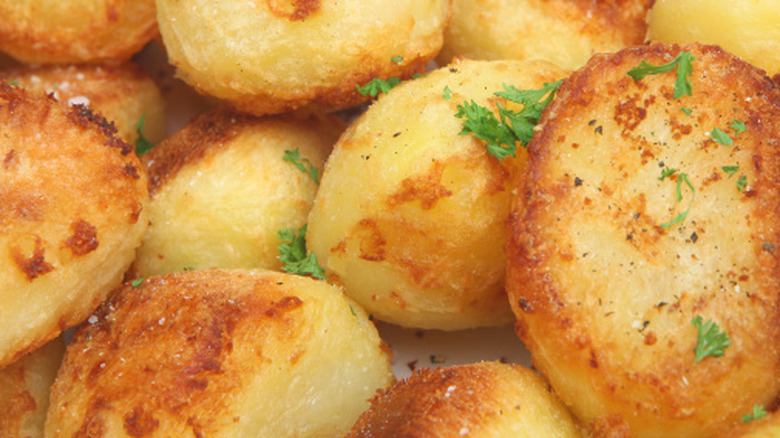
Actual arguments have broken out at our dinner table over who gets the last roast potato, and the crispier they are, the more eager everyone is to fork them down. Getting that incredible balance of soft, fluffy interior with incredible crunch is easy peasy, especially if you toss them in one unlikely Italian ingredient: semolina. Made of durum wheat, the key ingredient in most kinds of pasta, it guarantees the crispiest of coatings for your potatoes. All you have to do is roll them in it before they go in the oven or air fryer.
There are many ways to prep a potato, depending on what you're doing with it. Many people who use semolina to crisp up their taters par-boil them first — that means simmering them in hot water for around 10 minutes to kick-start the cooking process. But it's not 100% necessary, especially if you've got a little extra time on your hands and can wait for them to roast or air fry from raw.
If you do pre-cook your potatoes, make sure to handle them gently when you tip them into the bowl containing a few tablespoons of semolina and seasoning. The potatoes need to be evenly covered, but roughhouse them too much, and they'll break up into bits. If you're using canned potatoes (great to have on hand for boosting scrambled eggs, too), it's even easier. Simply give 'em a rinse, cut them up if you wish, and toss them in the semolina before cooking.
Check the label to make sure you're getting the real semolina deal
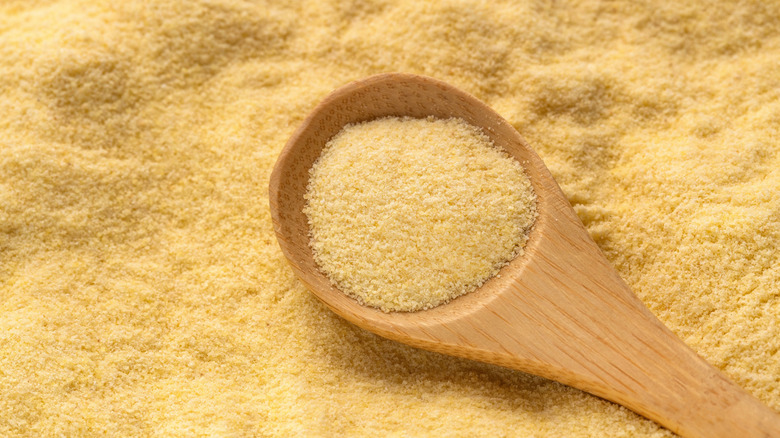
Durum wheat is one of the world's oldest crops and, as well as being used in Italy for generations to make fabulous pasta, it's also great for bread and is used in many desserts. Durum wheat contains a lot of gluten, which makes it very robust — perfect for foods that need a little structural integrity, like pasta. I loathed semolina when it was served as a miserable, gloopy pudding at school, but I've since found it's brilliant for stopping home-made pizzas from sticking, as well as that delicious potato coating.
Of course, there's science behind it all. The semolina's starch absorbs the potato's moisture, turning it into steam when it comes into contact with heat and creating a delicious crust. It works so well because its grains are bigger than flour, so they can soak up more water, giving more of a crunchy exterior. Some people insist that simply rattling par-boiled potatoes around in an empty pan, scoring the outsides with a fork, or salting them will do the same job. But for us, semolina gives great results every time.
Most semolina sold in grocery stores is the coarse kind, similar to couscous (also made of durum). But, if you browse your local specialty stores or shop around online, you can find fine versions, too, as well as flavored and whole wheat semolina. However, watch out for anything labeled corn or rice. These are more like regular flours than semolina, and while you can use them and a little seasoning to coat your potatoes, you're unlikely to get quite the same satisfying crunch.