

Add A Scoop Of This For Creamy Mac And Cheese With Sneaky Nutrition
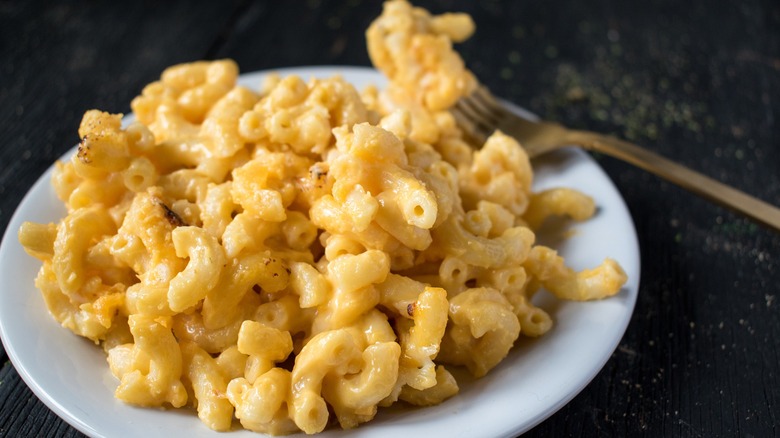
We're forever retooling our mac and cheese cooking experience with an eye towards optimization, and that even extends to boxed mac, which we love to upgrade with a canned ingredient. Where our culinary creativity really goes off the wall, however, is when it comes to the homemade stuff. Almost every scratch mac and cheese recipe will produce something edible — especially for mac lovers like us who have never seen a pan we didn't want to inhale — but, when you want more nutrition, we implore you to think about cottage cheese.
This curdy ingredient has a seriously ambivalent reputation, with some folks swearing it's the Next Big Thing in terms of superfoods (dig that combo of protein, vitamins, and probiotic cultures!), while others can't stand it. In mac and cheese, however, the cottage cheese all but disappears into the sauce, leaving behind silky-smooth creaminess and a nice bolster of healthy perks. We've seen this on social media, and we're dying to try it out.
Unlike using cottage cheese as a (surprising) change for ricotta in lasagna, mac and cheese is a dish where you definitely don't want the lumps and bumps of curds in your dish. The secret is to use your blender and thoroughly process the cottage cheese first to make it a homogenous mixture. At this point, you can stir it into your cheese sauce for both nutrition and tang. It probably won't be "cheesy" enough to stand as the cheese component of your noodle dish, so imagine it more as an improvement on your cream base. The fat in the cottage cheese will help emulsify your shredded cheese, and might work with some cream or milk as a foundation for your sauce; no roux required.
There are a few tips and tricks to adding cottage cheese in mac
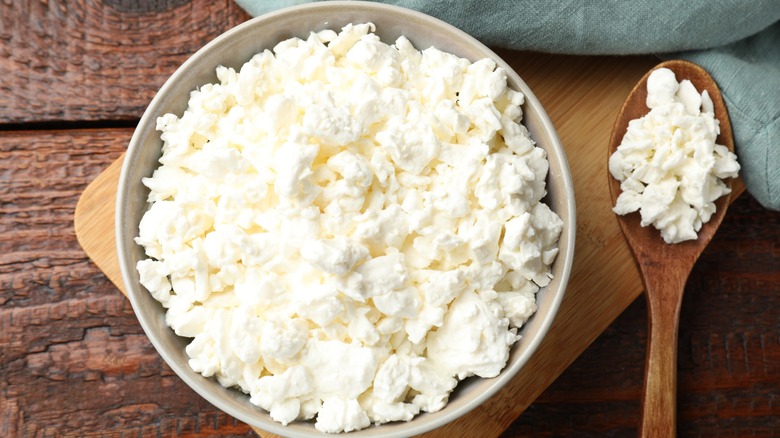
Cottage cheese stands up well to other dairy additions in mac and cheese, producing a mac and cheese that's creamy, smooth, and delightful. A few things to watch for will produce superior mac. For one thing, you need to make sure that you never heat your cream sauce above medium temperature on your range, because too high heat could cause your cottage cheese to separate. Your sauce might become grainy and "break." If nutrition is your goal — and that's a great side effect of choosing cottage cheese — make sure you opt for a full-fat variety. Full-fat dairy, in general, is packed in protein and vitamins that might make you overlook the higher fat and calorie content.
Keep in mind, also, that adding cottage cheese does not negate other tweaks to mac and cheese that you might enjoy! Do you have a favorite cheese combo? The cottage cheese cream sauce base is amenable to your choices. We occasionally like cooking our mac in cheese in cast iron for added nutrition ... and you can still go for that.
The beauty of adding cottage cheese to this dish is that it's subtle and noninvasive. It adds a textural smoothness that we delight in, and the protein punch is superb, but the flavor won't compete with your other elements.