

Your Steak Will Be 10x Crustier When You Follow This 10-Second Technique
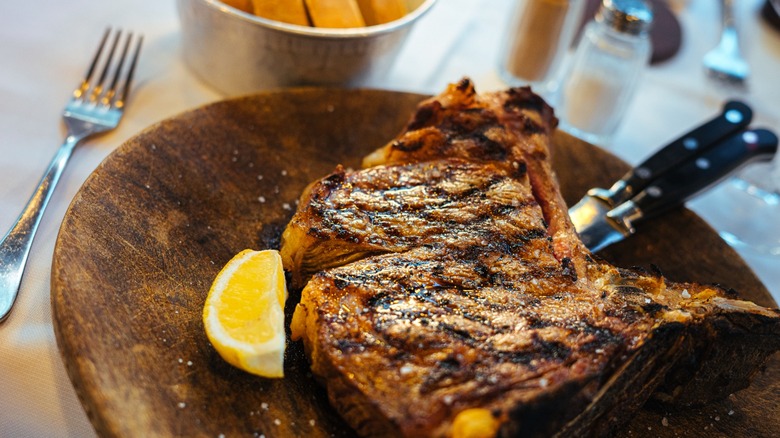
The reasons that steaks taste better at restaurants often have to do with the finer grade of beef that eateries are able to source, but there are definitely ways that you can achieve superb steaks at home ... even with lesser-quality meat. After all, who doesn't love a steak that's meltingly toothsome on the inside but blessed with a scrumptious charred crust? Foodie spoke with chef Dewey LoSasso of Puff 'n Stuff Catering, an upscale Floridian catering company. LoSasso had some simply brilliant suggestions for us when it came to scoring steak, which may be the magic bullet for making less-expensive steaks not only more tender, but crustier on the exterior as well ... and it only takes a few moments to do.
"Scoring can improve the texture and tenderness of a steak, particularly when working with less expensive, more fibrous cuts," LoSasso explained. "Shallow cuts interrupt some of the surface muscle fibers while increasing the exposed surface area, allowing marinades and seasonings to coat more of the meat." We all have been tempted by cheaper cuts of steak, knowing that some of them are real bargains, but perhaps we didn't know how to treat them. Scoring might be just the answer.
LoSasso actually favors budget steaks when it comes to scoring, because nicer steaks like filets don't respond well to being shallow sliced. On the other hand, there are some cheaper options that really shine: "Flank, skirt, and hanger steaks are excellent candidates for scoring because of their pronounced muscle fibers. Picanha can also benefit, particularly when scoring its fat cap."
How to score and marinade your steaks
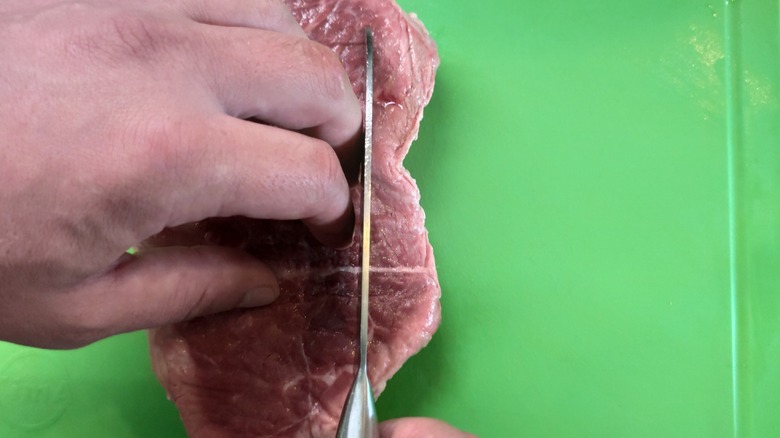
Dewey LoSasso explains that a few quick, shallow, deliberate cuts are most effective when scoring steak. "I generally recommend making shallow cuts approximately ⅛ inch deep, spaced about 1 to 1½ inches apart, depending on the size and thickness of the steak," he advises. This isn't an aesthetic decision, either. "The goal is to create additional surface area without compromising the steak's structure." Many home chefs go with a crosshatched diamond pattern, guaranteeing that at least one direction goes against the grain. You need not overthink the scoring process — this is meant to be a time-efficient hack, after all.
A quality marinade can work hand-in-hand with your scoring to produce the most flavorful, gorgeous steaks — it's a bonafide chef-approved secret for juicier steak. "Acidic ingredients like lemon juice, lime juice, and vinegar can complement the flavor and affect the meat's surface texture, but marinating for too long can result in an overly soft exterior," says LoSasso. Marination times vary, but somewhere between 2 to 4 hours for thinner steaks, and 6 hours to overnight for thicker, tougher cuts, is recommended.
Keep in mind that an effective steak marinade features a few must-haves: a fat, a salt source, an acid, and some aromatics to promote flavor. Knowing the basics can help you riff on your scored steak marinade for maximum effect.