

A Cup Of These Underrated Beans Has More Potassium Than A Banana
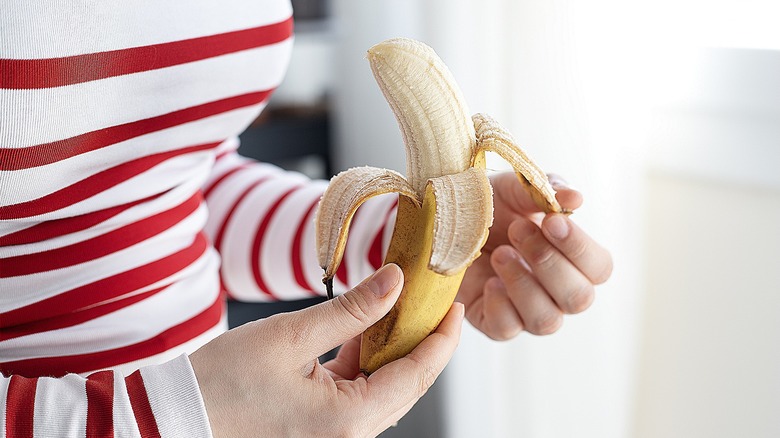
When most people think about potassium, their brain automatically goes to bananas. When you know how much potassium is in a banana, you get the point — one medium banana packs an impressive 451 milligrams of the stuff. Many folks will automatically reach for a banana when they are having a lot of cramping issues, for example. But bananas aren't the final word in potassium, and there are a few better options, including one that you would probably never suspect: mung beans.
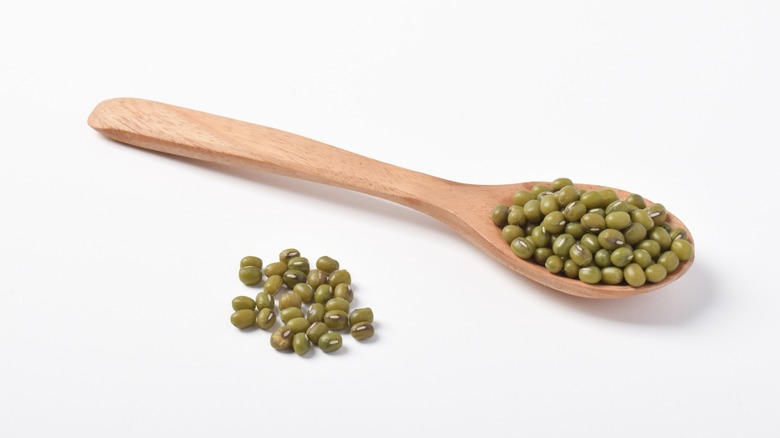
Mung beans are a dense source of needed dietary potassium. One cup of cooked, unsalted mung beans contains an impressive 537 milligrams of potassium. That's 119% of the potassium found in a banana! Mung beans also distinguish themselves by being loaded in other forms of nutritious goodness, which makes them a good food to eat overall. If you're concerned about getting more potassium, look at this humble bean and consider the (many) possibilities.
What might surprise you is how delicious and versatile mung beans can be in particular. Mix them into a soup or chowder for a meaty, nutritious bite; swirl them into a green curry; mix the sprouts into a salad; or use mung beans alongside quinoa as the base of your next protein bowl. They will add heft to stir fries, bean salads, and pilafs. You can also mash mung beans up into a tasty paste that will have you rethinking chickpeas as your only option for hummus! Basically, mung beans can do just about anything that edamame or lentils can do.
Why is potassium important?
If you've read up on any info regarding the nutrient potassium and what foods containing it can do for your body, you're probably intrigued. Potassium, an essential mineral, has a critical part to play in keeping multiple bodily systems running the right way, including muscles, nerves, heart, and kidneys. If you've ever been stricken by a painful muscle cramp hours after working out, low potassium just might be the culprit.
It's no surprise that beans as a general food category provide a potassium punch, as we already knew that a cup of white beans packs almost twice the potassium of a banana. More than just being potassium powerhouses, mung beans are also rich in protein. That same cupful of beans that you are eating for potassium is loaded in over 14 grams of protein, which is impressive for a plant. As a plus, you get a bunch of fiber (15+ grams), and lots of folate, manganese, and magnesium. Take note that sprouted versus unsprouted mung beans have similar, but slightly distinct nutritional profiles, so do your research!