

Grow Better Tomatoes Than Ever With This Old-School Gardening Hack (No Tools Required)

There's an app for seemingly everything in the 21st century, but some gardening tasks are best solved with simple wisdom. Knowing the right fertilizer for a bumper lettuce crop or boosting your zucchini harvest with companion plants are two such tricks of the grower's trade, for instance. To that, we're going to add another: Shake your tomato plants to pollinate them. It might sound weird, especially if your plants are outside and already moved around by the wind, but trust us, this is one old-school hack that can produce real results in tomatoes, as well as cucumbers, corn, and squashes.
First, a little tomato anatomy (or tomatomy!). Tomato flowers contain both male parts (in the back) and the female parts (closer to the opening). To produce fruit, pollen has to move from the back to the front. The majority of tomato plants have self-pollinating, or "perfect," flowers, while the few species that don't get a helping hand (or leg) from bees and other pollinating insects. When plants with perfect flowers are buffeted by even a slight breeze or an animal moving past them, the motion allows a dusting of pollen to settle on the female part of the tomato.
But if Mother Nature's got things covered, why do we need to intervene? Well, it's all to do with how much fruit a tomato plant generates. Ideally, tomatoes set their fruit at temperatures between 60 and 70 degrees Fahrenheit. Move even a little outside that range, and the chances of fertilization, and therefore any tomatoes (never mind decent ones) the plant produces, can drop considerably. If there's no wind at the optimal time, you've gotta make like Taylor Swift with your tomato plant's pollen and shake it off.
This quick and easy solution has split the gardening community
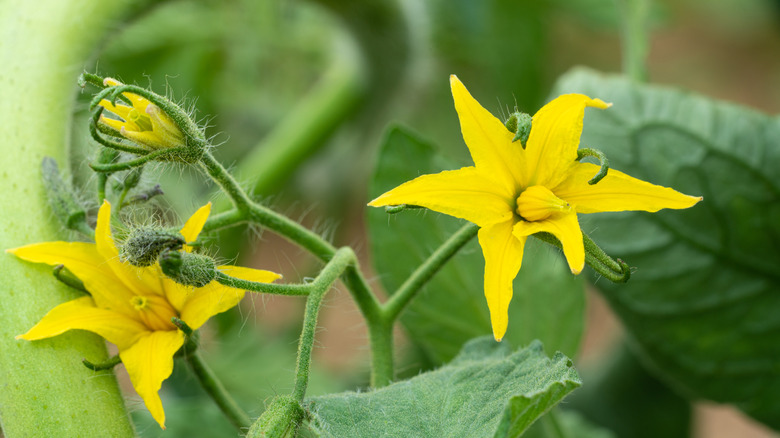
Hydroponic and greenhouse growers are big fans of this old-school hack because they often lack the necessary wind in their particular environments, though the methods they use can vary. It's important to focus on flowers that are still open, as closed ones have likely already been fertilized and don't need any extra attention. As for technique, some gardeners tap the flowers lightly with their fingers to dislodge the pollen inside, others nudge the cages holding up the plants, and some even use a rolled-up newspaper to (gently) smack them! Paint brushes and electric toothbrushes are also popular, and, while we know we said no hardware was required, you can invest in a plant pollination tool if you want to be really fancy here.
Despite its apparent simplicity, the practice of shaking or flicking tomato flowers has caused a bit of a rift in the online gardening community. Many admit it isn't always necessary, but insist it does improve yield and is especially helpful in areas where bees and pollinators are in decline, while other gardeners picked up the tip from their elders and have run with it. Those who aren't keen on the method claim that other factors, such as too much heat or humidity, can more seriously affect tomatoes' setting fruit, rendering any additional agitation unnecessary. We think it's worth giving it a whirl to see what happens. If you end up with a glut, turn 'em into this ultra-creamy tomato soup with basil oil.