

How I Learned To Cook With A Boomer Kitchen Must-Have
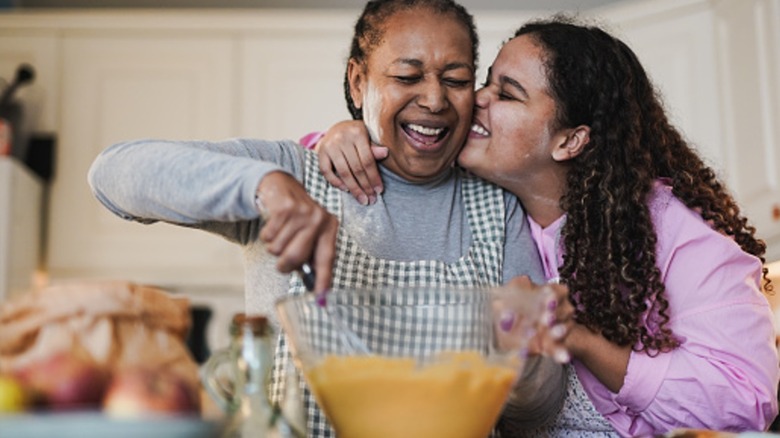
My coolest family heirloom isn't my grandmother's (gorgeous) diamond engagement ring, but her recipe box. It's currently in the care of my mother, and it was a foundational treasure in my journey towards loving food and cooking. Inside it are recipes for lost Boomer meals like Salisbury steak (which has Civil War origins) and some of the New England favorites that characterize my family's history, like baked beans and Portuguese kale soup. The box itself is gorgeous — a handmade hinged blonde wood receptacle that my father gave my grandmother for Christmas sometime in the '90s. It replaced its predecessor, a battered plastic box that she picked up at a long-gone department store.
My grandmother was a scion of the Silent Generation, but recipe boxes came later, a definite Boomer relic. They hit their heyday in the middle and latter half of the 20th century, and were inextricably associated with homemaker culture. Once upon a time, women passed family recipes down to their daughters orally and by example. The recipe box changed that, providing a tangible way to preserve family traditions.
Today, in a day and age where most recipes are stored on the cloud or Pinterest, recipe boxes are not just a charming analog way to reconnect to our tradwife roots (a very trendy idea), but, I'd argue, a better way to cook. My mother received her own recipe box when she got married, but she never added to it. The real treasure is Grandma's box, filled with hand-written cards and yellowed, food-stained pages from ancient magazines bearing recipes for foods that she loved, and which the family continues to enjoy today.
An argument in favor of written recipes
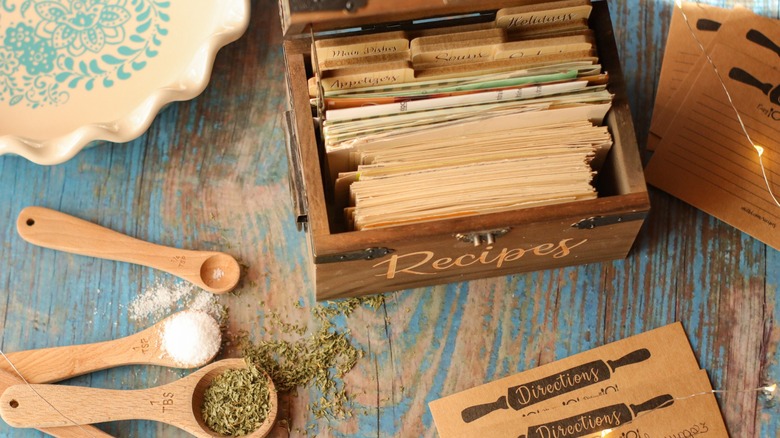
At the risk of sounding like an antediluvian relic, I myself prefer written recipes. I don't keep a recipe box, but a binder. I've had to continually upgrade its size in the 20+ years I've had it, and it's now an enormous 4-inch thing stuffed with pages separated with plastic dividers I bought at Target that keep categories (beverages, appetizers, desserts, et cetera) distinct from one another. I have recipes I've found on the internet, like my easy four-ingredient potato soup, and even ones I've garnered from my time as a food writer, like Foodie's own caramel pecan French toast recipe (you've gotta try it).
Written (or printed) recipes have a lot to recommend them. There's no scrolling with fingers soiled by meat juices or flour, no ads, and no oversized images to interrupt the flow of progressing from one step to another. Plus, with a physical recipe, you have the advantage of notes in the margin. Maybe one day, my own kids will learn to double the Dijon mustard in my go-to mac and cheese recipe or to bake my favorite chocolate chip cookies for two minutes longer than the New York Times suggests because they recognize my handwriting on the side.
Hopefully, down the road, they get to experience the magic of my Grandma's authentic pierogies that she made with a dozen of her fellow parishioners in the basement of St. Casimir's Church for summer festivals when I was a kid, or the apple pie that we make every Thanksgiving. There's magic in that wooden box, and it warms my heart to think of how many similar boxes (or binders) are in the kitchens of other home cooks all around the world, even today.