

This Tomato Planting Technique Can Actually Be A Mistake For Home Gardeners
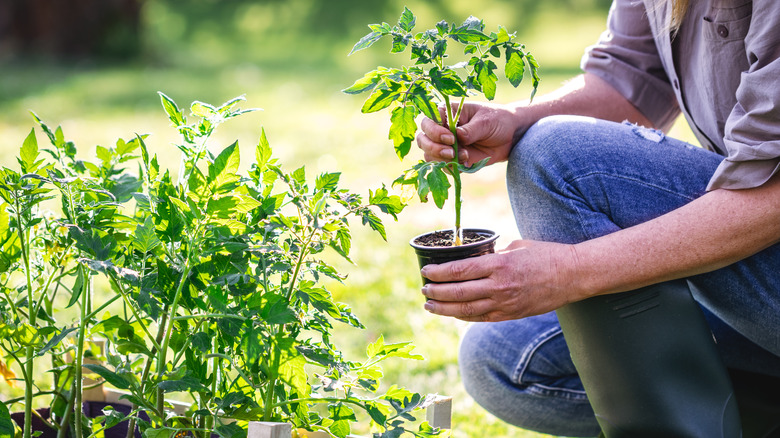
Talk to anyone who has grown their own tomatoes for any length of time, and they will always have advice on where you should or shouldn't plant your crops. Hop on the internet, and that trickle of information becomes a flood. Tomatoes need lots of sunlight, well-fed soil that doesn't get too wet, and plenty of space to grow, according to everyone from armchair experts to professionals. This retro hack might give you bigger tomatoes, but those who insist you cannot grow them in the same place year after year are overegging the pudding, especially for those with smaller plots.
Rotating crops makes perfect sense from the point of view of soil management. According to the USDA, it ensures any nutrients in the ground aren't depleted, while also bolstering pest control, limiting the spread of disease, ensuring biodiversity, and shielding soil from erosion. It's not a new practice, either. Farmers across the world have rotated their crops for centuries. While that's great for commercial growers, home gardeners – the majority of whom are raising tomatoes on a much smaller scale — have started to push back against advice to rotate their crops.
It comes down to the vast gulf between monocropping (growing a single product) and gardeners whose plots hold a variety of veggies and fruits. Monocropping will use up the same soil nutrients and attract the same pests, so rotation is imperative to keep the ground in tip-top condition. Home gardeners can do it too, but it may not be as necessary.
Heeding wartime advice has shifted to common-sense soil care
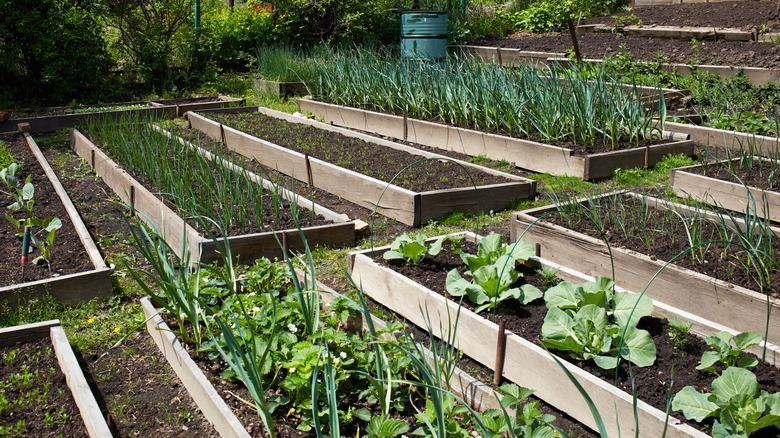
Home gardeners in the United Kingdom were urged by the government to rotate their crops during World War II. Across the Atlantic in the same era, the wider availability of herbicides in the U.S. led to continuous commercial cropping. As Americans busily created Victory Gardens, the principles of crop rotation also began to appear in magazines and USDA brochures. At the time, patriotic domestic gardeners were happy to follow along, and it became a done thing. But times have changed, and common sense now suggests otherwise.
Tomatoes rotated around even a relatively large home plot will still be found by the same pests and be susceptible to the same diseases because the scale is that much smaller. Rotating crops, then, can become a bit futile. Instead, it makes more sense to focus on soil care and maintenance, especially outside the tomato growing season. Test your soil to find out what nutrients it's lacking and what it doesn't need before you add any mulch, compost, or this fertilizer mix, which tomato plants adore.
Use clever companion planting to attract insects that will prey on the pests threatening your tomatoes, and pay attention to what's happening to the plants themselves. Getting rid of dead or diseased leaves or plants as you prune your tomatoes will minimize the risk of any spread, but make sure they go in the trash, rather than the compost. You can still plant your tomatoes in a different part of the garden if you want, but if you ensure the soil is in good condition and the plants are healthy, don't worry about it so much. You should still reap a solid tomato harvest year after year.