

Does This Retro Gardening Tip For Growing Bigger Tomato Plants Really Work?
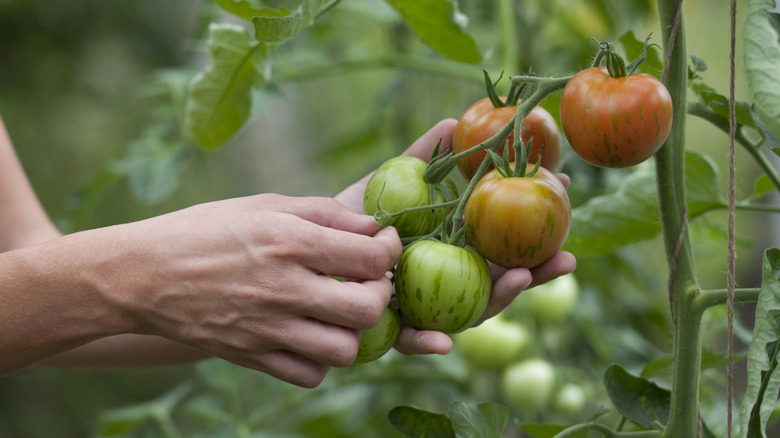
Gardening and cooking share a joyous, common connection: they both pass knowledge from one generation to the next. Some are elegant in their simplicity – this retro tip for peeling hard boiled eggs springs to mind — but not all advice stands up to scrutiny. Dosing tomato plants with Epsom salts is a prime example. Many gardeners who were told about it by previous generations insist it's a good fertilizer and offers protection against blossom end rot. In some cases that is true, but it depends on a specific set of circumstances.
Epsom salt, also known as magnesium sulfate, is a natural mineral made up of magnesium, sulfur, and oxygen. It's a known remedy for easing muscular aches and pains, but among gardeners, Epsom salt was an old-school gardening hack to boost their tomato plants' growth. Magnesium is necessary for plants to produce chlorophyll, which makes for healthy, green leaves, while the sulfur plays a key role in the development of a tomato's flavor.
During the 1940s in the United States, Epsom salt was deployed on larger farms to help combat disease, and after being impressed by the greening effect, smaller growers adopted it too. While it clearly worked for some, what wasn't widely known was that Epsom salt's success was patchy, offering only a temporary, verdant boost. We know now that adding magnesium to soil which doesn't need it can cause more harm than good.
Too much of a good thing can be very bad for your tomato plants
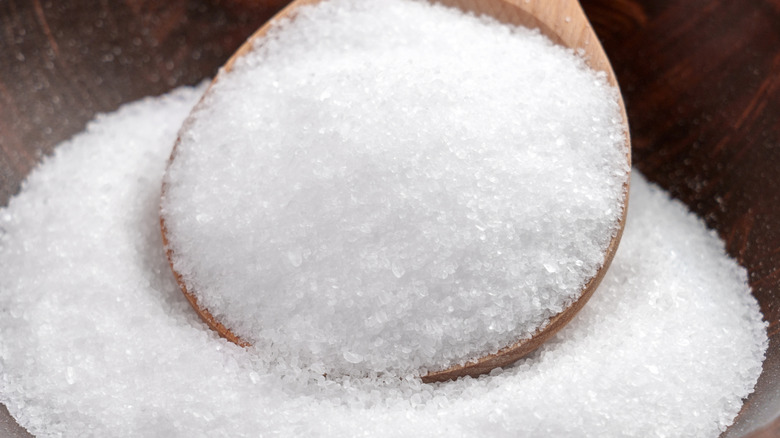
If a tomato plant lacks chlorophyll, its leaves turn yellow, red or brown, while both growth and fruit production can slow down. But before you reach for the Epsom salt, it's vital to test your soil, as magnesium levels can be lower in sandy or grittier plots. If the results suggest your soil is lacking magnesium, add a tablespoon of Epsom salts to a gallon of water and either spray it on the leaves or water the base of the tomato plant every month during growing season.
If, however, the soil test shows there's enough magnesium in your soil to begin with, forget the Epsom salt. Overdosing the ground with magnesium can hamper your plants' growth as well as cause the overproduction of chlorophyll, turning them too green. The potential problems don't end there. Adding Epsom salts to soil that doesn't need it could prevent the plants from absorbing essential nutrients such as potassium and calcium, ironically leaving your tomatoes at a greater risk of developing blossom end rot, which can be caused by calcium deficiency. Plus, as with all fertilizers, an excess in the soil could lead to groundwater contamination.
There are other ways to fix any issues with your tomatoes. Yellowing leaves could be a sign you need to water them less — you'll get a better flavor for it, and if you're not getting much fruit from your vines, give this, another old-school method, a whirl. If you have some Epsom salt lurking around the shed, don't throw it away. Pour a generous amount into a hot bath to ease your aching muscles after a hard day's work in the garden!