

The Steak-Cooking Hack Boomers Used To Swear By (But It Doesn't Always Work)
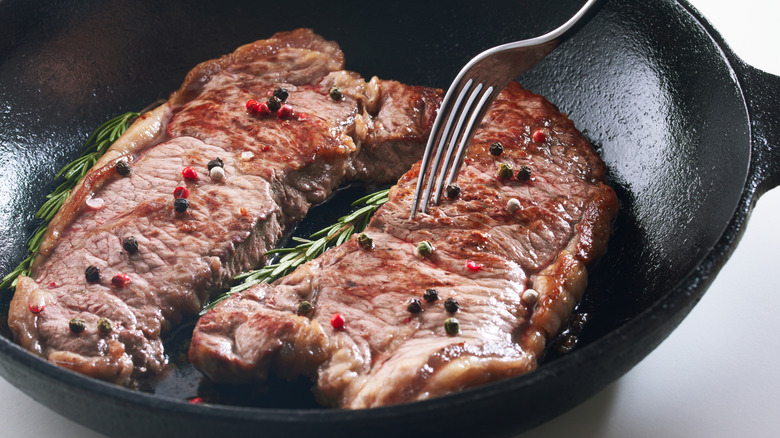
The boomer generation saw a lot of changes in their kitchens. A slew of labor-saving devices cut or eliminated the work needed to make a dish, while brands like Betty Crocker's supply of simple recipes, like these two-ingredient noodles, also made life easier. But there was still plenty of room for old-school knowledge, which included knowing when steak was properly cooked. Science can tell you why your steaks aren't browning on the grill, but ask a boomer about the doneness of steak, and they may tell you the answers are at the tips of their fingers.
The theory relies on the fleshy bump at the base of your thumb and how it feels when you flex it to a particular finger. Touch your thumb to your index finger and feel that spot — that's how a rare steak ought to feel. If you prefer your steak medium rare, your middle finger will be your guide, while well done is indicated by your ring finger. Setting aside the assumption we're all dexterous enough to do this while wrangling a hot skillet, is there any weight to this beloved boomer system?
As a rule of, ahem, thumb, it has some merit, albeit in the hands of seasoned professionals. Cooks and chefs who prepare the same cuts of meat every day know from experience when each steak is perfectly cooked, and importantly, safe for customers to eat. A home cook is less likely to buy the same size and weight of meat every time, so the level of doneness will change. Also, prodding their palm and the meat tells them about the exterior of the steak rather than what's going on inside. Only a meat thermometer can really do that.
Is a celebrity chef to blame for boomers sidestepping meat thermometers?
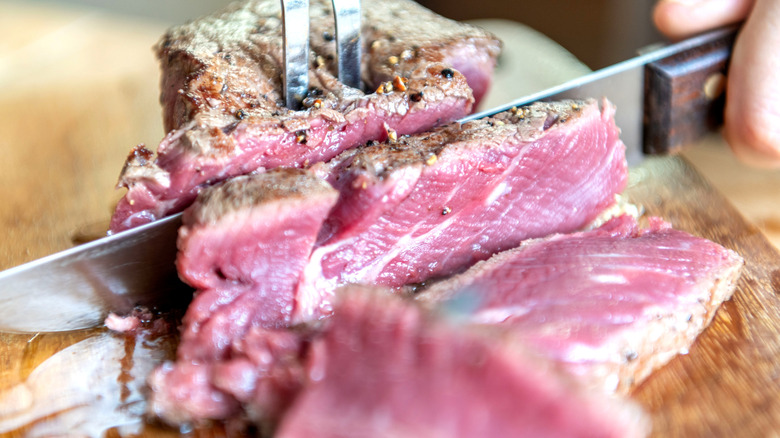
Despite meat thermometers being widely available, not every boomer home cook has embraced this clever bit of kit. One Reddit commenter who bought one for their parents said, "Dad is still too stubborn to use it for his steaks so he still overcooks them." Yet it's the best way to guarantee your steak is cooked correctly. The USDA recommends steaks reach an internal temperature of 145 degrees Fahrenheit, but rare and medium rare should be between 125 and 135 degrees, according to Healthline, well outside that official safe zone. Anyone who loves a unique, rare blue steak should definitely leave that one to the experts!
Some social media users suggest it's Gordon Ramsay's fault that boomers cling to their steak-cooking hack — and they might have a point. In a 2012 video with over 36 million views, he demonstrates how to cook the perfect steak, using his palm and two points on his wrist as a gauge for how rare, medium, and well-done meat should feel. According to the chef, you can poke your face too. On a 2016 episode of "The F Word," he showed young chefs that prodding the cheek, chin, and middle of the forehead will do the same job.
Do Ramsay's hands-on steak-checking techniques work? Many boomers insist they do, though they are also potentially oblivious to the (mostly) overcooked meat their families have been chewing quietly for years. Boomers got it right with this kitchen must-have, but if you want perfectly cooked steak that's safe to eat and is packed with flavor, use a meat thermometer.