

What's The Typical Lifespan Of A Good Set Of Steak Knives?
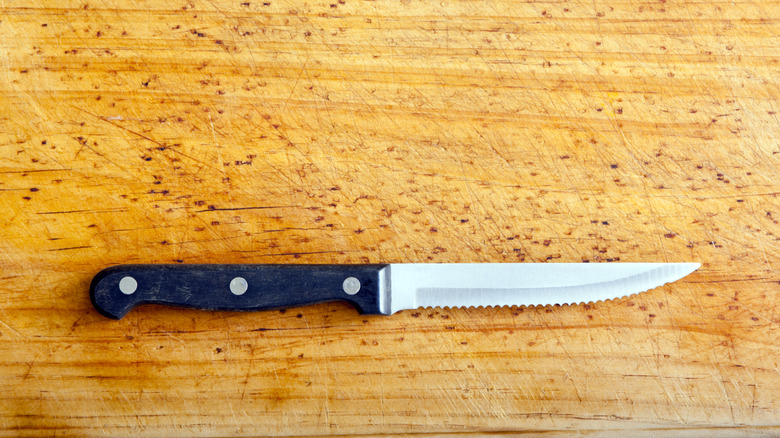
Home cooks rely on all kinds of tools to rustle up a meal, from the low-cost and mundane to the high-tech and expensive, and each requires a certain level of TLC to ensure you get your money's worth. Sure, there are ways you can maximize the lifespan of your refrigerator, but what about those steak knives that come out for every holiday dinner? Experts say a quality set should last around 20 to 30 years, and while paying a few dollars more for steak knives has its benefits, it's not the only factor to consider when it comes to longevity.
How long your steak knives last will depend on several factors, including whether you buy straight or serrated blades, how they are used, how often they are sharpened, and how you keep them clean. Let's start with what you do with them. If you reserve your steak knives to cut beef or foods a regular butter knife would struggle with, then their edges will stay sharp for a long time. However, what you cut your meat on matters too, particularly for straight-edged blades.
Using a steak knife on a hard surface like stoneware will eventually dull even a good brand. A whetstone is the best way to maintain that cutting edge, though home cooks who know their way around a honing rod for straight-edge knives or a sharpening rod or other dedicated tool for serrated blades can go some way towards repairing any damage. If you're not confident about getting it right, ask a professional to regularly sharpen your steak knives and prolong their useful life.
Stick to the core tenets of steak knife care and they will last for years
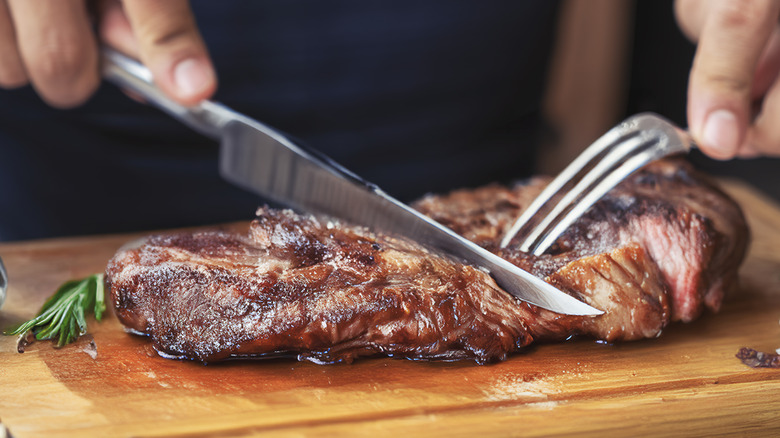
If you're lucky enough to have bought or been given a really good set of steak knives, then it can be tempting to use them to cut more than just beef, but it's a slippery slope. Many argue that it's better to invest in a small range of kitchen knives for specific tasks rather than relying on your steak knife to do everything.
How you clean your steak knives will also impact their durability. Unless you want to make a professional chef cry, never put your steak knives in the dishwasher, even if the label says you can. The water jets not only cause the knives to bash against other utensils, but they can even knock the blade out of line. Plus, some detergents are too harsh for some protective coatings on blades and can also prematurely degrade the handles. Stick to hand washing your steak knives in warm water with a little dish soap and dry them with a clean cloth immediately afterward.
Storing them in a kitchen drawer, especially if they're wet, can lead to bacterial growth, but keeping them in a good-quality knife block won't. Timo Horl, CEO of HORL knife sharpeners, gave us advice on the best way to keep a wooden block clean, noting, "Your knife block is protecting the hard-earned money you spent on your knives." Stick to these simple rules and your steak knives will be cutting through everything like butter for years to come.