

Skip The Stove And Cook Salmon This Way For Fast Weeknight Meals
We may receive a commission on purchases made from links.
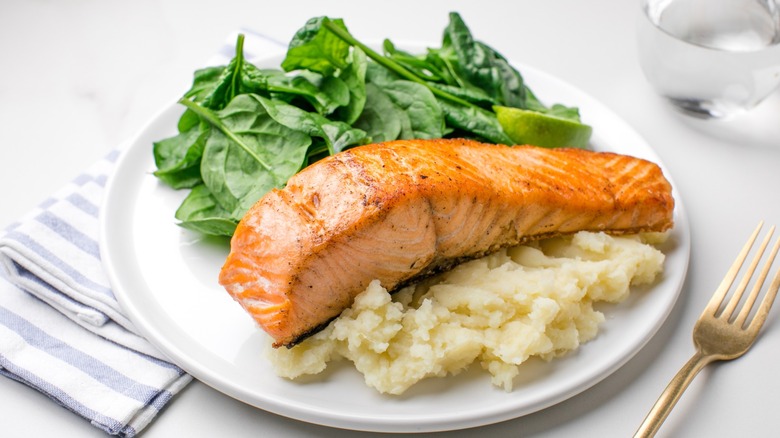
When we went over common mistakes people make when cooking fish, overcooking salmon was a sin that our consulted experts specifically warned against. While pink, delicate salmon is a flaky and delectable treat when cooked perfectly, it can quickly become a dull, beige rock if you hammer it with heat. We're here to tell you that the best cooking method for weeknight salmon that you haven't yet tried is broiling it for a speedy, delicious dinner.
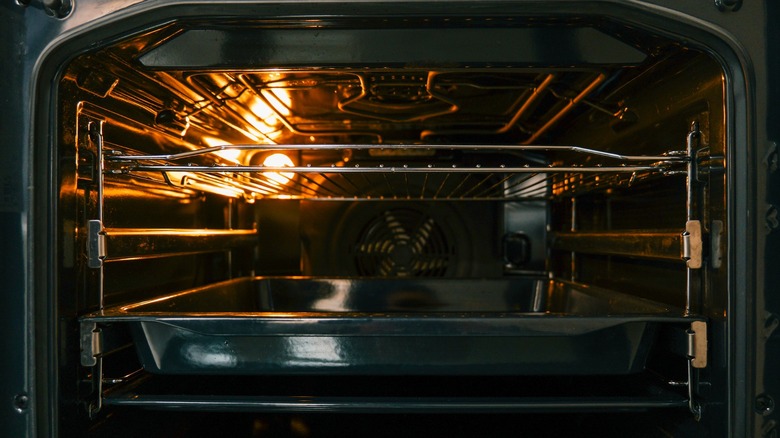
In less than 15 minutes under your oven's broiler, you can have succulent salmon that's ready to serve any way you'd like. You can sauce it, season it, or adorn it with salt and pepper for a neutral flavor. We like to utilize the sticky-sweet sauce from our miso and ginger glazed salmon recipe. There isn't really a trick to this preparation, either. Most ovens will broil at somewhere between 450 and 550 degrees. The exact temperature doesn't matter as much as carefully monitoring the doneness. You want to pull your fish from the oven when the internal temperature of the thickest portion of the filet reads 130 degrees; carryover cooking under a foil tent will get you the rest of the way to the food-safe zone of 145 degrees. We're fans of the rave reviews on the TempPro TP19H Digital Meat Thermometer, a budget-friendly option.
When to keep the skin on a salmon filet is always a pertinent question. When it comes to broiling, leave the skin intact and cook skin-side down. The skin will insulate the fish against cooking too quickly. It can be quickly and easily peeled off once you remove your salmon from the oven.
There are some tips to keep in mind for broiling salmon
Many esteemed foodies like to coat their salmon filets in mayo before cooking, along with their choice of seasonings. Rather than imparting any actual flavor, the mayo is both a protective coat and a bronzing agent for the broiler, leaving behind moist flesh and golden toastiness. Other recipes will coat the fish in oil instead. The choice is yours, but a fat will greatly enhance the texture and promote the desirable Maillard reaction. In addition to mayo, we've also seen butter and olive oil used. If you want to keep things lean, you could get away with a few blasts of low-fat cooking spray, but this, of course, won't leave as nice a flavor.
Some folks turn the filets throughout the broiling process to get browning on multiple surfaces of the fish, but this isn't strictly necessary. The top-down cooking of the broiler will effectively cook the filet through in somewhere between 6 and 12 minutes, depending on size and thickness — a quick cooking method that can't be beat. It can be hard to evenly cut a cooked piece of whole salmon, so many savvy home cooks will portion the fish into serving-sized pieces before putting it under the broiler. Two more tips: use only thawed salmon for the broiler method, as the extra moisture in frozen fish will interfere with proper cooking. Secondly, make sure you grease your pan or foil before putting down your raw fish to cook — salmon sticks easily, and you don't want to leave part of your dinner behind!