

Can You Really Use A Grocery Store Cucumber To Grow More Plants?
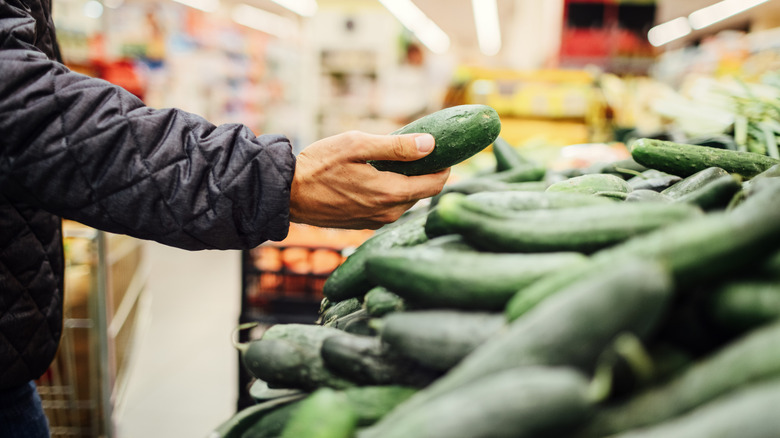
The warmer months send us all scurrying to the grocery store in search of foods that will keep us hydrated throughout the summer. Cucumbers, with their cool, juicy flesh, are top of that list, and for anyone with a green thumb, they're easy to grow. You might even be tempted to set one of your store-bought cukes aside and plant its seeds for a home-grown harvest next year. You can certainly give it a go, but in all likelihood, your horticultural efforts will come to naught for two good reasons.
The first is the age of your grocery store cucumber. The vast majority of cukes we find in stores are picked while they're still very young. These fruits are tender and ripe enough to taste good for consumers, but the seeds inside won't be even close to mature enough to germinate.
The second reason also covers almost every cucumber stocked in a supermarket or grocery store. That's the likely fact that they are F1 hybrid varieties, specifically developed to provide uniform fruit and stand up to disease. Yet, this means their seeds are likely infertile or will not produce a true-breeding plant. That last fact means it won't produce plants with the same traits as the cucumber it came from. Still, that doesn't mean you should give up on harvesting seeds from other cukes.
Heritage varieties are a better source of viable seeds
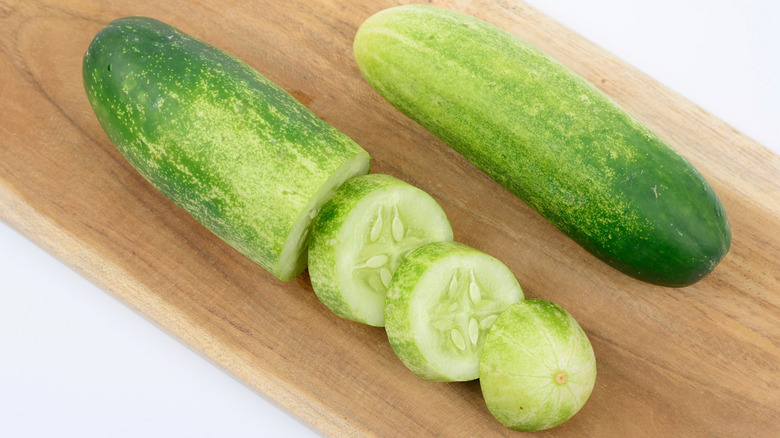
If you're on the hunt for seeds, instead of getting your cucumbers from the grocery store, head to your nearest farmer's market. Find someone who grows heritage varieties, which aren't F1 hybrids, and buy some cukes from them. Eat your fill, but set one aside and recover the seeds by scooping them out with a spoon, dropping them — flesh and all — into a jar of clean water. Leave them there for a few days before drying them out, storing them, and planting them next season, when hopefully they will germinate. It's worth keeping in mind that hybridization was developed to reduce bitterness in cucumbers and improve yields, meaning heritage species can be affected by both issues.
You can buy lots of heritage seeds online, though make sure you choose cucumbers that are suitable for where you live. Find a cuke you like the look of, and when it comes to putting them in the ground, remember to include these companion plants for a bumper harvest. If you want to save more seeds, leave one of the fruits to ripen completely in the garden — it should be bigger than your standard cuke and will likely turn yellow or brown. Cut it in half, scoop out the seeds, and clean and dry them as before, then carefully store them for the following year. If all goes well, it could be the start of a fruitful cycle of growing cucumbers from your very own seeds.