

One Of The World's Classiest Foods Is Also A Rich Source Of Omega-3
Perhaps no fruit of the sea carries such associations with luxury as caviar. (Although grilled lobster tails are definitely up there.) These brined fish eggs, or roe, are often served as a garnish that puts the glamorous flourish on a classy dinner, whether served with blini or alongside a tall glass of chilled champagne. But caviar isn't just delicious and rare — it's also nourishing in an unexpected way, because caviar is actually an amazing source of omega-3 fatty acids.
Omega-3 fatty acids are healthy fats that support a number of internal systems that keep your body running well and properly-regulated on a daily basis. There are some specific varieties of omega-3 that are found commonly in human food, like EPA, DHA, and ALA. The first two are commonly seen in seafood. You may have heard that salmon is a rich source of omega-3 (although there are at least 5 foods with more), but caviar is not to be trifled with when it comes to the good stuff that promotes heart and brain health.
One mere tablespoon of caviar packs 1,046 milligrams of EPA and DHA. That's a mighty small serving compared to 3.5 ounces of salmon or mackerel. Gram-for-gram, caviar is an absolute powerhouse of omega-3. Healthy adults are recommended to get between 1.1 to 1.6 grams of omega-3s in their diet per day, with men and lactating/pregnant people on the higher end (per the National Institute of Health) — meaning that a little caviar might just square you away for the whole day! When you savor this special treat, you aren't just indulging in a taste of the good life ... you're also enriching your health.
There are more attainable sources of caviar to get your omega-3 in
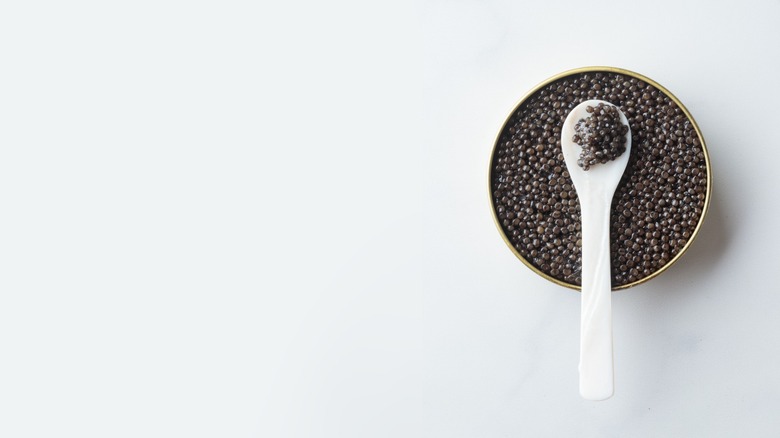
The belief in the popular consciousness is that caviar is expensive, and with good reason: Russian beluga sturgeon caviar is a limited import that can go for hundreds of dollars per ounce. Real caviar technically only comes from sturgeon, and this fish takes a couple decades to reach sexual maturity and start producing eggs. Furthermore, the fish must (sadly) be killed to harvest the eggs, so this is definitely a finite resource. Keep in mind, however, that not all caviar is beluga sturgeon — and that roe, or fish eggs from a non-sturgeon source, can make a very palatable substitute for fine "authentic" caviar at a fraction of the price. In fact beluga caviar isn't even the richest source of omega-3 in terms of fish roe – hake and salmon are just two examples of cheaper roe with better nutrition.
First of all, if you want to enjoy caviar at a cheaper price point, you can automatically shave precious dollars off your bill by eating it at home instead of at a restaurant. Restaurants need to mark their products up to make money. If you source your caviar from a reputable source, you can savor it just as finely at home if you present it correctly. Mother-of-pearl spoons aren't a necessity; a plastic spoon will do just as fine a job of presenting clean flavor. Consider trout roe or salmon roe as a very inexpensive caviar substitute; if you want "actual" caviar, look for budget-friendly options like hackleback or American white sturgeon that are still a nice indulgence, but cost half or even just one-third as much as spendy beluga or osetra. With some research and care, you can have an enjoyable, nutritious caviar experience for a lot less than you might expect.