

Not Just Omega-3: Salmon Also Contains Heaps Of This Essential Vitamin
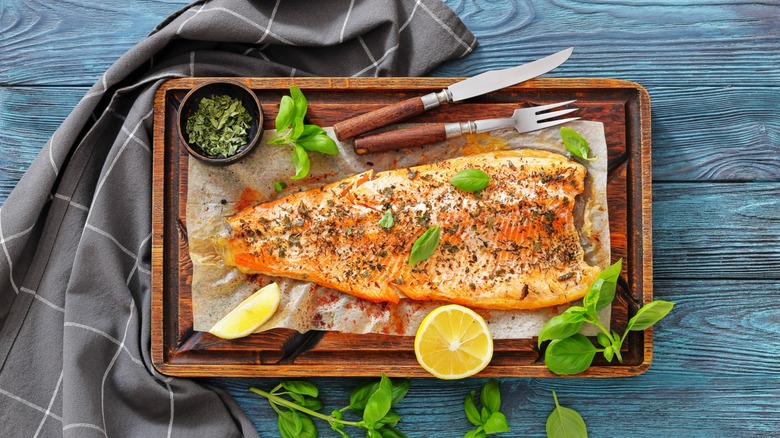
Is it any wonder that salmon is a superstar of our weekly meal rotation? It's effortless to source, insanely delicious, and simple to cook, to boot. As if we needed more reasons to mow down on this beloved seafood, it's also super nutritious, with low calories and high protein, along with a host of vitamins and minerals. One oft-overlooked benefit of salmon's nutritional profile that we think deserves more attention? Its healthy dose of vitamin B6. Wild-caught salmon contains 56% of your daily value of this vitamin, while farmed salmon contains 38% ... less, but still a worthy haul.
It can be hard to keep up with all the nutrients one should be eating to maintain a healthy body, but vitamin B6 is not one to sleep on. Most adults get the amount they need from whole foods and don't require supplementation, but the effects of too little B6 in your diet can be devastating. Mood swings, an increased risk of heart disease, diminished brain function, and higher cancer risk are just some of the pitfalls of not absorbing enough vitamin B6, which is a helper vitamin that assists with several metabolic processes.
Here's how to maximize a B6-rich salmon dinner
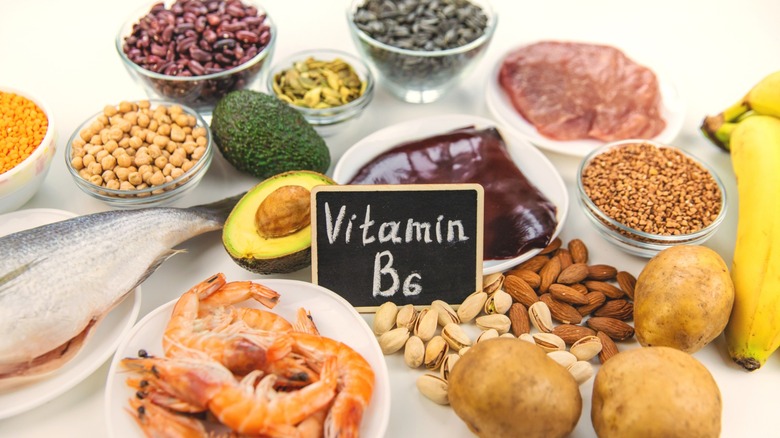
If you want to maximize your weekly salmon dinner(s) for peak B6 consumption, the elements you choose to plate your fish with really count. Chickpeas, dark leafy greens, papayas, oranges, and cantaloupe are all foods associated with high B6 levels. We're imagining an orange-based marinade with our fish, or perhaps a fruity salsa. We love our in-house recipe for miso and ginger-glazed salmon; how about a savory chickpea salad on the side? Remember, you can also skip the stovetop for fast and easy broiled salmon.
There's always a fine line we walk when eating seafood, because the non-negligible levels of mercury in oceanic proteins can be harmful, especially to certain populations. For optimal health, adults should eat eight ounces of lower-mercury seafood at least once a week, and can safely consume specimens like salmon (a lower-mercury fish) up to thrice weekly. Additionally, there are only a few foods with more omega-3 than salmon, which is another major health benefit of eating salmon two or three times per week.