

Blueberries Need This Essential Nutrient To Help Them Grow As Sweet As Possible
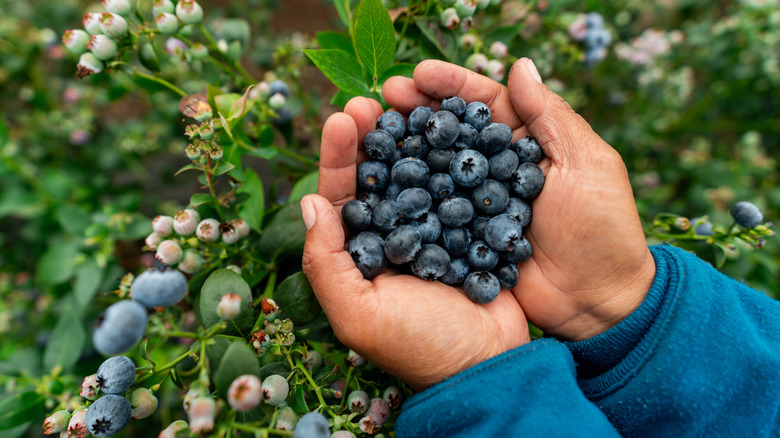
We fiend all year for celeb chef Alex Guarnaschelli's blueberry pie (complete with a secret ingredient), but, before you can stuff syrupy-sweet berries into pie crust and perfect your lattice pattern, you need to grow the sweetest berries possible. Sure, you could buy bushels of berries from the store. For that matter, you could buy boxed blueberry muffin mix — we know a secret to make it better — and not fuss with gardening at all. But that's no fun. You want, nay, require sweet blueberries, and those growing fruits need lots of potassium to get as sugary as possible.
Like all other fruits and veggies, blueberries require each of the "big three" (nitrogen, phosphorus, and potassium) to grow healthy and strong. Just like other garden superstars, however, blueberries have specific fertilizing needs. It's been scientifically determined that robust supplementation with potassium increases sugar and dials down acidity in your fruit (via PLoS One). Your best bet might not be reaching for an all-purpose fertilizer like Miracle-Gro, but instead sourcing a dedicated blueberry food, like this liquid fertilizer by HiThrive that many customers appreciate.
Since blueberry plants live for a long time (as long as 50 fruit-bearing years!), knowing how to fertilize them throughout their lifespan is just as important as knowing what makes them exquisitely sweet. Avoid overloading baby plants (those less than a year old) with too much supplemental nutrition. Once established, feed them twice a year: once in early spring and once later in the season. Iron and sulfur are important secondary additions to blueberry food, as these promote ideal soil conditions — more on that in a moment.
Blueberries can be tricky to grow, but they're worth it
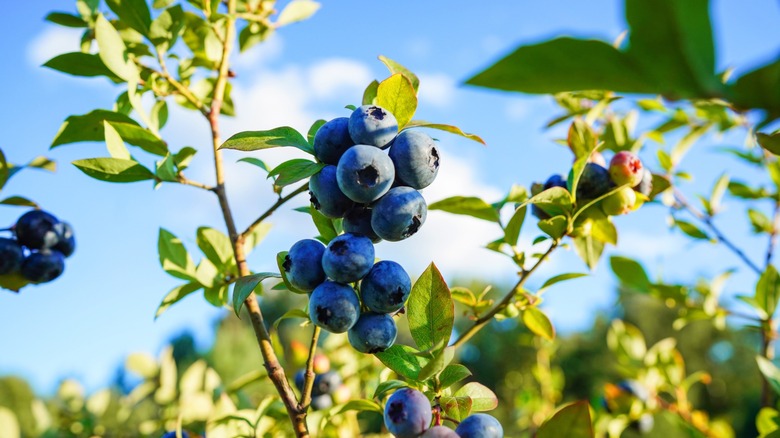
Social media site Reddit seems to be overrun with novice gardeners bemused by the wimpy state of their blueberry bushes. "Anyone with blueberry experience know what I am missing here?" moaned one Redditor, showing off a picture of a yellowish, peaky-looking plant. Elsewhere on the site, a frustrated gardener spelled out their struggles in detail: "I bought 2 different cultivares [sic] last year, both have died I think. 1 of them turned brown and all the leaves fell off only a month after I planted it. The other had berries already on the bush, but when I got it home and planted it, no more berries and all the berries were super duper tiny, literally the tiniest blueberries I have ever seen."
In fact, it seems true that blueberries might be divas of the garden bed, presenting a true challenge for those lacking an innate green thumb. They require very acidic soil (which automatically rules out a lot of companion planting). They are also picky about sun and temperature, and while the experts say that you can technically grow them in planters, some of the Redditors mentioned above had seriously mixed results doing so.
And yet, we respect blueberries for their high-maintenance ways and persist in growing them. After all, there are few pleasures in life as robust as sinking one's teeth into plump, ripe, perfectly sweet blueberries. Catch us with our potassium-rich fertilizer, catering to our needy blueberry bushes and coaxing them to produce ever-sweeter fruit.