

Cook Nearly Any Fish With This Method For Dinner In Half The Time
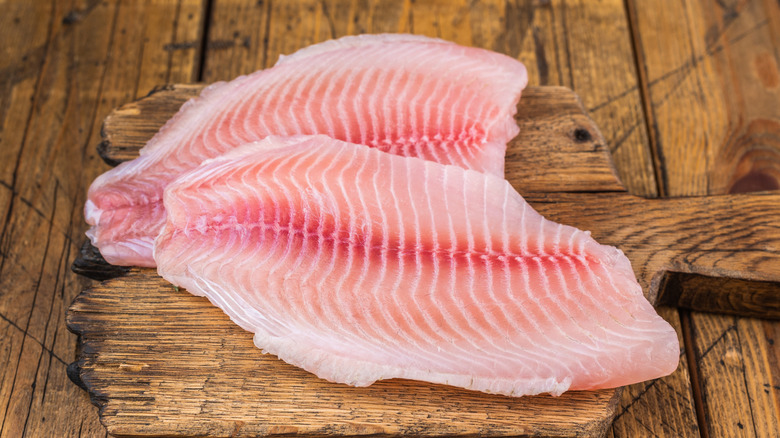
There are lots of reasons to add fish dishes to the weekly menu. As well as being good for us, fish is flexible and can be cooked in myriad ways: wrapped in paper or aluminum to lock in all that moisture, dipped in batter and deep-fried, or slow-cooked in the oven. If time isn't on your side, then pan-searing your fish is your top choice, enabling you to serve up a delicious fillet in as little as 10 minutes. It works for just about any kind of fish, and the secret to your success is all in the preparation.
Don't try to pan-sear fish straight from the freezer as you'll end up with an overcooked mess. Always open any packaging to thaw out the fillets completely. If your using skin-on fish, score the skin with a sharp knife so the heat from the pan can penetrate the flesh. Make sure to dry them with kitchen paper (moisture is the enemy of crispy fish skin), season with salt and pepper, and they're ready for your shimmering hot pan. Place the fish skin-side down, if you're using a skin-on fillet. When the underside has taken on a lovely golden colour, turn the fillets and do the other side. It should only take 2-3 minutes per side to cook, depending on the fish. Serve them with a green salad, piles of veggies, or some home-cooked fries and call it dinner done!
Choose the right pan and oils for your fish, and play around with coatings for maximum flavor
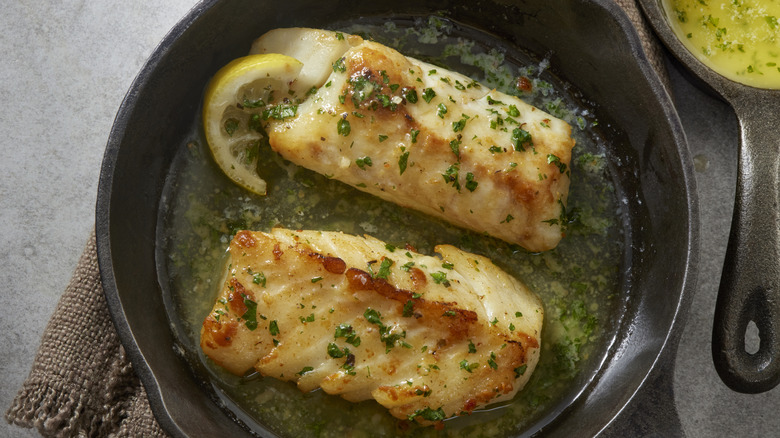
Pan-searing is a quick and effective way to cook lots of different kinds of fish, particularly thinner white fillets, such as snapper, catfish, or tilapia. We got expert advice on the common mistakes when cooking different types of fish, and that included cod. It's superb for pan-searing, but don't move it around while it's in the pan otherwise it can fall apart, and always use a wide spatula to flip it. Monkfish, on the other hand, will withstand a little rougher handling during pan searing, and because it cooks quickly, it's ideal for a speedy dinner.
Pan-searing fish demands oils that can take high heat such as canola, peanut, or vegetable, though some cooks blend them with a dash of higher-fat oils like coconut or olive oil for extra flavor. Now, lifting a whole, golden fillet of fish from the pan is a real achievement, and unless you're the owner of a 100% reliable non-stick skillet, then this is one instance where high-heat loving carbon steel pans beat out their stainless steel rivals. Use them as a test bed to play around with different oil combinations to find one that marries perfectly with your fave fish.
Once you've mastered pan-searing fillets, you can explore different coatings. Fish fillets dipped in seasoned, herbed cornstarch or flour and then pan-fried creates a crispy, barely-there coating that tastes amazing. Although it's a little thicker, panko is a popular option, and if you're gluten sensitive, almond flour or potato flakes will give also excellent results.