

12 Foods That Cowboys Commonly Ate On The Trail
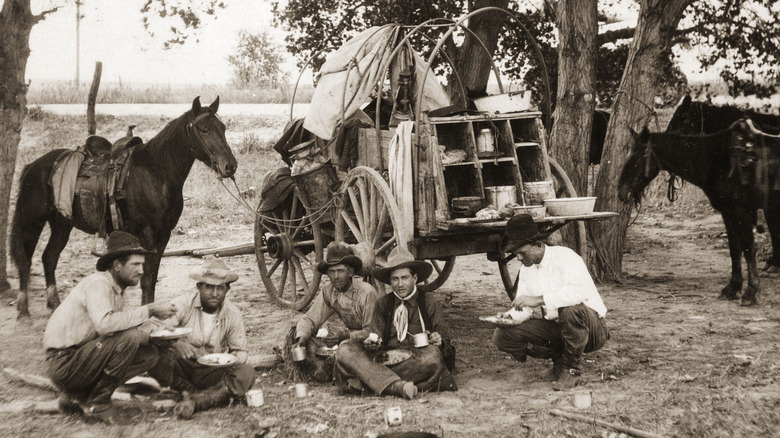
There are lots of myths about the American West, many of them created by Hollywood, which offered a somewhat rose-tinted view of this formative time in the country's history. Although the "wild" period only lasted around 30 years, for much of the 19th century, cowboys were instrumental in getting cattle from ranches in the South to wealthy buyers in the North. Those journeys were long and arduous, so these hardy men needed food that would fill their empty bellies — and lots of it.
Coffee was, of course, a staple. Many roasted Arbuckle beans, pre-sweetened thanks to a coating of eggs, sugar, and Irish moss, but if they weren't available, dried, ground-up patties of sweet potato, acorns, and chicory roots also provided a hot jolt when needed. Whatever was actually in their coffee, the same pot was often reused over several days. As unappealing as that might be to us, it's just one example of how resourceful cowboys and the cooks who travelled with them could be when needed. However, their diet isn't as one-note as the movies would have us believe. Saddle up for a surprisingly varied mosey into the chow cowboys enjoyed on the trail.
Meat
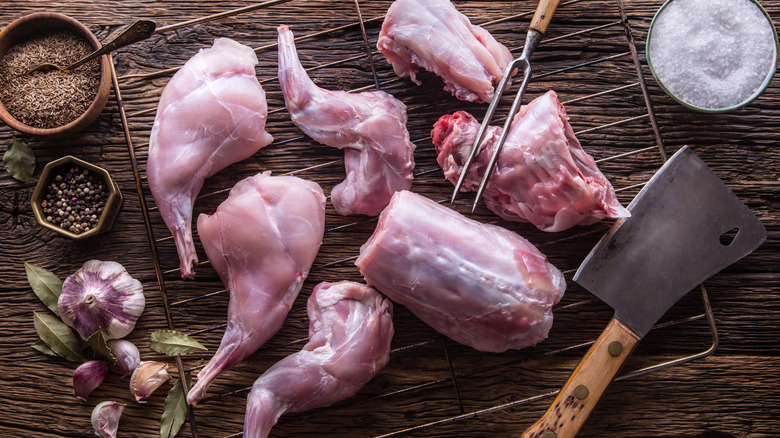
Cowboys loved a good steak, and might even have used this boomer hack when cooking theirs. Fresh beef wasn't always on hand (you wouldn't or couldn't eat the cattle you were driving, for instance) and while everything but the "hair, horns, and holler" went into a son-of-a-gun (that's the polite version) stew, many cowboys would shoot wild game for the pot. Everything from prairie chickens and rabbits, to birds and fish caught in rivers were up for grabs — assuming they could shoot them ...
Jerky
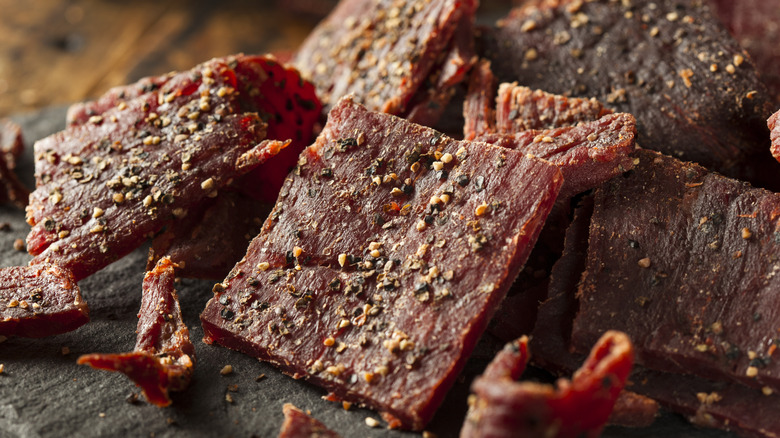
Dried meat was a mainstay for cowboys, as it was easier to keep than the fresh kind. The often arid conditions didn't make for comfortable travelling, but the sun and wind were ideal for drying out scraps of beef or game. Camp fire smoke was also used, and compared to today's jerky, this was saltier and a lot less chewy. Sometimes it was turned into pemmican, a Native American blend of fat, dried meat, dried berries, and salt or sugar.
Canned goods
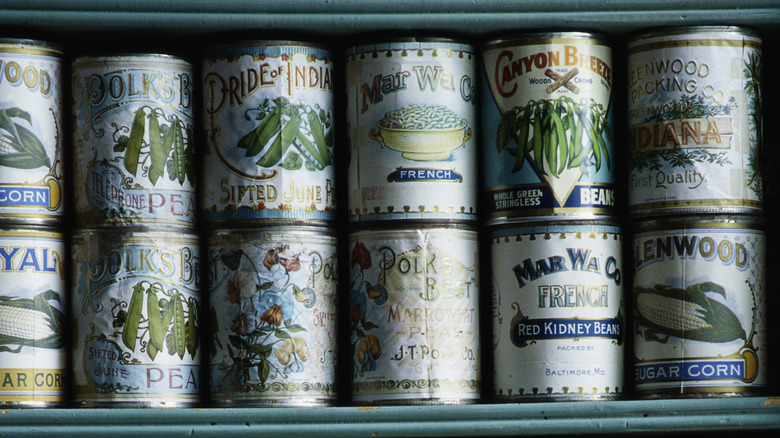
A cowboy would have given anything to have a can of something delicious for breakfast — or any time of the day. Canned foods were expensive and bulky, but when "airtights" did make an appearance, they were devoured. The liquid from canned tomatoes was a refreshing drink that helped clear cowboys' throats of dust, while the veggies themselves were often turned into the much-loved "pooch" by mixing them with some sugar and either biscuits or bread.
Dried fruits
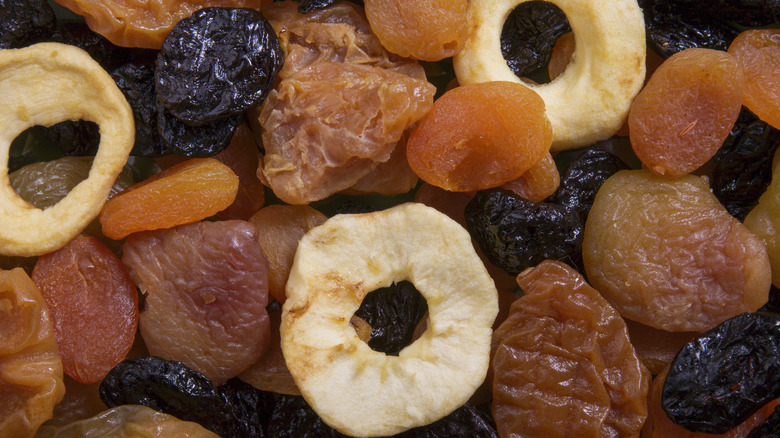
Cowboys driving cattle from one side of the country to the other were able to indulge their sweet tooth with a surprising range of dried fruits. Apples, apricots, berries, and prunes were just some of nature's bounty on the menu. Many were rehydrated with water and turned into desserts such as a "boggy-top" which had no top crust, or had "calf slobbers" — that's meringue to the rest of us — piled on. One inventive cook steamed dough and dried fruit in a bag, a treat known as "son-of-a-b***h-in-a-sack."
Hard cheese
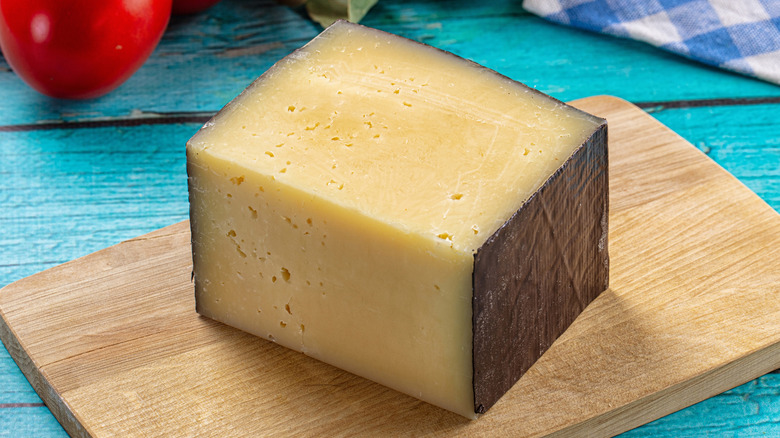
Preserving food while on the trail was a major preoccupation for cowboys, and while salt worked for meat, for more delicate foods like cheese, wax was the way to go. Known as hard cheese, it was left to dry out, then dipped in paraffin wax. As gross as it sounds, this wasn't a luxury — it was an essential source of nutrients (though the cowboys were likely unaware). Rest assured, hard cheese was rarely eaten as it was, instead it was added to stews or folded into biscuit dough and then cooked.
Sourdough bread and biscuits
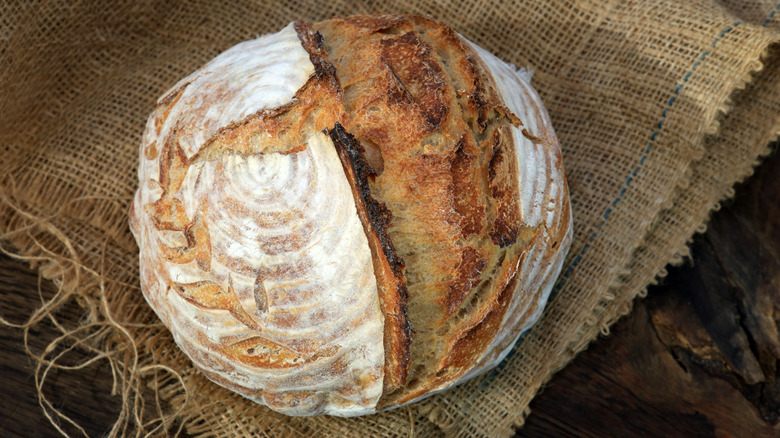
During their time on the trail, cowboys chowed down on loaves of sourdough bread (presumably the cooks knew how to build bigger starters) that were made over the camp fire. Just as popular were sourdough biscuits, cooked in a Dutch oven and preferably served drenched in gravy, alongside "hound's ears," dollops of sourdough batter fried in hot fat which were then soaked in a mix of dried fruit, sugar, and water, known as "whirlyup sauce."
Salt pork and bacon
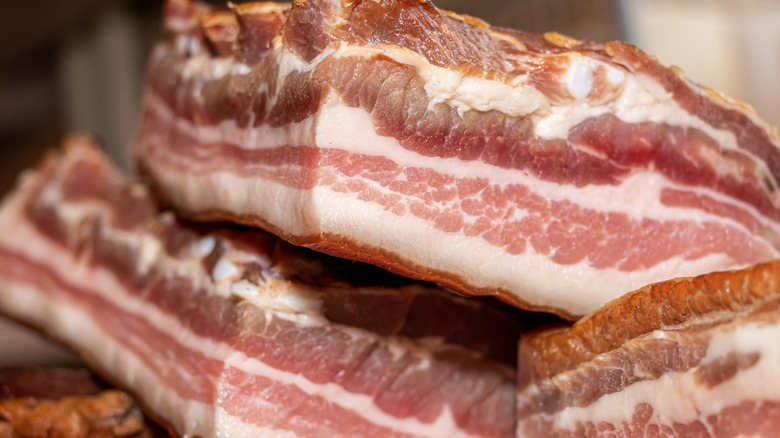
Affectionately known as "overland trout," this heavily cured form of bacon wasn't so much a food as an integral part of a cowboy's life. The grease was essential for frying other foods, or adding to biscuits for extra flavor. Likewise salt pork, taken from the sides and belly of a pig, were foods that could withstand the rigors of trail life, while also delivering a punch of flavor. Salt pork grease was used with cornmeal to make "corn dodgers."
Potatoes and onions
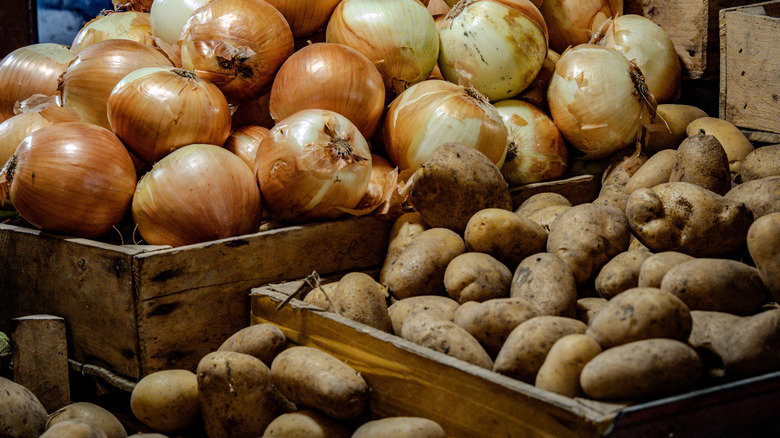
They are the foundation of so many recipes, it's hard to imagine a kitchen that doesn't use potatoes and/or onions. It was the same for cowboys. While there were a few lone wolves, many of them travelled with chuck wagons, helmed by cooks who knew how to turn out lots of hearty food for the hungry men on horseback. Happily for them, potatoes and onions both had long shelf lives (though this is the best way to keep the latter veggie crisp), so their stews and chilies always had flavor.
Eggs
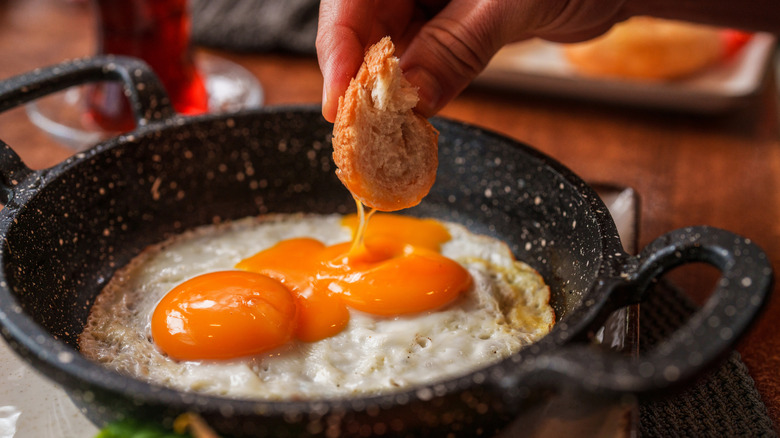
The image in many minds of a cowboy breakfast is potatoes and bacon sizzling in a skillet, alongside an egg or two. If they weren't being saved for calf's foot jelly then yes, it certainly might be a way to start the day. However, back in the 19th century, the food supply chain was unreliable at best, and fresh eggs would take a long time to get from chicken to chuck wagon. More often than not, they would go bad in transit, earning the satirical moniker "souvenirs."
Calf fries
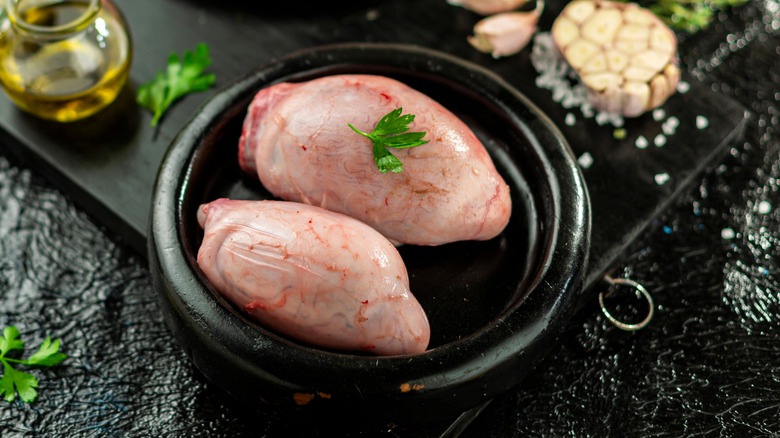
Also known as "prairie" or "mountain oysters," calf fries (aka veal testicles) may make some 21st century foodies' toes curl but to a cowboy hundreds of years ago, they were a delicacy. Fried or roasted, they were wildly popular, and a measure of how food — no matter how unappealing — could not be wasted. Perhaps that's why they imbued calf fries with vitality-boosting or aphrodisiac properties ...
Sheep sorrel pie
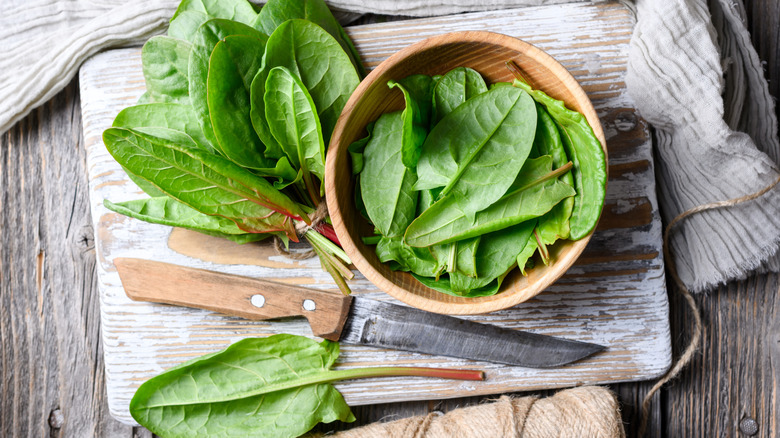
If there's one thing conspicuous by its absence in the cowboy diet, it is greenery. Happily cowboys got a much-needed shot of chlorophyll in the form of this tasty-sounding dessert. Sheep sorrel, also known as sour grass and field sorrel (among other names), has a delicious lemony flavor. Cowboys and cooks would scour the trail for the distinctive arrowhead-shaped leaves and whip them up into a delicious pie. Here's hoping it was served with the aforementioned calf slobbers.
Beans
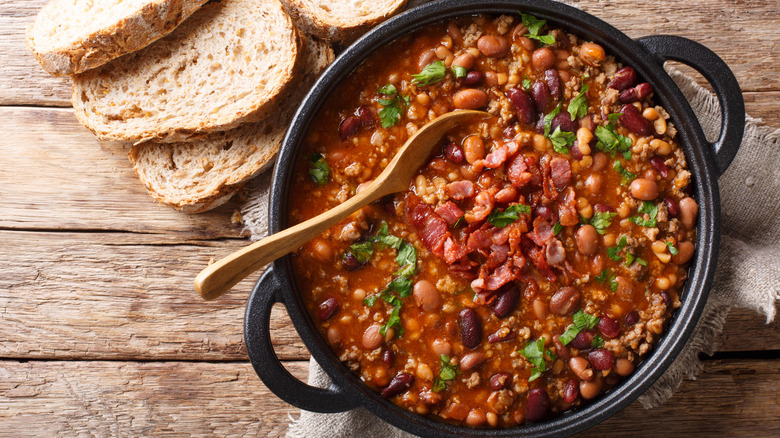
We couldn't look at what cowboys ate on the trail without including beans. It's become the stereotypical Western food (thank you again, Hollywood) but there's more than a grain of truth in it. Beans were an easy food to haul in bulk, could spend all day soaking and then be cooked in a single pot over the camp fire. Navy beans were popular, as were pinto beans, and thanks to Mexican vaqueros, cowboys and cooks could draw on a range of spices to add flavor and heat.