

Does Cooking Salmon Destroy Its Omega-3s? It Depends
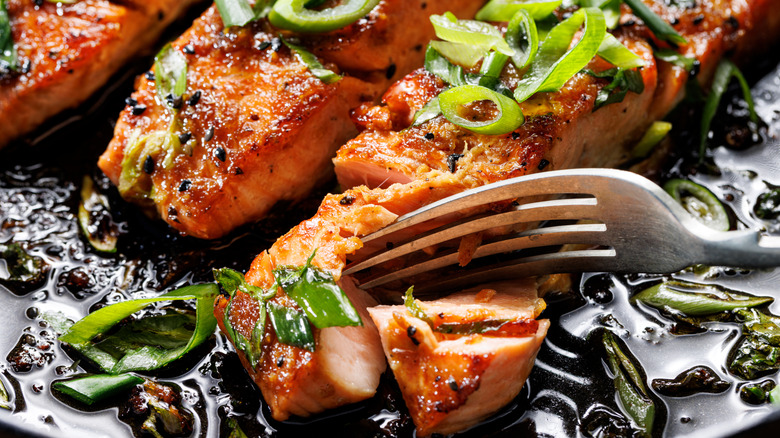
The art of turning a handful of ingredients into a finished meal is a profession for many and a passion for others. Yet a lot of people might not know that the act of cooking doesn't just make ingredients more palatable — it can actually change their nutritional profile. Vegetables, for example, lose essential vitamins when boiled, while the amount of omega-3 in a fillet of salmon can fluctuate a lot, depending on how it's cooked. Lots of people relish getting a crispy skin on their fish (which is where you'll find the largest concentrations of omega-3). Common methods include sautéeing fillets in a skillet or roasting them in an air fryer or oven, but prolonged exposure to high heat can wipe out up to 85% of the salmon's DHA and EPA fatty acids.
Studies of other fish also revealed that, as well as losing those all-important omega-3s, cooking at high heat also led to the creation of trans and saturated fatty acids, per the research journal Foods. The problem is, although omega-3s have lots of health benefits, they're not particularly stable. Too much heat can destroy them, while exposure to light and air won't do them any favors, either. So what's a home cook to do?
The solution is to cook salmon at lower temperatures to retain as much of the omega-3 as possible. We're all about saving time by switching up our weeknight dinner cooking methods, but sometimes nutrition comes first. Baking a fillet of salmon at a gentler 350 degrees Fahrenheit might take a fraction longer, but the end result will still taste amazing, and you'll get more omega-3 to boot. If you absolutely have to have that crispy skin, stick to pan-searing, but turn the heat down.
Wet cooking methods help retain salmon's omega-3, but other ingredients can provide protection too
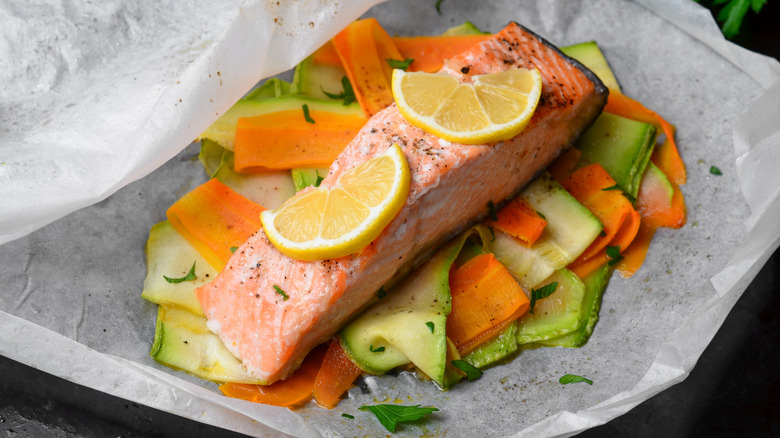
Poaching and steaming are the best lower-temperature "wet" cooking methods that preserve more of salmon's nutritional goodies, which include this essential vitamin, while also producing juicy and tasty platefuls. You can also consider cooking salmon in paper, or en papillote, and you can slip in fragrant herbs, slices of lemon, or veggies for extra flavor. Microwaving is also a handy way to cook salmon, though rather than nuking it on full power, turn the level down.
Whichever method you choose, make sure the fillet's internal temperature reaches the USDA-recommended 145 degrees Fahrenheit. That said, not every kind of salmon has to be heated to be cooked. Smoked salmon has some of the highest omega-3 levels because it hasn't been heated at all. Likewise, marinating salmon in lemon or lime juice to make ceviche can retain more omega-3 in your fish.
As well as cooking your salmon more gently to maximize its omega-3 content, other ingredients can help protect those fatty acids while cooking. That splash of authentic olive oil in the skillet or dish? It doesn't just add flavor or stop the fish from sticking; it also contains important antioxidants that halt the breakdown of fatty acids. Garlic, the aforementioned ceviche, and any sauces made with antioxidant-rich foods can also provide a handy buffer for your salmon's omega-3. Pair your finished salmon with other foods bursting with omega-3, like edamame beans or leafy greens, and you're good!