

This Part Of A Salmon Contains More Omega-3 Than Any Other
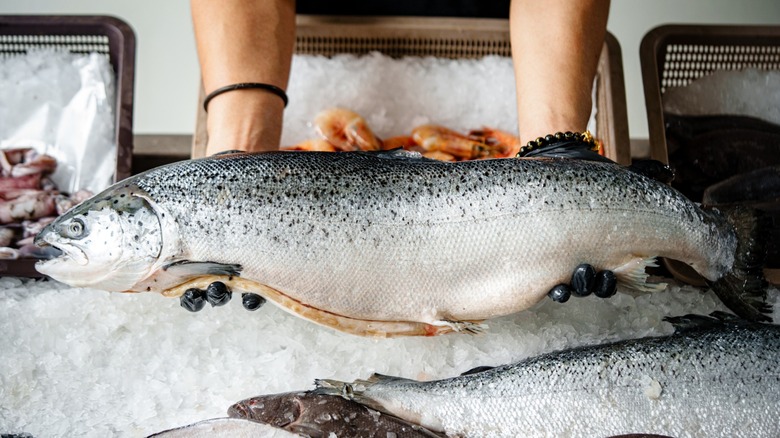
When we really started to delve into the nutrient info concerning omega-3 fatty acids – the benefits of which include heart, brain, and eye health (along with a ton of promising research showing many other potential perks) — we discovered that salmon is, perhaps, one of the best overall sources of these polyunsaturated fats. There are a few foods with more omega-3 than salmon, but not that many. Plus, it's hard to match the iconic pink fish for versatility and sheer yumminess. What part of salmon, exactly, contains the most omega-3 to benefit your body? Well, beauty may be only skin-deep, but the omega-3 motherload in salmon is pretty superficial ... literally. In other words, that important nutrient is most concentrated in the salmon's skin.
According to Tufts University, removing the skin from a salmon filet cuts out somewhere between 36 to 61% of the omega-3 fatty acids from the fish. The concentration of nutrients lies in both the skin itself and the thin layer of grayish fat beneath, which makes sense when you think of the fact that, in all species (and all fish, specifically!), omega-3 is stored in the fat. Foodies often question when to keep the skin on a salmon filet with regard to style of cooking, but perhaps we should really be flipping the logic and questioning whether the style of cooking allows us to keep the precious salmon skin intact! Luckily, there are numerous delicious ways to enjoy salmon skin, whether you're enjoying it as part of a piece of whole fish or if you're removing it and crisping it up to eat on its own.
If you know how to cook salmon skin, you're in for a treat ... and health benefits
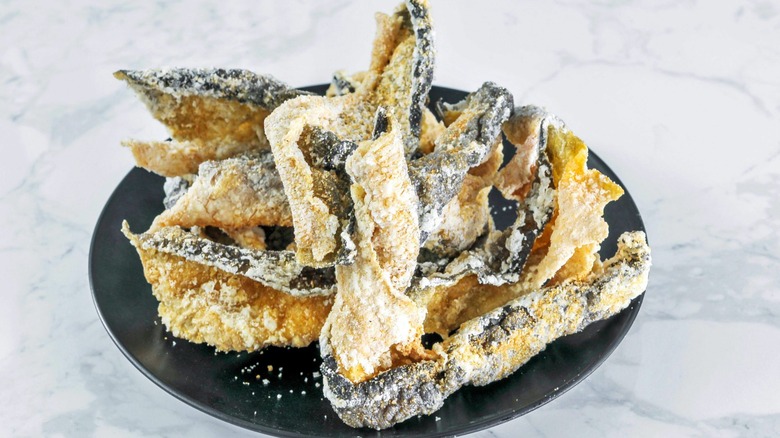
In addition to being a great source of omega-3 fatty acids, we also love salmon skin for its multiple other nutritional perks. Did you know, for instance, that a mere half-ounce of skin contains a whopping 10 grams of protein on average? It's carbohydrate-free and is potentially dense in vitamins and minerals that are already present in salmon, like vitamin B6 and B12, vitamin D, niacin, and selenium.
Luckily, making salmon skin delicious isn't hard to do. If you're leaving it on your fish dinner, you'll want to get it nice and crispy for the best texture. Marinating or saucing salmon are both popular preparations, but they are more likely to result in soggy skin. Instead, pat the skin as dry as possible and lightly pan-fry or air-fry your salmon, which will get the skin delightfully textured. We've also seen folks remove the skin and cook it on its own, making a thin, crispy wafer that's not unlike bacon flakes or a crouton that you can use as a condiment or snack!
On a Reddit thread in the r/Cooking subreddit, social media users recommended using dried salmon skin as a wrap for salmon sushi (yum!) or treating it similar to chicharrones and boiling the skin before letting it naturally dehydrate and then frying it up. The resulting treat is allegedly comparable to a shrimp puff! It seems like salmon skin might be the tastiest fish trimming that you're unknowingly throwing away ... and a super-nutritious one, to boot!