

Salmon Vs Tuna: Which Fish Has The Higher Mercury Content?
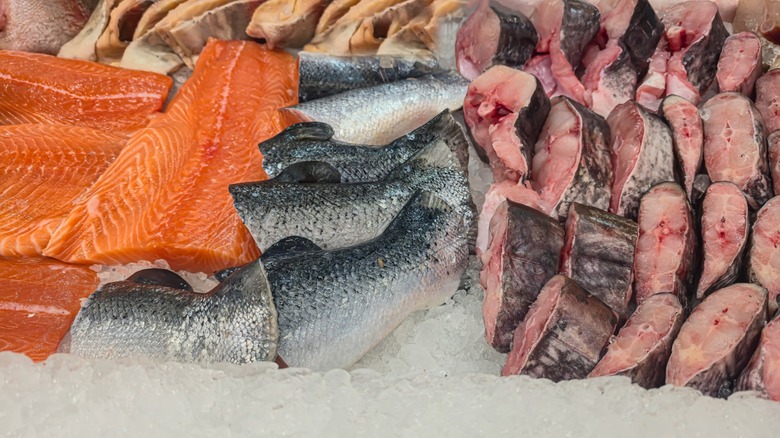
Fish is a perennially popular protein. According to the CDC, almost a quarter of American adults eat seafood twice a week or more. And, yet, savvy consumers know that their enjoyment of seafood must be tempered by concerns about mercury, high levels of which can cause memory loss, tremors, and an unsteady gait, among other issues (per Cleveland Clinic). Sharks and other large predatory fish land on the list of things to think twice about before ordering at a seafood restaurant because of potentially dangerous high levels of mercury, but how about two superstars of Western tables: tuna and salmon? While neither fish represents a significant mercury risk when consumed in moderation, tuna, being the larger of the two, tends to have more mercury overall.
It's notable that, as per The American Journal of Clinical Nutrition, the blood mercury levels of salmon consumers and tuna consumers were about the same, and not even 5% of the total consumers studied had clinically high mercury levels in their blood. Still, yellowfish tuna samples were found to contain unusually high levels of mercury, and albacore, a common canned tuna product, can be comparatively loaded with the stuff.
Does this mean that you have more to be concerned about than the proper mayo ratio in your tuna salad? Probably not. Still, if you are a frequent consumer of tuna, you might want to switch to light canned tuna, which has some of the lowest mercury concentrations of any tuna product. And while tuna and salmon both have their place in a balanced, healthy diet, it may make sense to prioritize salmon. That's not just because of mercury levels, but also because of the higher amount of omega-3 fatty acids in the pink fish.
Seafood is part of a balanced diet, but choose wisely

The USDA's dietary guidelines state that adults should consume eight ounces of lower-mercury seafood per week, with pregnant people getting up to 12 ounces to promote fetal brain development. Higher amounts of seafood can be consumed with caution but definitely not every single week, as mercury accumulates and isn't easily discarded by your body. Tuna is definitely a worthy contributor to your seafood allowance, being lean, low in calories, and an excellent source of vitamin B12. If it's between one or the other, however, you might want to consider salmon as your top choice.
Salmon is so nutritious that some have called it a superfood. As mentioned, salmon is packed in omega-3s, and specifically, two kinds (EPA and DHA) that are often scarce in Western diets. Tuna has omega-3s, but not nearly as much as salmon. Not only is salmon lower in mercury, but, on paper, it's healthier, too.
In conclusion, enjoy that tuna salad sandwich ... but maybe only whip it up once or twice a week and be mindful of the can that you select. On the other hand, dive deep into the debate over the best temperature at which to cook salmon and look into some recipes for this versatile, nutritious fish. The risks of mercury toxicity from eating too much fish are not incredibly concerning with either salmon or tuna, and seafood is objectively good for you ... but especially salmon, which has greater amounts of omega-3 fatty acids.