

Plant This Beautiful Herb To Give Your Garden The Nutrients It Needs

Some garden inhabitants are bad neighbors — we've even discussed the list of veggies you should never plant together — but other plants are beneficial companions to your veggies. Take, for example, fenugreek, an often-overlooked herb that can not only enrich your diet (and maybe your health ... more on that in a minute) but will also enrich your garden bed by fixing nitrogen in the soil. Fenugreek may not be a heavy hitter in many Western herb gardens, but it's been grown for both its leaves and seeds for over 6,000 years. This pretty herb, which looks a bit like clover, is visually appealing, tasty, and useful all at once.
Fenugreek is technically a legume, and, like other plants in this category, it adds nitrogen back to the soil in which it's planted. Nitrogen, of course, is one of the "big three" fertilizer nutrients, along with phosphorus and potassium. Not only is fenugreek a scrappy grower that doesn't need rich soil in which to thrive, but it can also work as a worthy companion to big-time nitrogen feeders in your garden like corn and cucumbers.
It grows fairly quickly and doesn't love hot weather (despite being a full-sun plant), so the time is ripe for gardeners in most climates to plant it now. Do so, and you should be able to harvest your first leaves and seeds in autumn. Fenugreek likes well-drained soil and hates overwatering, which is something to factor in when deciding how often to water your veggie (and herb!) gardens.
Fenugreek is a great addition to your diet as well as your garden
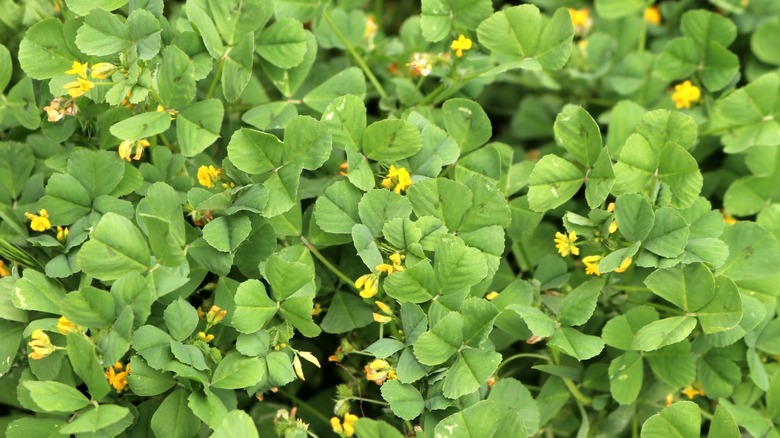
You could grow fenugreek solely to help nourish your other garden plants, but why not put it to use in our favorite place: the kitchen? Fenugreek is versatile and delicious, being a key component of many Indian curries, to start. You may also see it called "methi" on spice shelves. Fenugreek is unique in that, when fresh, it's considered an herb. When dried, it's a spice — and you should definitely brush up on your frozen herb hacks along with how to dry them, because fresh fenugreek doesn't last for very long. It has a smell that has been compared to maple syrup, but with a bitter edge. Therefore, the greens are often eaten when very young, before they've had the chance to get off-putting. You can use the greens just like spinach or other microgreens by eating them raw or stirring them into soups and stews.
Emerging research suggests that fenugreek may have valid uses in alternative medicine as well, per Healthline. For lactating people, consuming fenugreek seeds in a tea can help with breastmilk production when struggling with low supply. Some men have also seen a boost in lagging testosterone levels when consuming fenugreek. There may be other health benefits to this wondrous herb, but research is still ongoing. No matter why you choose fenugreek — for your garden, for your spice cabinet, or for your health — we predict you'll be delighted with the usefulness of this herb that exists off the beaten path of typical Western garden denizens.