

Make Your Garden Safer For Hummingbirds With This Leftover Aluminum Foil Hack
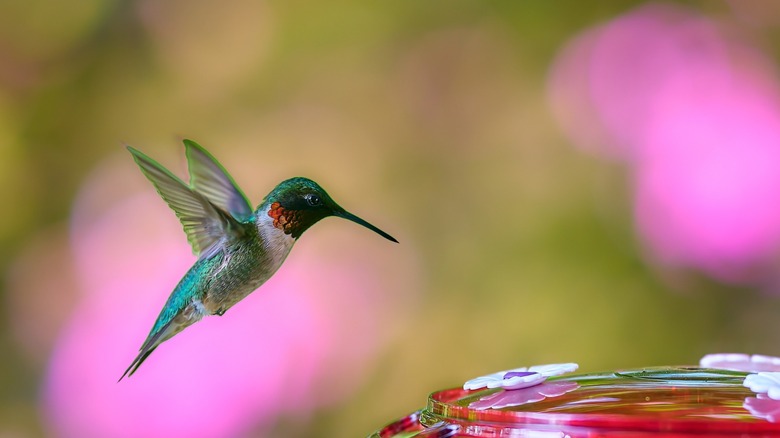
Watching adorable hummingbirds sip delicately from the feeders in your garden is a singular joy that never seems to get old. If you absolutely love scoping out hummingbirds at the feeder in the spring and summer, you may have wondered how you can make sure that your tiny feathered friends are safe and healthy as they visit your yard. It turns out that leftover aluminum foil might be the answer to improving the quality of your hummingbird feeders.
The nectar or sugar water that you place in your feeders is a delicious treat for hummingbirds, but it is also wont to spoil or breed bacteria like salmonella at temperatures over 100 degrees. If a feeder is sitting in a sunny spot, it's definitely easy to reach the danger zone. Taking scraps of foil left over from the ends of your rolls or even repurposing clean, dry foil that never touched anything greasy can not only help you recycle, but benefit hummingbirds — just use the foil to cover the feeder reservoir where the food is kept. This will deflect sunlight and lower the temperature of the sugary goodness inside.
Again, the key is to only use clean foil, and to make sure your feeders stay scrupulously clean for your long-beaked visitors. Vinegar and water are just some of the pantry staples that are great for cleaning, and they definitely best dish soap, which can leave harmful residue on your feeders. Likewise, make sure that any reused foil is clean. Foil used to cover breads or other dry foods are probably fine, but discard foil that has touched meats or anything oily so that the food remnants don't hurt the hummingbirds. Changing out your nectar frequently (even daily in hot weather) is also a must.
Clean, cool feeders are just some of the ways to attract more hummingbirds
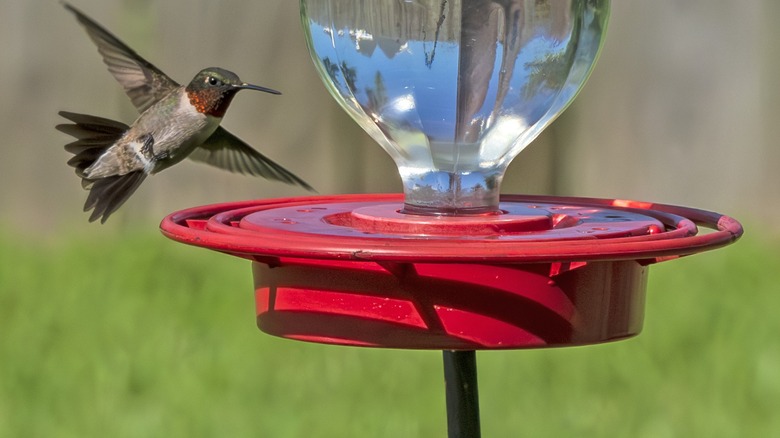
Just like we sometimes plant herbs to deter garden pests, so can we plot our gardens to be more welcoming to wanted visitors ... like hummingbirds! Keeping your feeder(s) clean with aluminum foil is just one step that you can take to make feeders safer for your birdy buddies, but it's far from the only measure that will promote more hummingbird activity in your yard. Placing the feeder is important. It should ideally be in a partially-shaded area, as this will also go a long way towards temperature control, just like the aluminum foil, but with good sightlines from your kitchen window. Don't hide the feeder in leafy foliage, because hummingbirds might not find it, but also allow the feeder enough of a privacy screen from surrounding plants so that the birds aren't bothered by other wildlife as they're eating.
You can also plant herbs and flowers that hummingbirds like to encourage them to come hang out. Sugar water is all well and fine — and experts prefer that you feed a 4:1 solution of water to sugar instead of store-bought nectars — but birds really love the natural nectar produced by their favorite plants. Sage, for instance, is an example of a popular herb that's beloved by gardeners and hummingbirds alike. All varieties of salvia, for that matter, will delight hummingbirds. Bright flowers like columbine, foxglove, and pink azalea will also beautify the outskirts of your veggie garden while providing an irresistible temptation to all the hummingbirds in the neighborhood.