

Are Caraway Pans Eco-Friendly?
We may receive a commission on purchases made from links.
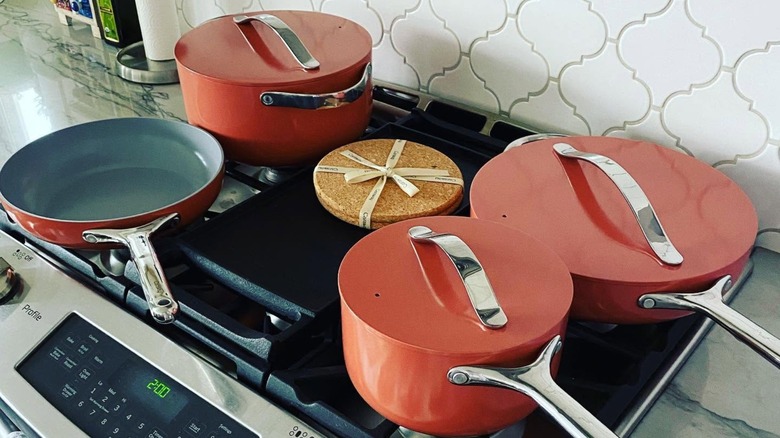
The hunt for better kitchenware has long plagued us, and it's a struggle shared by many home cooks. Carbon steel vs. stainless steel is a perennial question, for instance, and don't even get us started on all the cast iron options on the market. Where we really run into questions, however, is in the area of non-stick pans. They're a kitchen essential, but recent years have seen increasing consumer concerns over the toxicity of Teflon, which can flake off into food and possibly stay in the body as a forever chemical, not to mention potential fumes emanating from these linings. One contender as a Teflon alternative that's emerged with a wave of "better" and eco-friendly cookware is the Caraway brand. Caraway asserts that it's good for the home cook and for the environment, but is that true? As far as we can tell, the answer is a solid "yes."
The Caraway brand was founded in 2019 by Jordan Nathan, who experienced "Teflon flu" after leaving a nonstick pan on the stove by accident. The pans are made of ceramic-covered aluminum, providing a slick, non-toxic, nonstick finish with no PFAS. To many, they are also as lovely as any designer vessels you might see at a high-end retailer. They ship in recycled cardboard, the packaging contains no plastic, and even the ink used on the boxes is naturally sourced. Caraway pans are also manufactured by workers who receive fair pay and work under humane conditions and schedules. What's stopping you from running out and outfitting your whole kitchen with Caraway goods? Well, they might be gorgeous, eco-friendly, and well-reviewed to boot, but some argue there are non-negligible downsides.
There may be better and more durable options
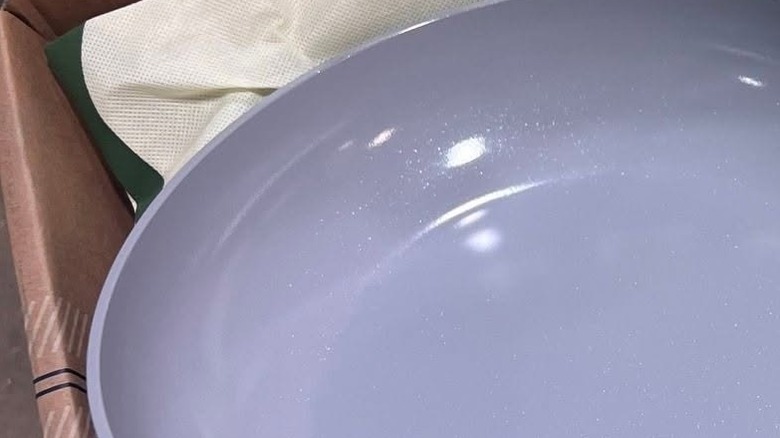
Caraway is a gorgeous choice for home cooks of all stripes, whether you're an old pro who savors new kitchen challenges or a newbie who can barely tell the difference between a sheet pan and a baking sheet. Overall, Caraway pans are a serious boon for home cooks ... if they have the disposable income. You can scoop up these popular, attractive pans at many accessible retailers, including Amazon (where we fell seriously in kitchen-love with the Marigold colorway), but the full cookware set demands a pretty penny. There's no denying that there are a number of eco-friendly options that cost just a fraction of the price, yet function just as effectively. If you have $500 to spend on four pans, then Caraway is a fantastic option ... but not all (or even most) amateurs can say that.
Then, there's the question of maintenance. We've covered how to clean built-up residue on nonstick pans, but your Caraway pans have unique requirements concerning to their rather delicate care. The pans are indubitably prone to scratching if you don't gently hand-wash them and use only certain utensils while cooking. We've also heard anecdotes about them receiving stains from common foods. Again, if you have the funds to replace very expensive pans every couple of years, Caraway pans are both beautiful and a greener way to cook. For many readers, however, cheaper and hardier eco-friendly alternatives may be a better bet when it comes to the financial hit.