

The Kitchen Rule Beginner Cooks Break Immediately
Keen-eyed cooking newbies will notice a distinct pattern when they're studying the methodology of T.V. chefs. Whether you're watching Guy Fieri school the contestants on "Guy's Grocery Games," gaping at the high-stakes energy of "Beat Bobby Flay," or drooling over The Lodge, where Ree Drummond films "Pioneer Woman" content, these telegenic culinary masters all have one thing in common: they execute their mise en place before they so much as pick up a single pan. This French term encompasses one of the most fundamental essentials of successful home cooking, and it's also a step beginner cooks often overlook to their own blundering detriment.
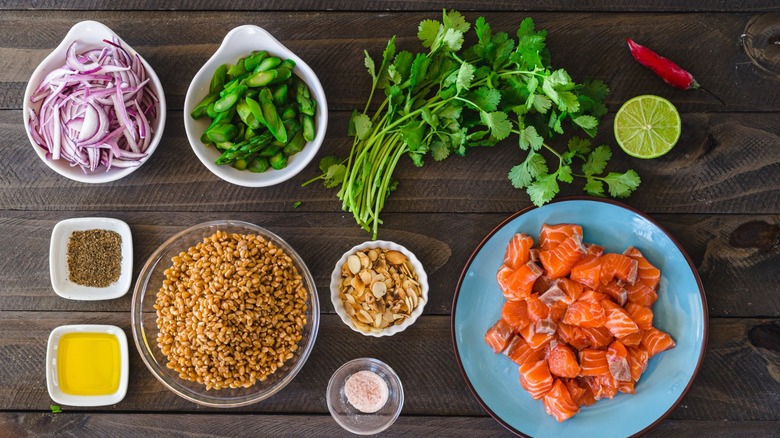
The term translates roughly to "everything in its place," and novice home cooks should consider it the non-negotiable starting point for every successful meal. With mise en place, you prepare and process every item, edible or otherwise, that you will need for your cook ahead of the actual cooking. For example, maybe you've looked up whether salmon or cod is easier to prep (we prefer salmon), and you have a doable-looking recipe for baked breaded cod. A smart chef will first portion out their breadcrumbs and butter, chop their herbs, prep any sides, and make sure the cod filets are defrosted or descaled and deboned. Are you preparing a pot of rice with your fish? The rice will be measured and rinsed before you set it cooking. All the pans, bowls, and utensils you need will be ready on the counter, too. That way, there will be no rushing to measure or locate misplaced items while a critical element burns. Mise en place isn't some neurotic ritual; it's a critical step that experienced cooks undertake because they know it saves them time and stress in the kitchen.
Ignoring mise en place is a major rookie mistake
To an inexperienced cook, it may seem counterintuitive to set aside time to prep and measure all their ingredients and implements before cooking. "Why not wing it?" one might ask. Let us tell you why: if you don't prep your station before cooking, it's all too easy to find yourself cursing because you suddenly need a chopped onion and don't have one to hand when you already have something boiling, sauteeing, or frying. Worse, you need a cup of flour, and you just realized that your flour canister is on its last dregs. That thyme you bought especially for your dinner? It's across the kitchen in your fridge, and the sauce is ready now. Next thing you know, there's no room on the counter, your pan is scorching, and your plans are ruined.
Mise en place actually makes cooking more approachable and less stressful because it gives full control over timing and pacing back to the chef. While a beginner table setting mistake may result from overcrowding, a beginner cooking flub may lead to no dinner at all. Setting up a proper mise en place puts new cooks in the right state of mind to prepare food with success and gusto.
An important note: you may notice that celebrity chefs have as many as a dozen fussy, picturesque little bowls into which spices and ingredients are pre-measured. These look great on camera, but they aren't necessary for home cooks! Nobody is judging you for cramming multiple piles on a plate (or even using plastic baggies) to portion your ingredients. Utility is the point here, not creating a thousand dirty dishes.