

Skip Breadcrumbs: The Low-Carb Alternative For Crispy Chicken Cutlets

Millions of home cooks reach for a pack of breadcrumbs when chicken cutlets are on the menu. Some might sub them for this pantry staple that we love on salmon, but the key component in both coatings is bread. That's great if gluten isn't a health issue, but for people with food sensitivities or who are following a keto diet and want to dial back their carbs, almond flour is a flavorsome alternative. Not only is it a low-carb ingredient, you can also use it in pretty much the same way as traditional wheat flours, including as a coating for chicken cutlets.
There are a few things to bear in mind if you do switch to almond flour. It cooks a little quicker than bread-based coatings, so you need to turn down the heat, whether you're pan-frying your chicken parm or turning it around in double-quick time in the air fryer. The fat present in almond flour means it doesn't soak up as much moisture as breadcrumbs or panko, while a fine almond flour lacks structure and might not give your chicken the crunchy coating you're looking for. Happily, there's an easy fix — sprinkle your almond flour on a sheet pan and toast it in the oven first, before using it as a coating.
Toasted or not, you can blend almond flour with other ingredients to create a flavorsome coating for your chicken cutlets. Parmesan is a very popular addition, as are garlic and paprika. Alternatively, if you've tried this warm spice on your fried chicken, give it a whirl with your cutlets too.
There are many benefits to cooking with nut flours, but watch out for their density
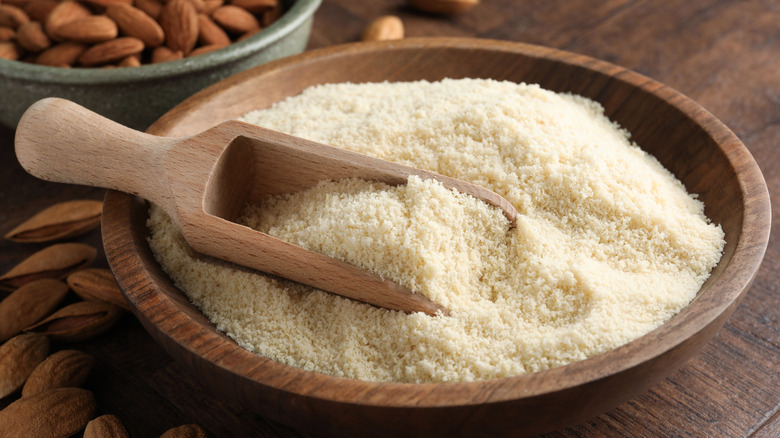
A few years ago, specialty stores would have been the only port of call for home cooks seeking nut flours, but hazelnut, pistachio, pecan, and walnut flours (to name but four), can now be found in regular stores up and down the country. Keep an eye out for defatted nut flours too, which contain fewer natural oils and a little more protein.
For people without nut sensitivities, there are many health benefits to using these alternative flours, as they're good sources of potassium, vitamin E, and magnesium. What they lack in carbs, they make up for in protein and fiber, though some do bring a little sugar to the table too. If you're watching what you eat, it's worth reading the labels on packets carefully. How you use your nut flour can depend on their flavor profile, though it's worth noting they can be denser than wheat flours, so your recipes may need a little tweaking to accommodate it.
As for their taste, there's a range to experiment with. Hazelnut flour is bolder than its softer almond cousin, and is delicious in muffins or bread, but it will also bring that nutty boost to your chicken cutlet's coating. Walnut and pecan both have an earthier, more subtle taste that we love to pair with the creamy saltiness of Parmesan, while pistachio brings a pop of color, as well as that unmistakable hint of sweetness.