

The Best Way To Cook Broccoli For Maximum Nutritional Value
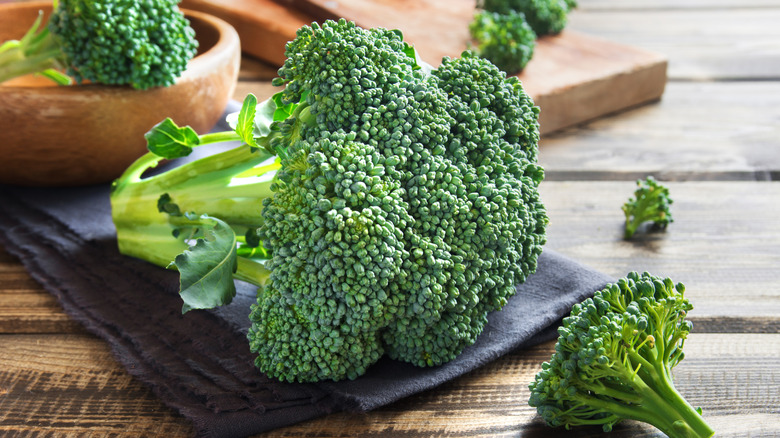
Flavor is the predominant preoccupation of many home cooks, us included. There's so much focus on getting an ingredient to taste its absolute best that the nutritional value of what we're cooking sometimes comes a poor second. Broccoli is a good example, and here it generally falls into two culinary camps. We're either working overtime to disguise its presence in a dish or amp it up, but both can hammer the precious antioxidants in broccoli. The solution? Lightly stir-fry it.
High-heat cooking dents the nutritional value of many foods, including steak (but we've got the answer for getting the maximum nutrition there, too). However, stir-frying broccoli allows an enzyme called myrosinase to convert more of a stored compound glucoraphanin into sulforaphane. That antioxidant is a powerhouse of bodily benefits, including the ability to fend off cell-damaging free radicals and its anti-cancer properties. However, the longer broccoli is exposed to heat, the less glucoraphanin is produced by the myrosinase, and the nutritional benefits of our green veggie dwindle. Researchers found that after just three minutes of stir-frying, myrosinase activity slumped by 80% (via Journal of Agricultural and Food Chemistry).
There is another way we can increase the sulforaphane levels in broccoli before we flash-fry in a scorching wok. Per the above research, chop it up around 90 minutes before it's cooked. That's because myrosinase enzymes get kick-started when broccoli is chewed, chopped, or broken up (eating it raw offers the maximum nutritional benefit, but that's hardly cooking). Meanwhile, the delay before cooking them allows the veggie's sulforaphane levels to almost triple.
Stir fries are a great way to showcase broccoli's flavor and texture
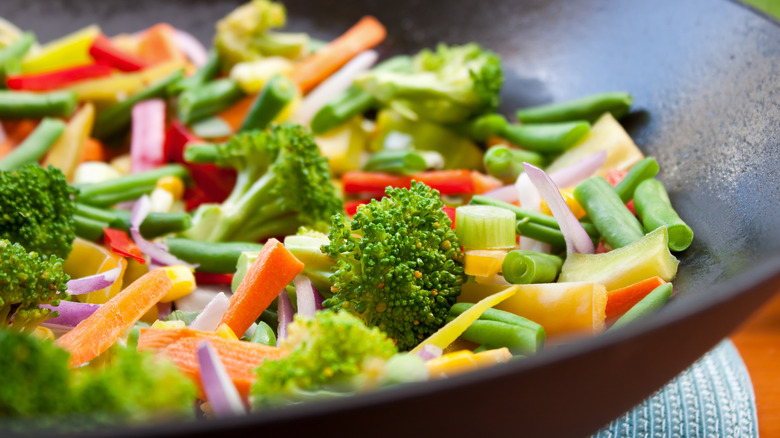
Broccoli is a great source of sulforaphane, but it's not the only veggie that has this compound. Although they're not on our list of low FODMAP foods, cruciferous vegetables such as kale, cabbage, cauliflower, and Brussels sprouts all give us a sulforaphane boost, but the nutritional advantages of stir-fried broccoli don't end there. This humble green veggie is packed with vitamins C, A, and K, as well as fiber, potassium, and iron. When our parents told us as kids that broccoli was good for us, they weren't fooling around!
Today, it's one of our favorite stir fry ingredients. Because it's such a fast method, properly stir-fried broccoli is perfectly cooked yet still has a little crunch, rather than turning into waterlogged, soggy veggies. Toss them over a high heat in peanut oil for a little extra nuttiness, while chopped, fresh herbs will add brightness. Bonito flakes, sprinkled just before serving, add umami flourish.
If you're not a big fan of stir-fries, or you're leery of serving up a plate of crudités for a weeknight family dinner, don't worry. Gently microwaving or steaming your cruciferous greens and other veggies will help retain some of their sulforaphane goodness, and a little is better than none!