

This Veggie Gardening Hack Takes A Lot Of The Guesswork Out Of Planting

There can be a frustrating number of rules to follow when growing veggies. Whether you're concerned about putting plants that prefer shade in a sunny spot, or think you've overdone it with the coffee grounds in the vegetable garden, it can be tempting to throw caution to the wind and let Mother Nature take its course. In some cases, you can do just that, and guess what? It even has a name: chaos gardening. We should point out that this approach does not work across the board, but we'll get to that later. In the meantime, if you've got lots of small seeds to plant and can't bear the thought of filling zillions of tiny pots, we've got you.
The theory behind chaos planting (also known as broadcast seeding or scatter sowing) is simple: sow your tiniest seeds straight onto the ground or container. Some people mix them with sand to make the scattering process easier, but that's up to you. Although it might feel random and freeing, it's important to sow plants together that like the same conditions and share similar germination times, so they are all more likely to thrive.
Those who practice chaos gardening insist seeds must be watered daily, come what may, or else they won't germinate. Play by these few rules and, within a few days, the various seedlings should start to poke through. Before you know it, your container or bed could be an oasis of veggie plant life. No more backbreaking work of creating drills or lines in the soil, carefully rubbing fingers and thumb to deposit a thin trickle of seeds, which vanish, never to be seen again.
There's more work than meets the eye, but chaos gardening is great for beginners
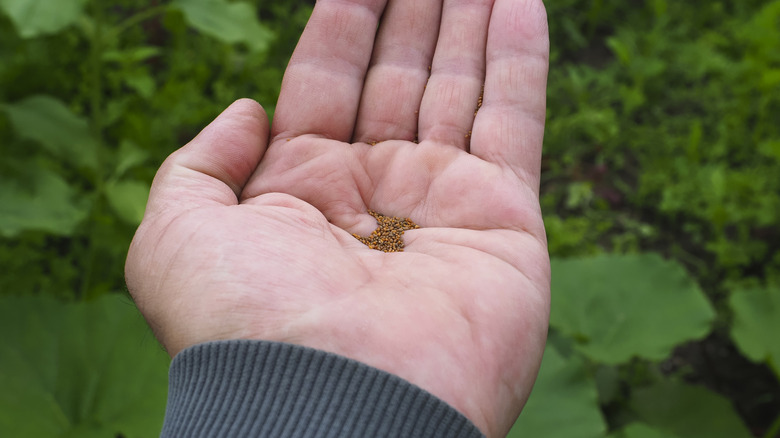
On the face of it, this fly-by-the-seat-of-your-pants gardening has been successful for many veggie growers raising leafy greens, carrots, and leeks, as well as herbs such as parsley, dill, and borage. However, there's a little more to it than chucking a few seeds around and putting your feet up while you wait for a bumper harvest. Apart from carefully matching your seed bedfellows, preparation is a key component of chaos gardening. Ideally, the soil you're scattering them on needs to be well-worked and weed-free, no matter how many social media users claim that their poor ground was super-productive. Some gardeners also cover up their seeds to protect them from hungry, pecking birds.
Chaos gardening has been a hit with some growers for many years, who use it either to increase yield or fill in empty spots in their plots. That said, the method doesn't work for plants like tomatoes, which often need support as they grow (though setting up a trellis system for tomatoes can be easy, too), as well as space around them for air to flow. Meanwhile, species that are usually sown in drills, such as peas or beans, are often less successful with this scatter method. Others say that chaos gardening doesn't allow for succession planting, or the growing of microgreens to use up any leftover seeds. Still, for beginners, it offers a practically stress-free entry point into raising veggies and herbs, and although it doesn't guarantee a harvest, it can be a simpler way to grow.