

What To Do If Your Tomato Plants Have Splotchy Leaves
We may receive a commission on purchases made from links.
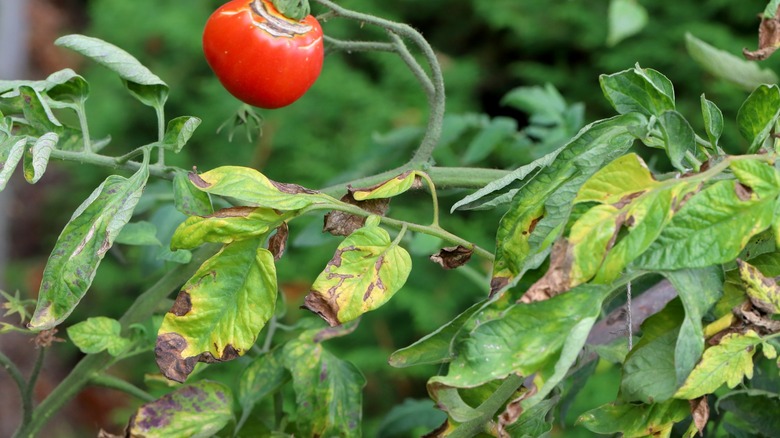
If you've spent time researching what plants to grow alongside tomatoes for a better harvest and invested in stakes, trellises, and mulch, then you are probably pretty attached to your budding tomato plants. So, blotchy leaves can be cause for shock and frustration to concerned home gardeners. Not only are they unsightly in your gorgeous, thriving garden bed, but you know they're a symptom of ... something bad. What, exactly, is your tomato plant trying to tell you? And how can you make things better?
On the list of facts you didn't know about tomatoes, don't forget to include the point that blotchy leaves on your plants are an ambiguous symptom. There are several distinct causes of leaf discoloration in tomato plants, and discerning the root cause (pun fully intended!) will guide you to how you should treat the problem. First of all, don't panic. Just about every cause for discolored tomato leaves is fixable, unless the plant has greater systemic issues. Best of all, the solutions to many of these problems are simple and cheap to boot! With a little attention and TLC, you can overcome many causes of splotches on your tomato plants' leaves and be back on the path to a bumper crop of gorgeous red fruit in no time flat.
Bacterial disease
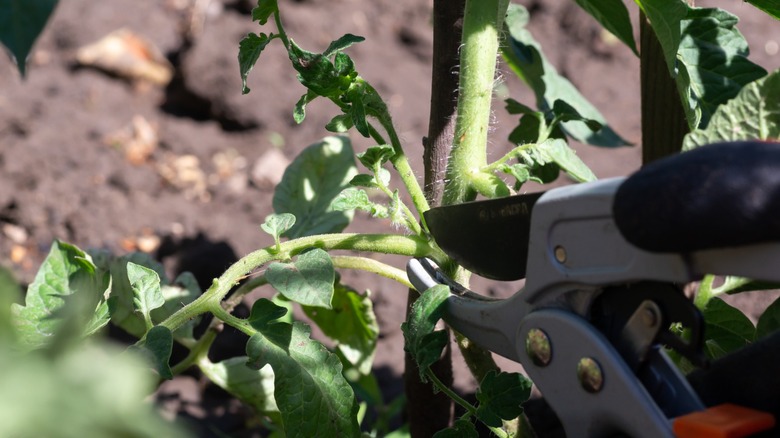
Knowing the best way to prune tomato plants is the key to overcoming bacterial infections, which are often splashed up from the soil. Small, dark spots and yellowing are commonly seen with these infections, which include bacterial spot and bacterial speck. These microorganisms are found in seeds and old crop remains in your garden. To combat bacteria, you can either pinch off infected leaves with your fingers or use clean clippers to do the job. Make sure you don't remove more than 1/3 of the plant's total leaves and disinfect any gardening tools you use.
Frost injury
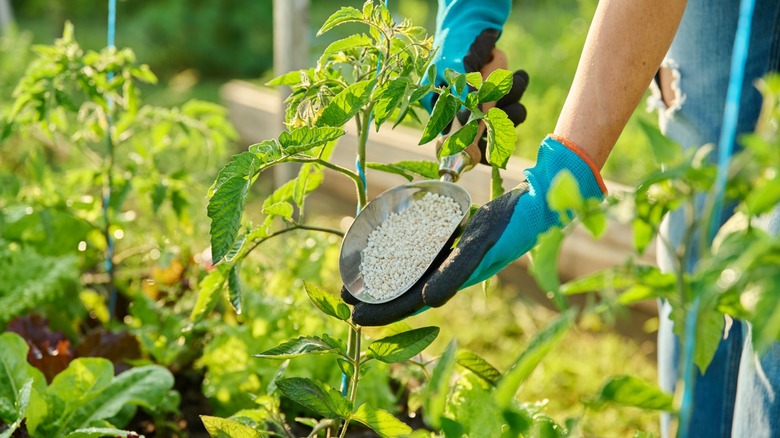
In your haste to grow beauties like the rare Dixie Gold Giant tomato, maybe you planted too soon, and an early-season cold snap got the better of your tomato plants. If plant roots are black and mushy, the plant may be too far gone, but if the leaves are just discolored, you can likely bring it back to life. Trim off damaged leaves, and, once the plant is starting to rebound, fertilize it to promote new growth. If more frost is on the horizon, make sure to safely cover your plant(s) to keep it insulated.
Spider mites
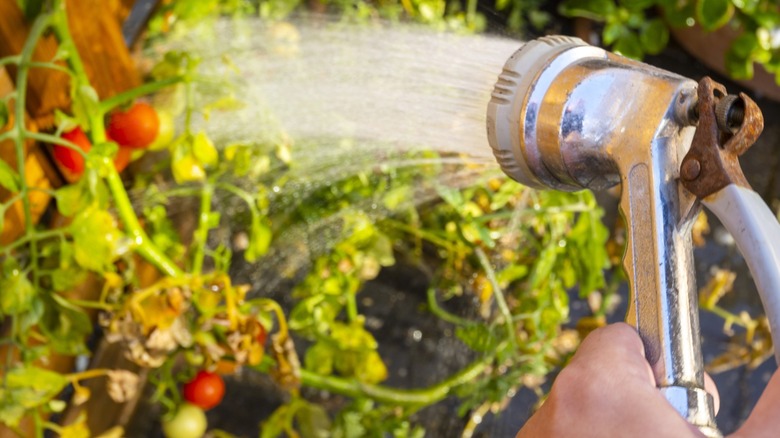
Before you can make an easy three-ingredient tomato soup, you may have to save your tomato plants from spider mites, a common garden pest. In the early stages of infestation, you will notice blotches on your leaves; down the road, you'll see the swoopy, diaphanous webs of the mites, which resemble those of a spider. If you catch the mites early enough, you can use the force of your hose's sprayer head to knock them off the plants. An application of all-natural neem oil spray will finish off the job.
Fungal diseases
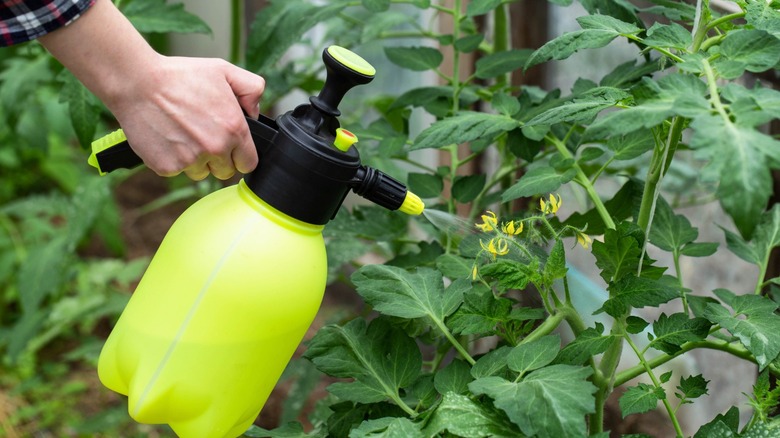
Septoria leaf spot and early blight are two fungi that often go hand-in-hand when it comes to infecting tomato plants and causing splotchy leaves. These diseases live in the dirt and stay dormant until watering or human hands allow them to climb the stem of the tomato plant. You'll want to research a food-safe fungicide (like Natria's liquid copper) that you can spray on your plants to protect leaves that aren't yet infected. The only thing to do for blighted leaves is remove them, since fungicide is a prevention and not a cure.
Magnesium deficiency
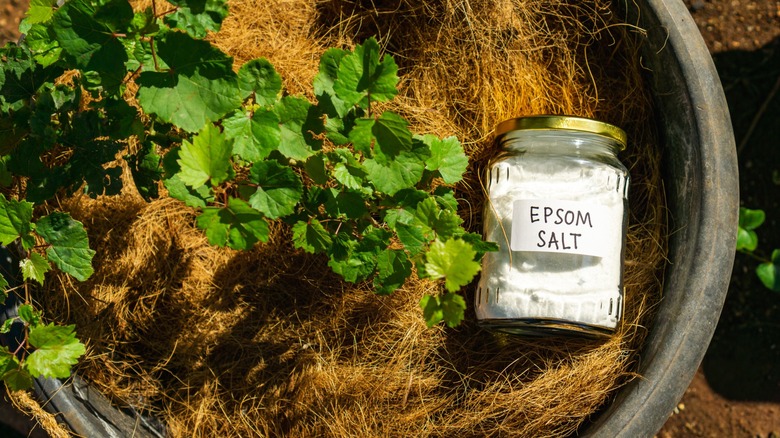
Yellow, red, or brown spots on your leaves may be signs that your tomato plant is missing crucial magnesium in its diet. Sure, you know about the best fertilizer for gardening tomatoes, but, for specific magnesium needs (perhaps indicated by a soil test), what you want are Epsom salts. Simply dissolve a tablespoon of Epsom salts in a gallon of water and use it both at the base of your plants and on the affected leaves for a nutrient boost. Re-up your plant or plants with the solution once a month during growing season, though don't overdo it.
Watering issues
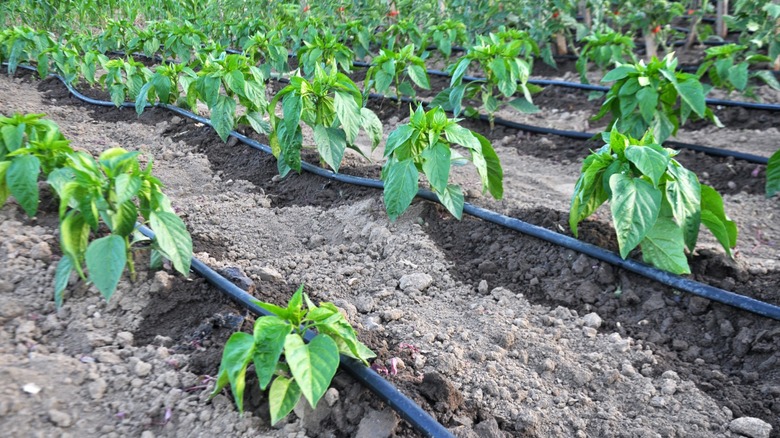
You already knew that irregular watering was the reason why your tomatoes keep cracking, but did you know that both overwatering and underwatering can cause discolored leaves as well? Consistent watering is just as important to tomatoes as giving them enough water per session. The easiest way to do both? Use drip irrigation, also known as a soaker hose. Not only will this type of watering prevent blotches and keep potential nasties from splashing up from the soil, but it's also more cost-efficient and hands-off as well. Win/win, we think!